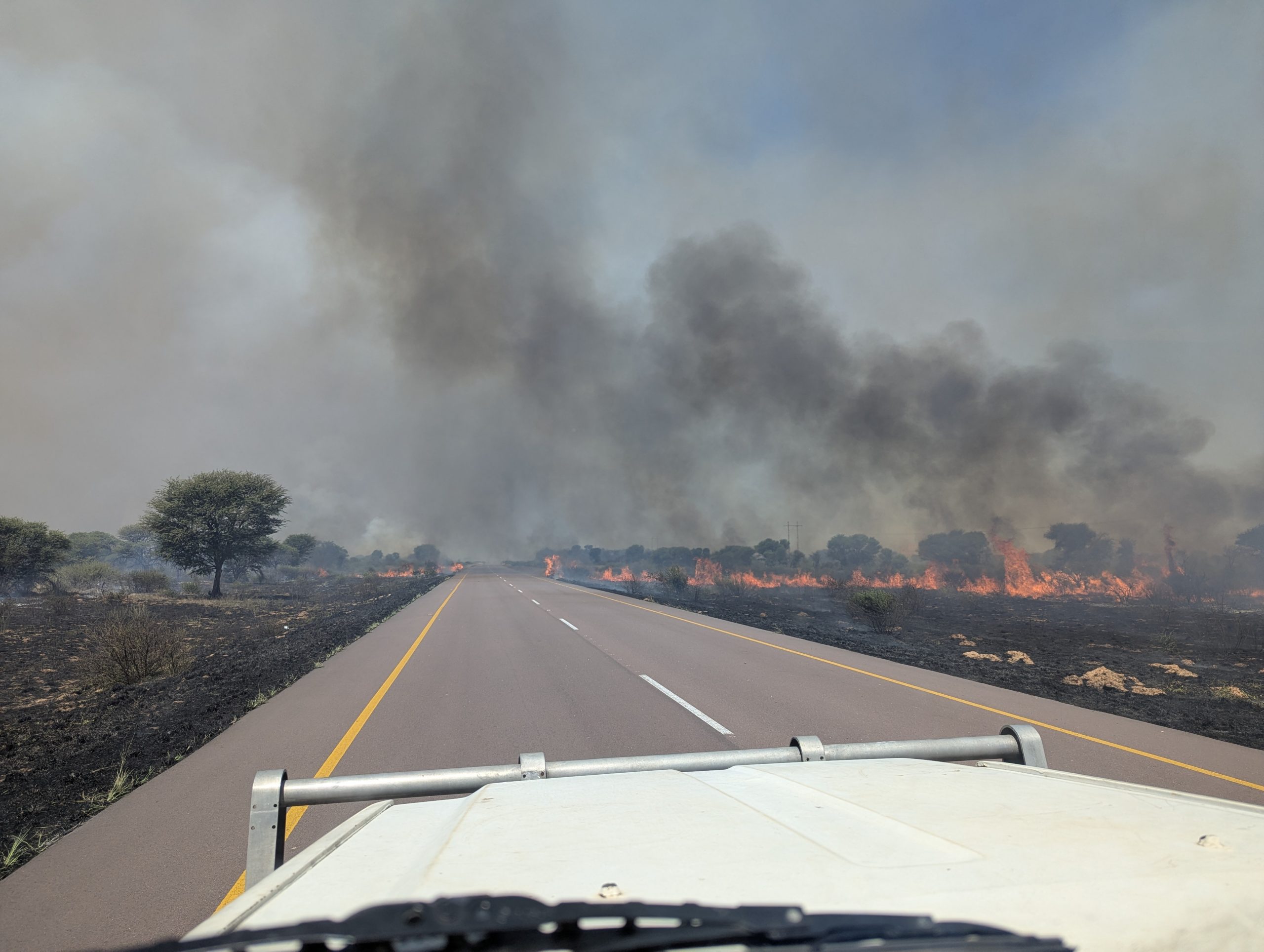
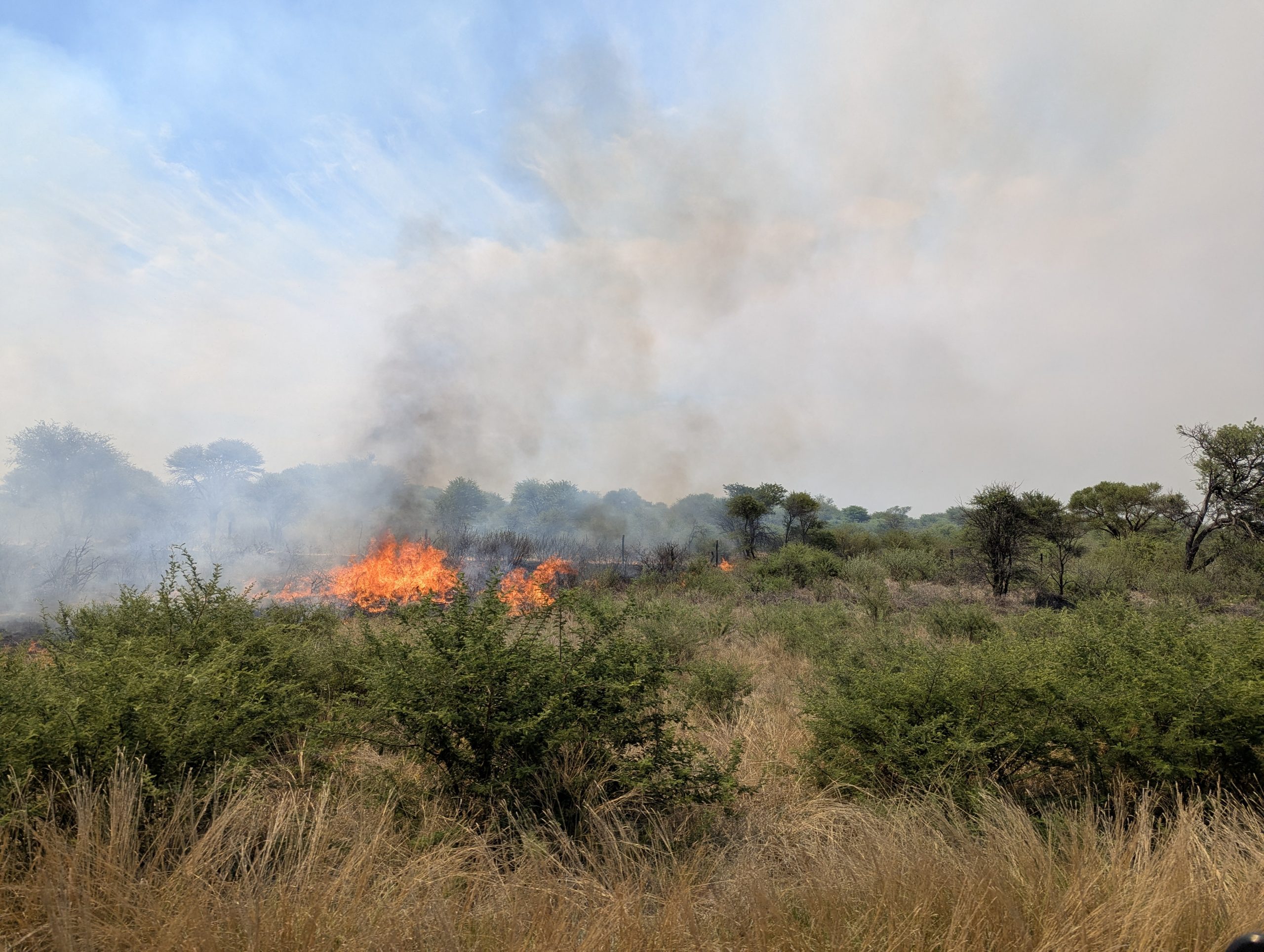
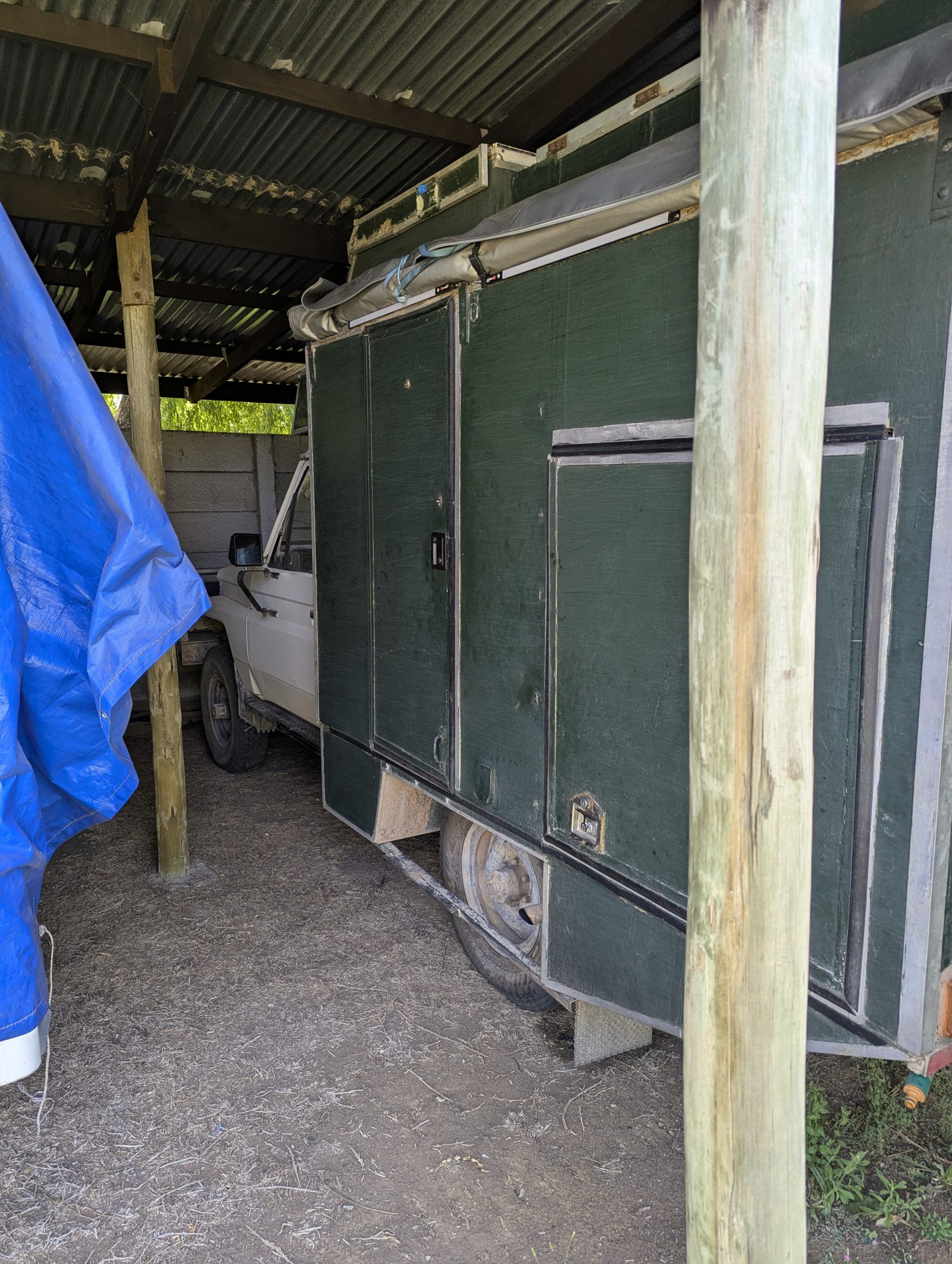
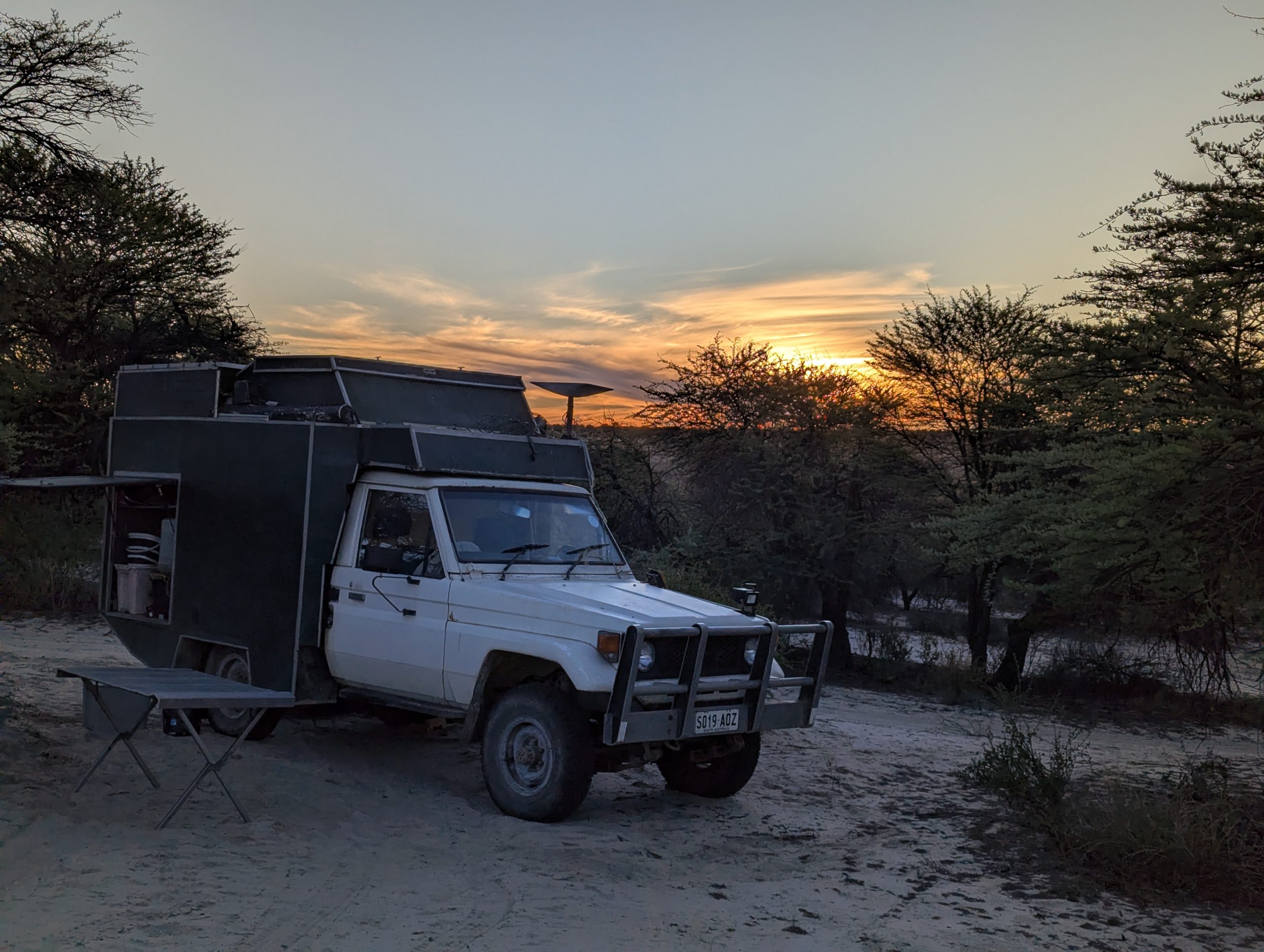
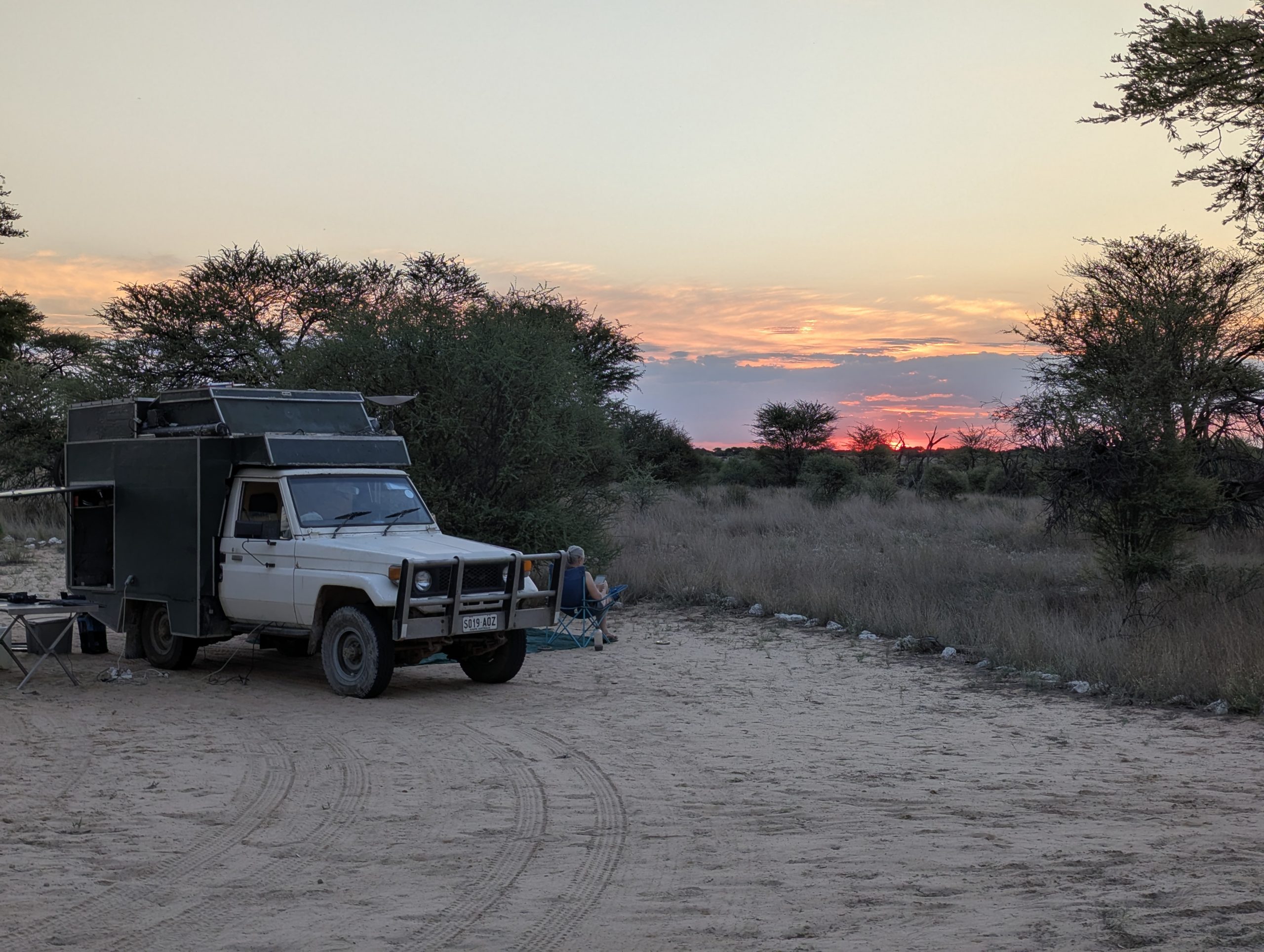
It was a 25km sandy track back to the entrance gate at Mubua, then it was about a 2 hour drive down a sandy then corrugated track to Tsabong. This was the start of the return journey to Joberg that was going to take us four days. At Tsabong we stopped at the supermarket for supplies then drove the 11km out to Camel Park campground. The next morning it was a hot 380km drive to Green Zest farm on the A2. We got there at around 4:30pm after driving through a grassfire on the A2. From Green Zest it was around 120km to the border at Pioneer border post. As usual the Botswana crossing was fine. I was nervous about how I would go getting a TIP (Temporary Import Permit) from South African customs, but it worked out OK. We crossed into South Africa, stopped at the mall in Zeerust, then camped at Hunters Moon, the third time I had stayed in two months. From then it was around 260km run to Benoni, with a stop along the way at Rustenberg to go to the outdoor warehouse. We arrived in Benoni late afternoon. Then the next day it was pack up and get the camper ready for storage, plus a bike ride to Oakfield shopping centre and lunch at Ocean basket. Saturday morning it was an Uber to Joberg Airport.
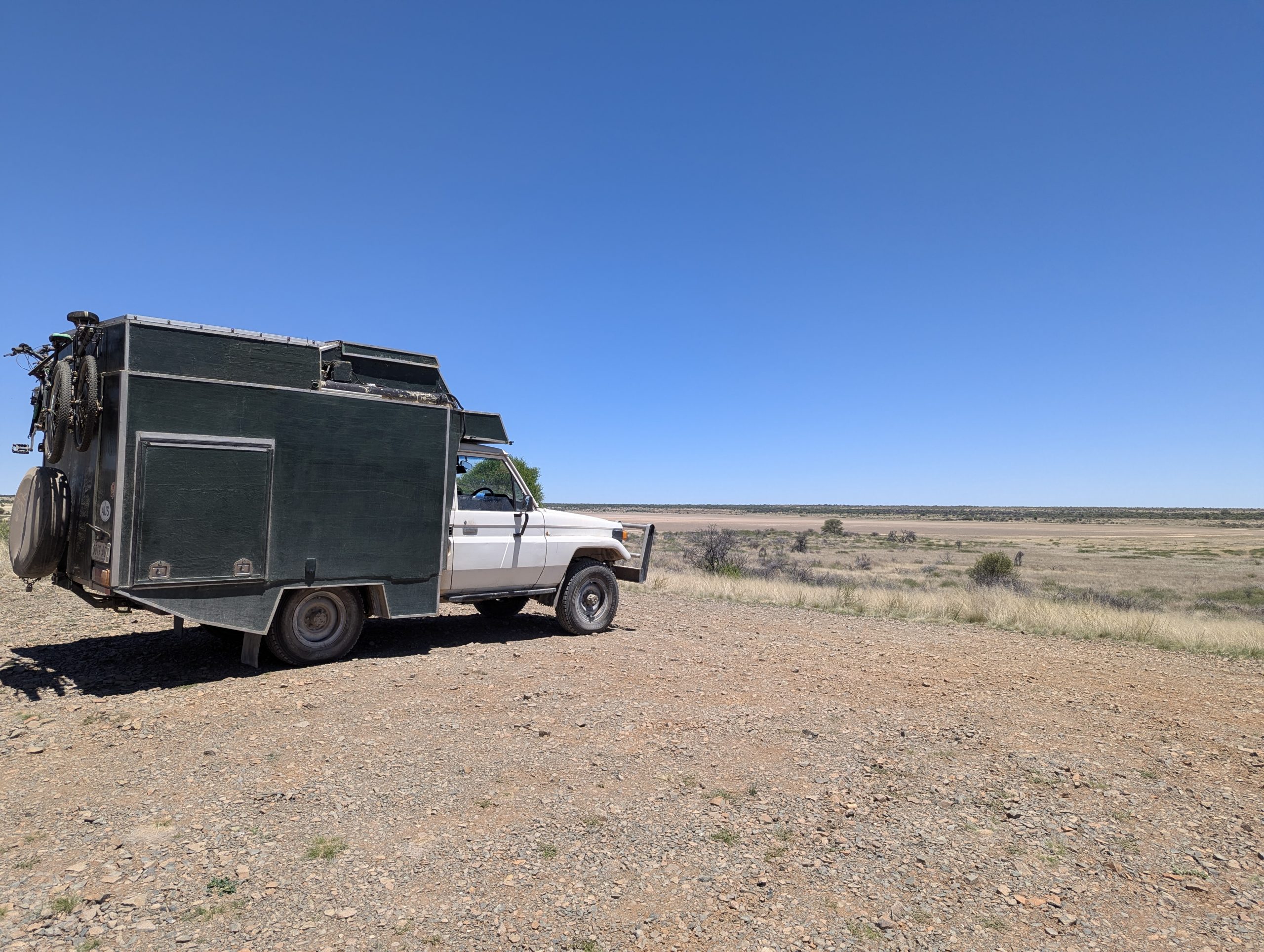
a grass fire on the A2 in BotswanaA2 fireIn storage in Benoni
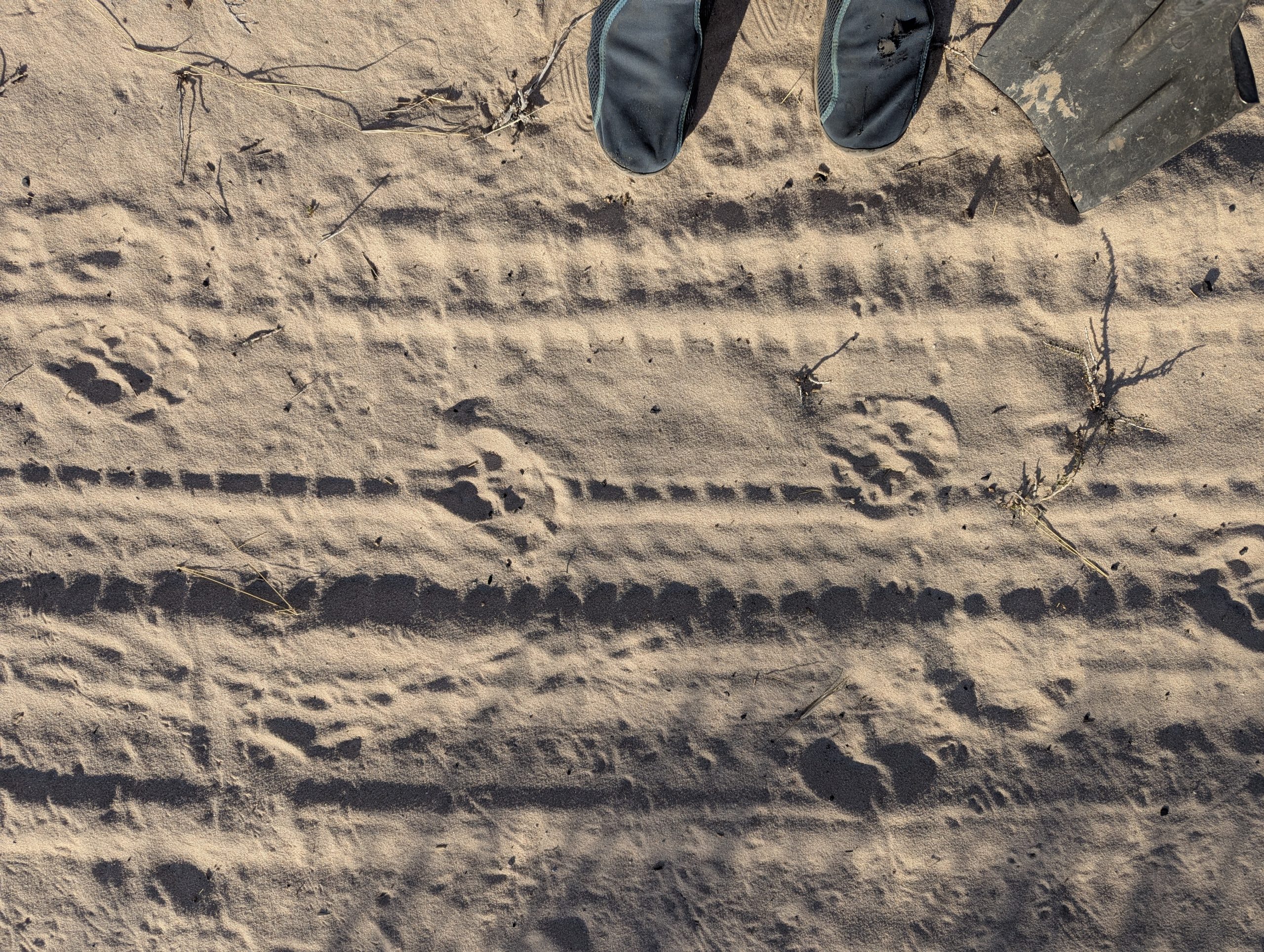
We headed to the gate to top up with water, which we had been offered when we entered the gate. As we went down the track towards the gate camp we saw Lion footprints on the road. When we got to the gate camp the staff were reluctant for us to get water saying they didn’t have much. They told us about water near Mpayathutlwa Pan. So we headed off for the approximately 20km to the pan. The directions we were given were not very good, but we met a park worker near the pan who gave us good directions. We loaded up with probably an extra 60 litres of water.
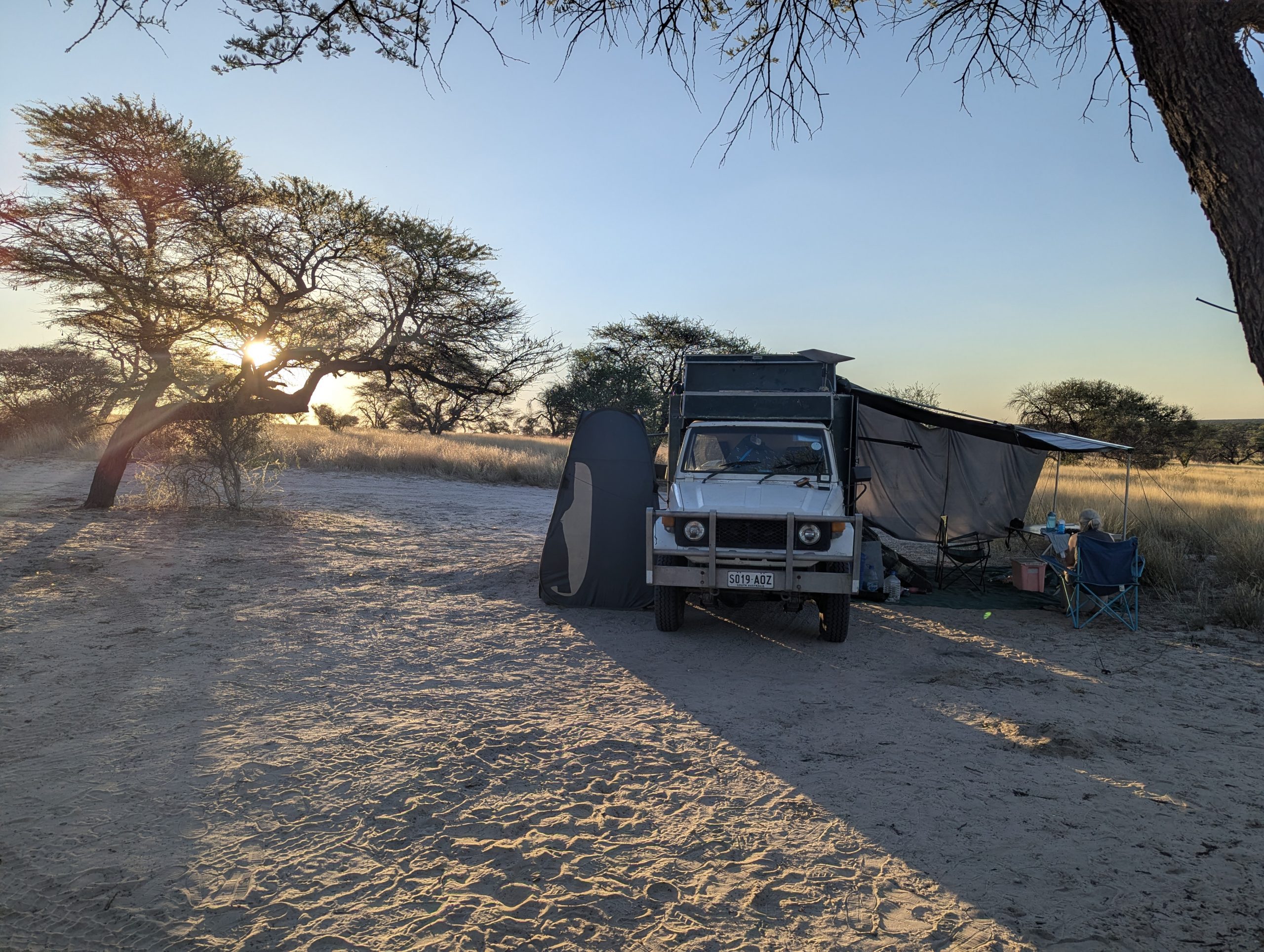
Then we headed south to Bosobogolo Pan the most remote pan of all the pans in Mubua, 25km away. We passed the turnoff to Nossop, which was around 150km away. We arrived at Bosobogolo Pan campsite No. 2. It had an A frame shelter but no toilet. It had a great view of the pan, but it was hot. We put up the awning for shade and settled in for the 3 nights we were going to stay. There was not much in the way of animals on the pan. The first day we had a german couple arrive saying that they had booked three nights in the same campsite as us. We had heard of this before. It is so difficult to book campsites with Botswana parks, and when you do they sometimes double book. Liz suggested they go to Bosobogolo Pan camp 1, which they reluctantly did.
Night two looked like nothing would happen. It was really hot so we wanted to sleep with the door open and fans blowing in air. Liz thought we should have something in the door in case something came along, so with some reluctance I found the lid of the pressure cooker box and jammed it at the end of the bed. All was quiet until 1 am when we both got up to go to the toilet. The first problem was that Liz couldn’t find one her thongs. This was odd because I was sure there were two when we went to bed, but it was 1am, and I was trying to get a flood light working so Liz borrowed one of my shoes. Liz went to the front, I went to the back. I was about 4 metres from the back of the camper, swinging my spotlight around, but I got attracted to four owls who were in a tree some distance away. One of the owls flew right over me only about 2 metres above me, it would have made a great picture. I followed the owl with my spotlight and then as it flew past I swung the spotlight down to the ground and behind me, to see a leopard sitting in the A frame about 5 metres away. I backed away back to the camperwhile asking Liz if she was inside. The Leopard casually got up and walked across the campsite and into the grass while I followed it with a spotlight.
That was not the end. The Leopard came back. I opened the door only about 5cm to look down at the leopards face about 1 metre away, and looking, at least to me, as if it was going to pounce. I snapped the door shut!
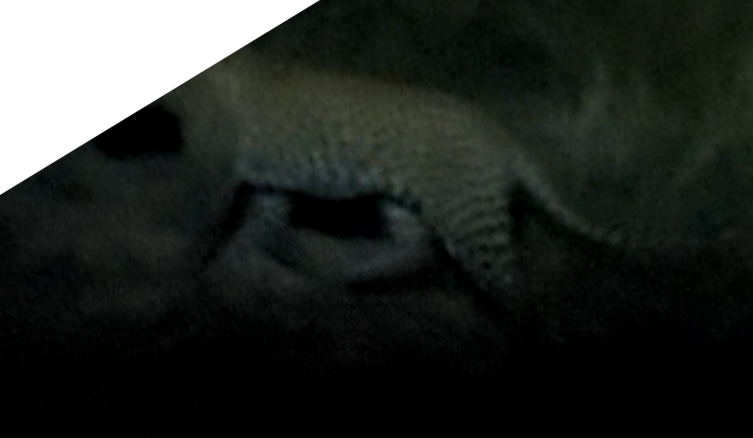
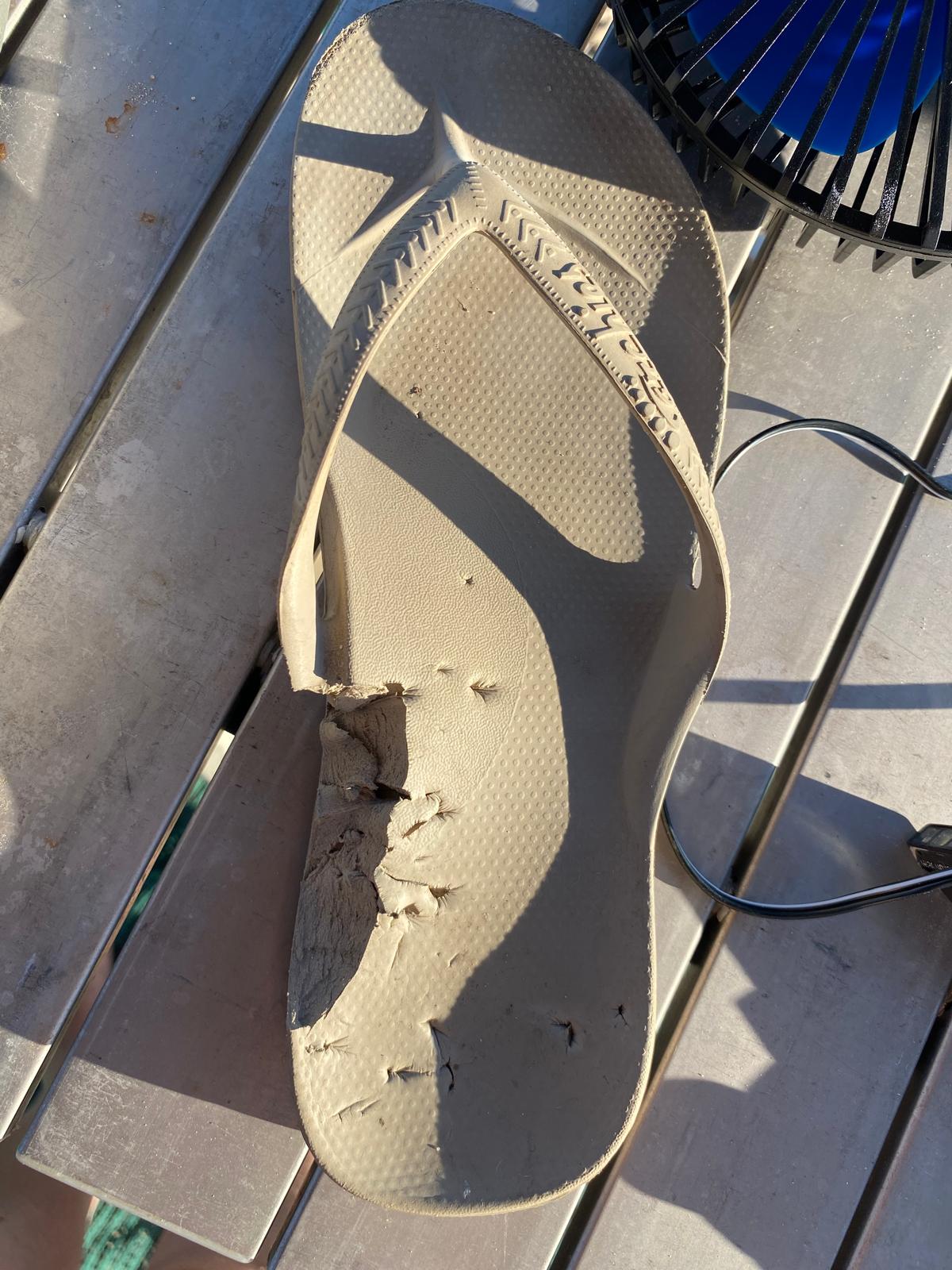
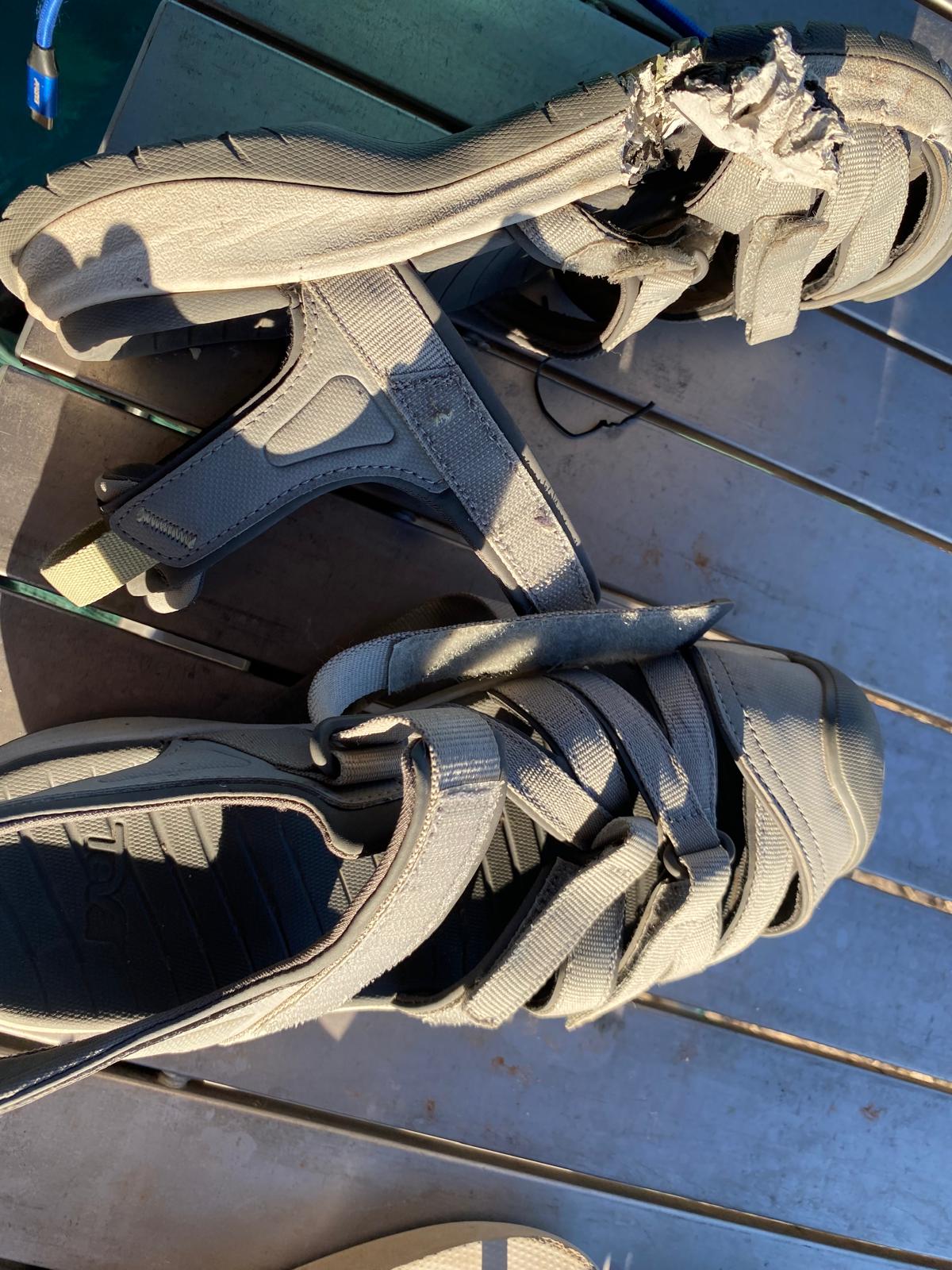
Liz opened the door a crack and saw the leopard a couple of times, and we got a very grainy picture from a video. During this time it stole one of my sandals , bit the other one, and bit one of Liz’s sandals. It destroyed three pairs of shoes in total.
The next night we barricaded the door, but the leopard did not return. We headed out after three nights and headed south to Tsabong.
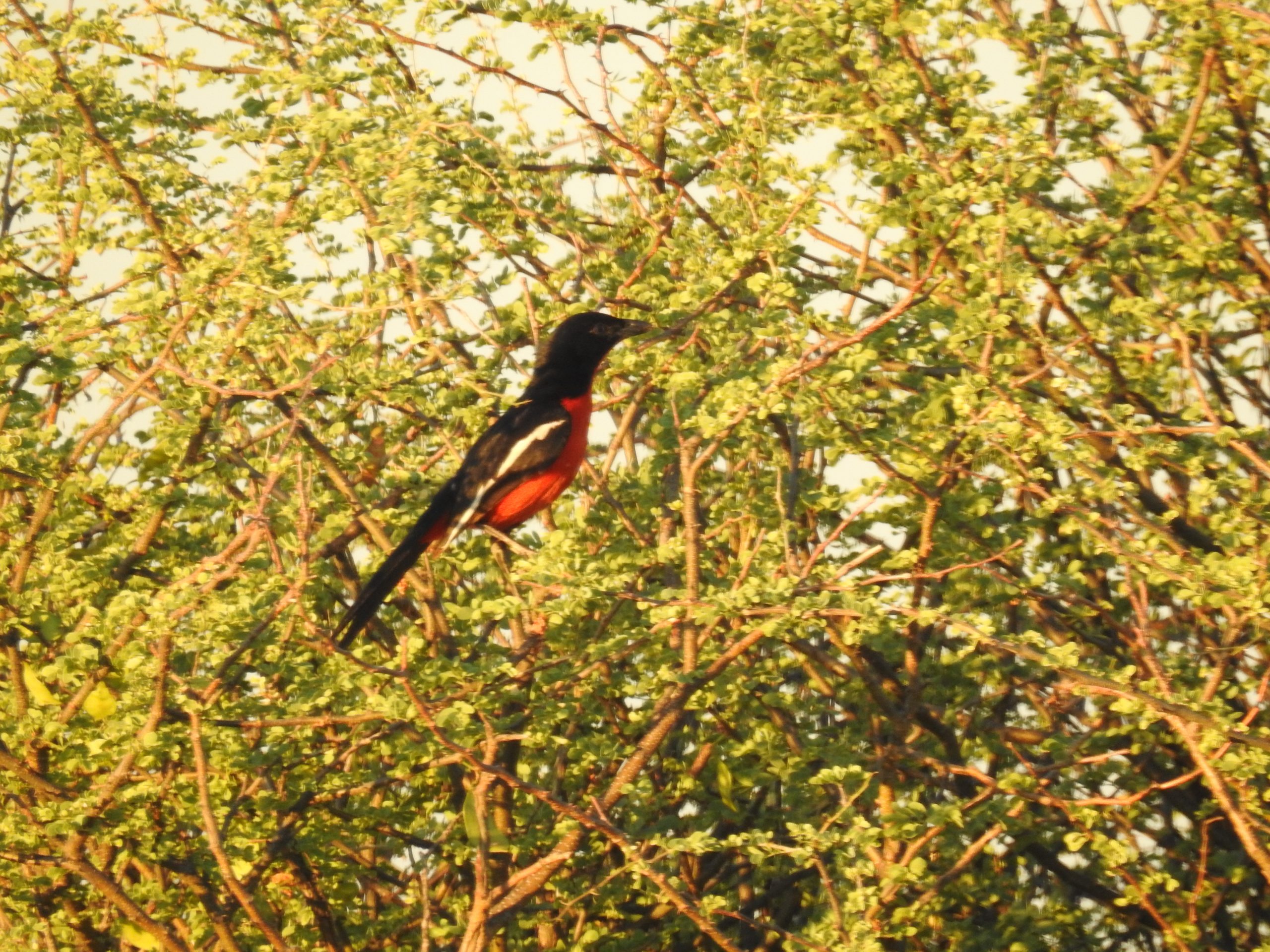
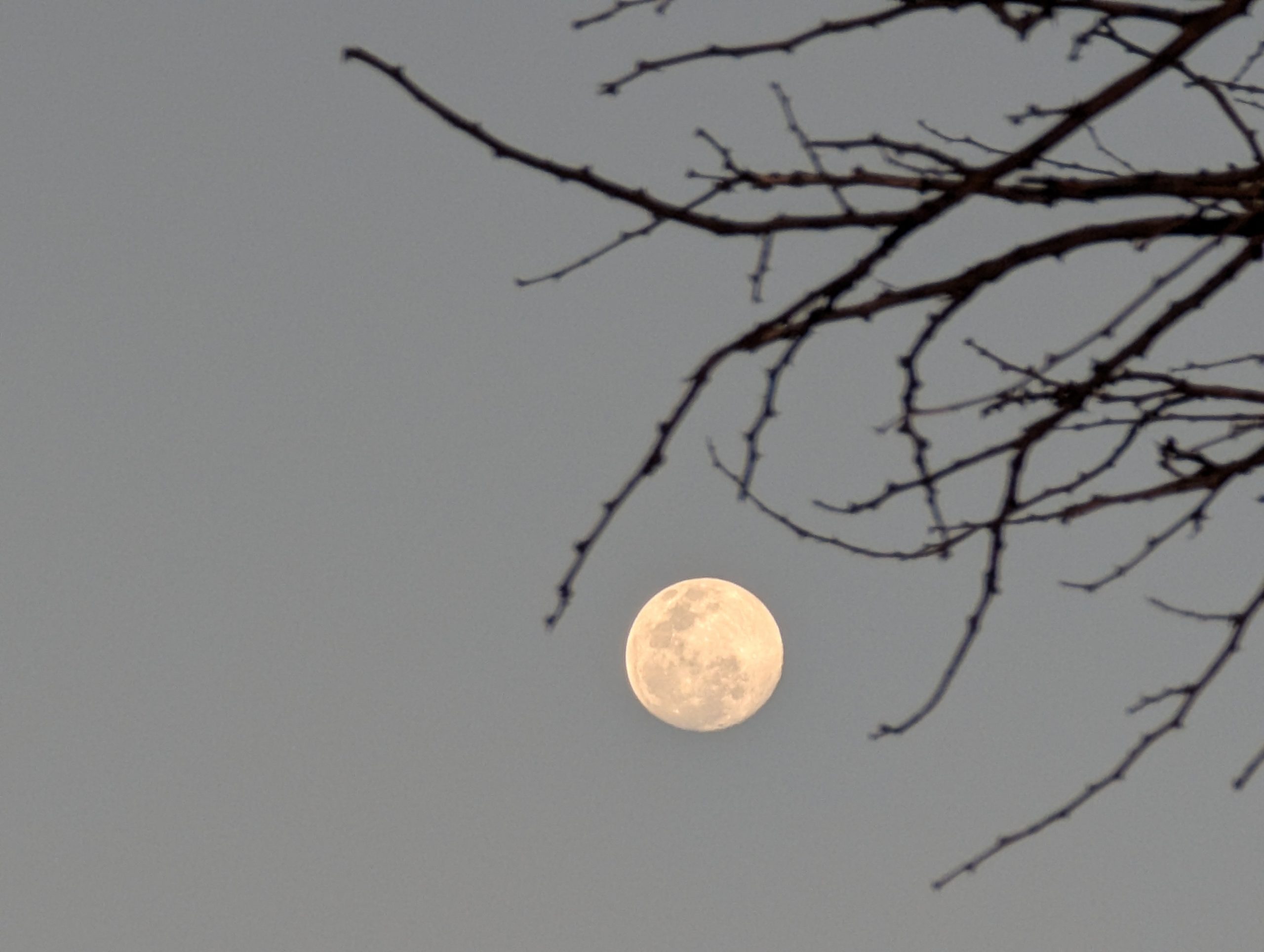
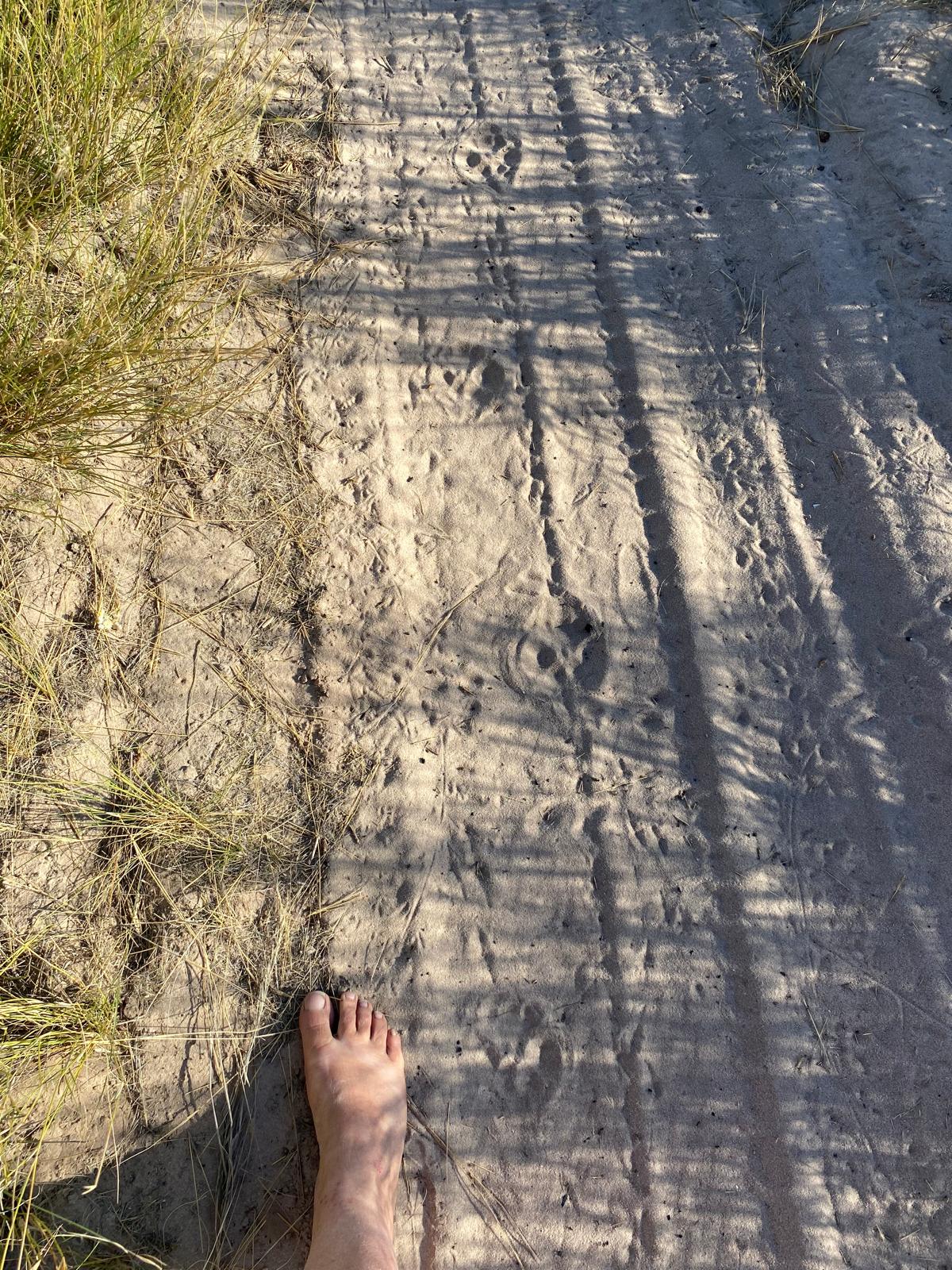
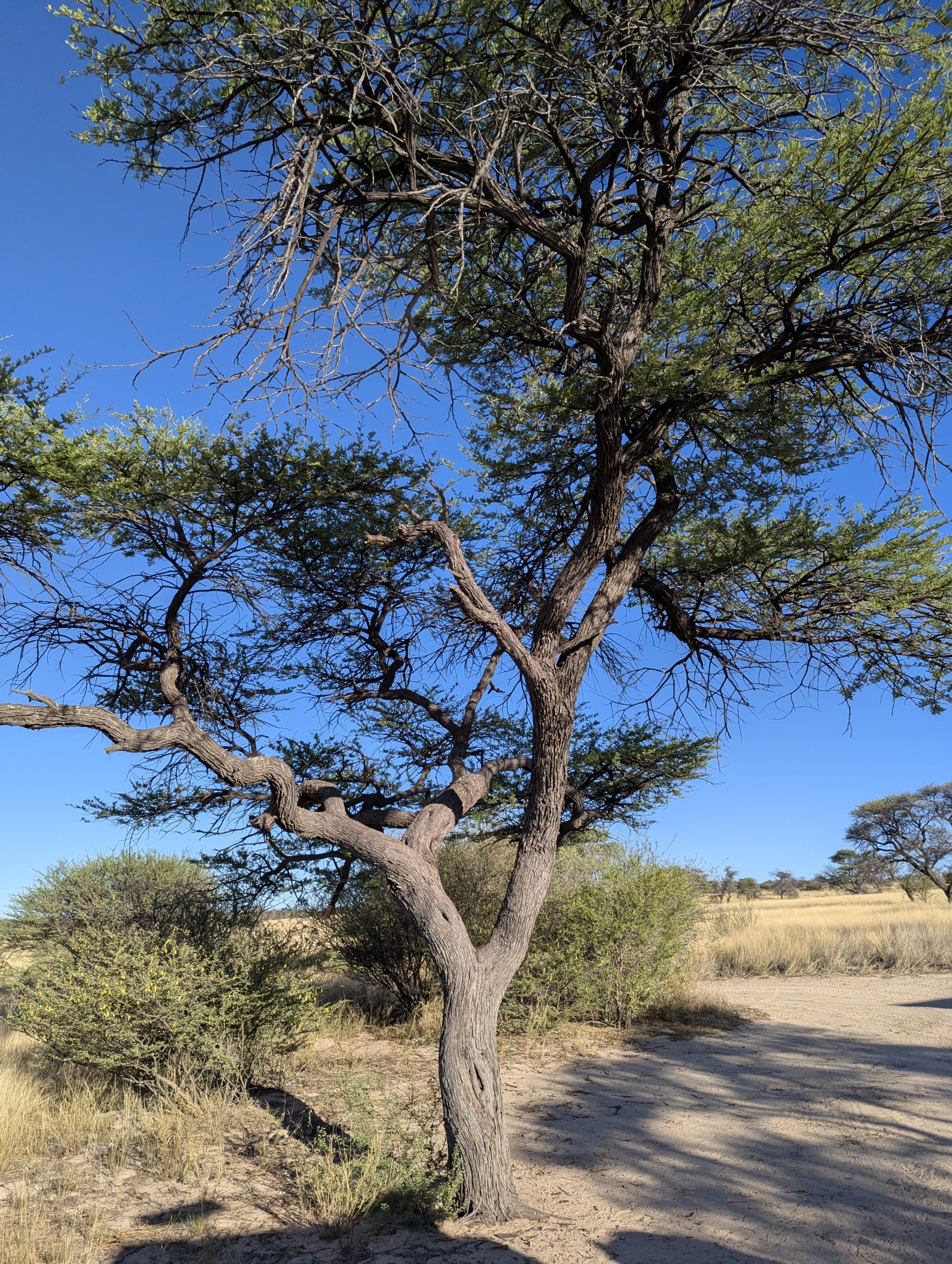
the grainy leopard picture from a videoBosobogolo Pan camp 2a Crimson-breasted Shrikenear full moonLeopard printsLeopard eatenMore Leopard eatenMore leopard printsCamel Thorn tree
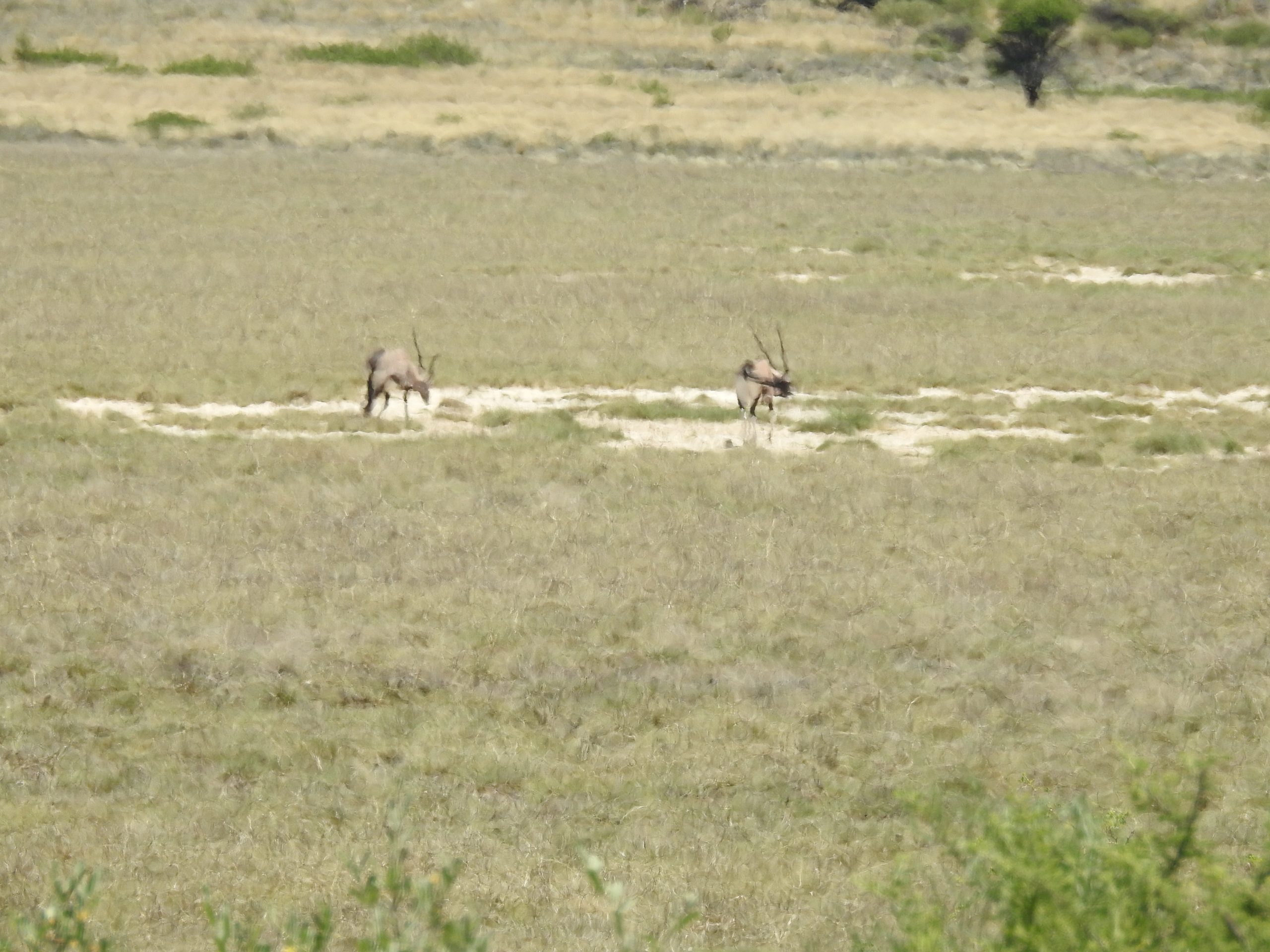
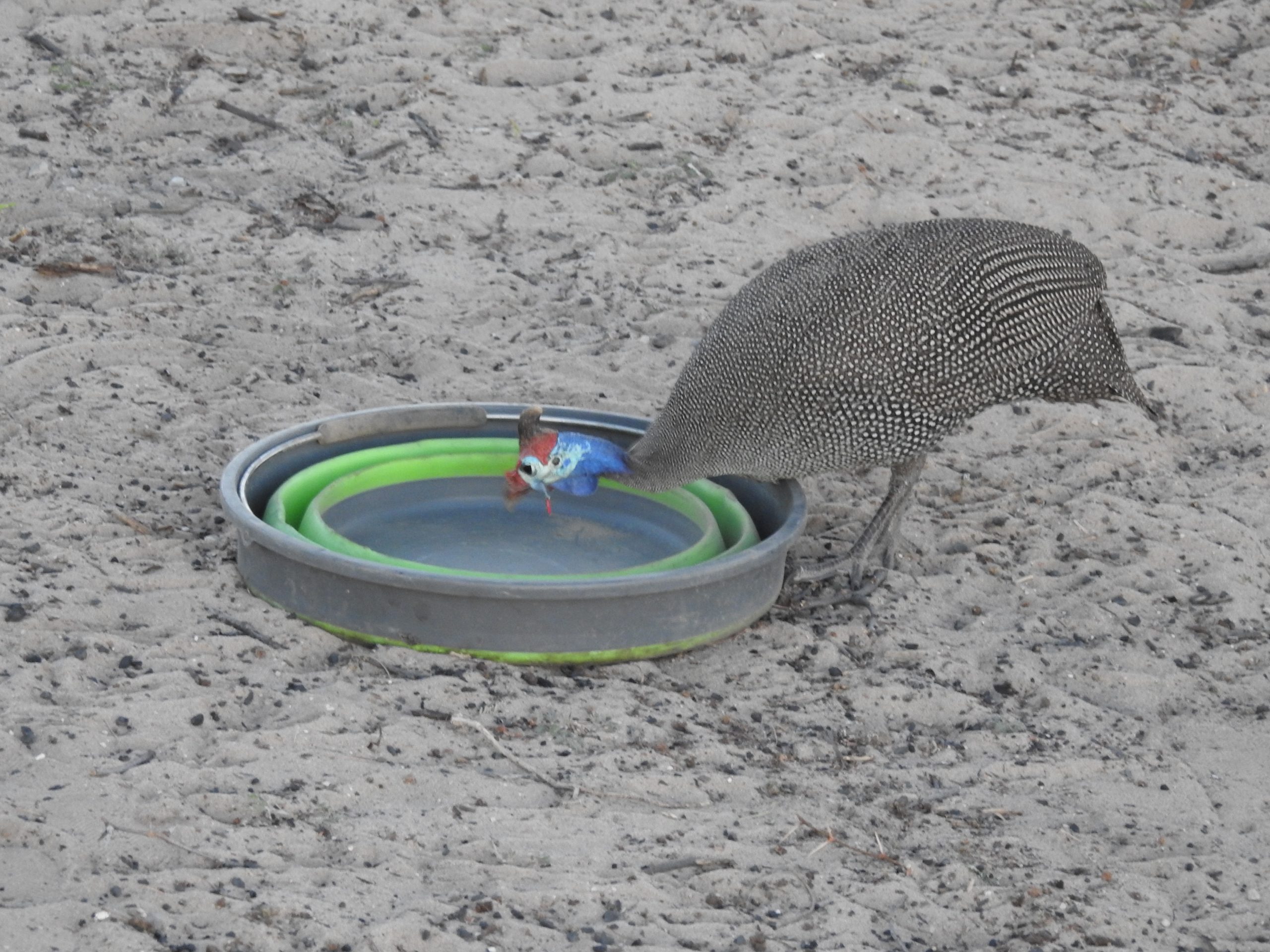
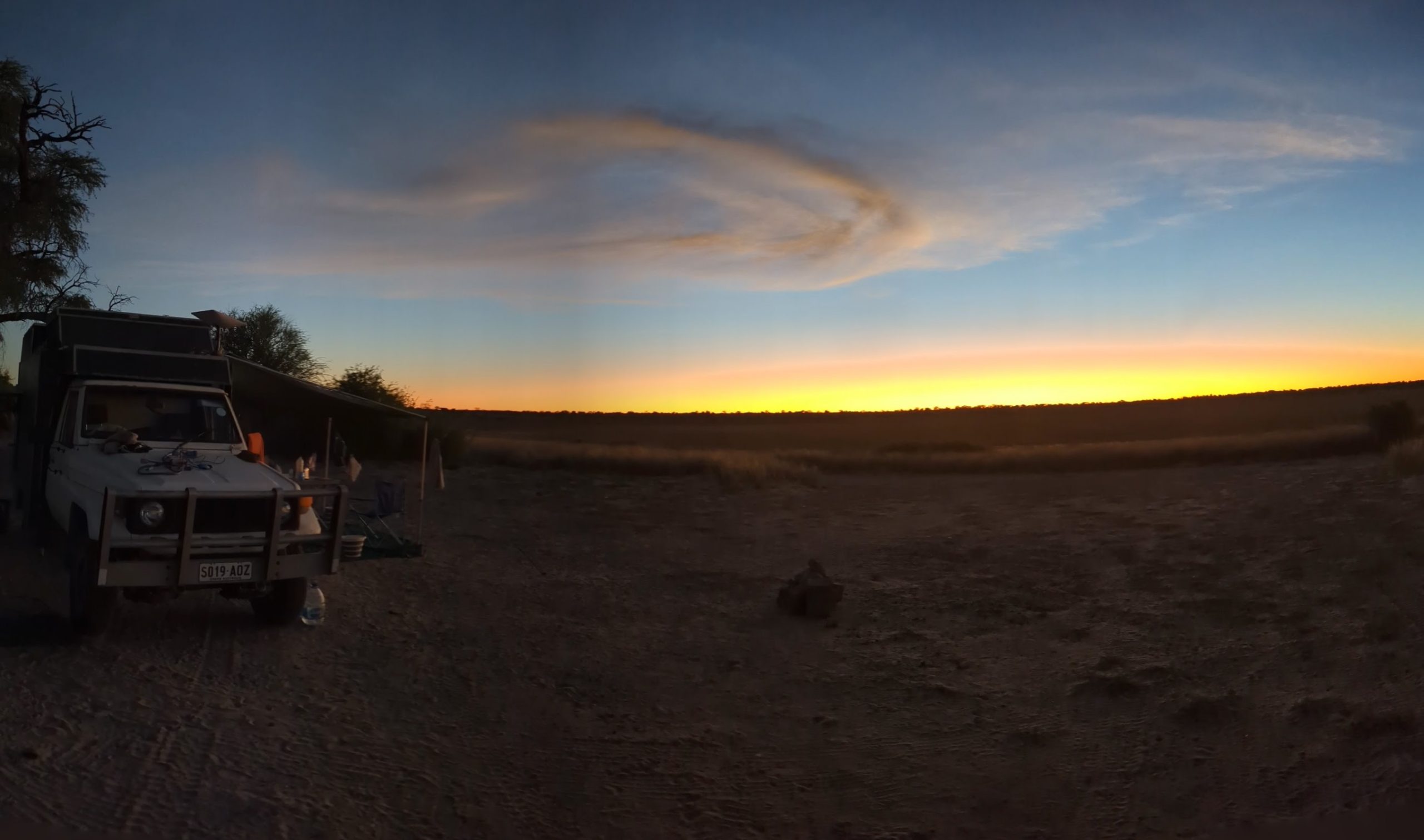
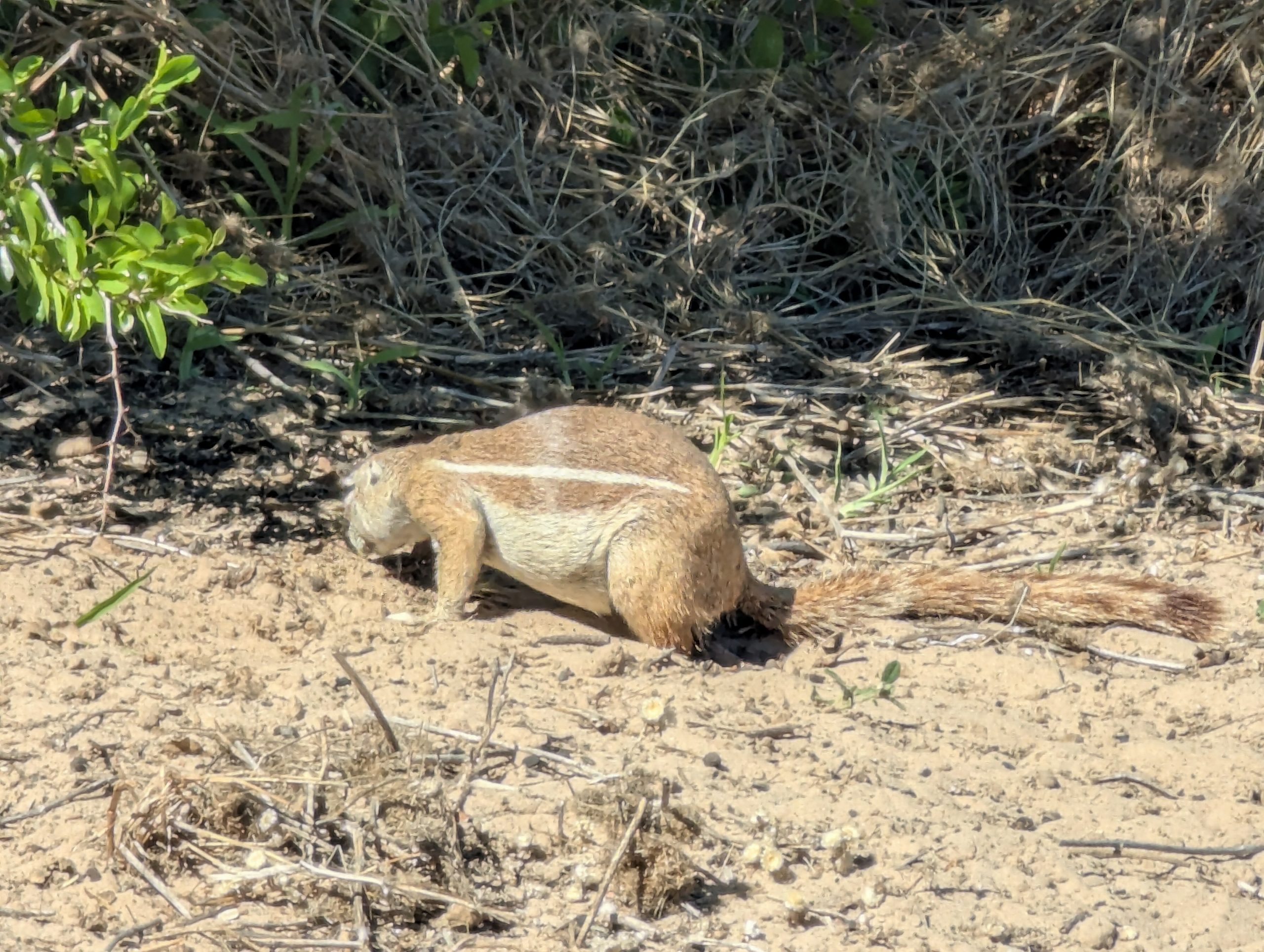
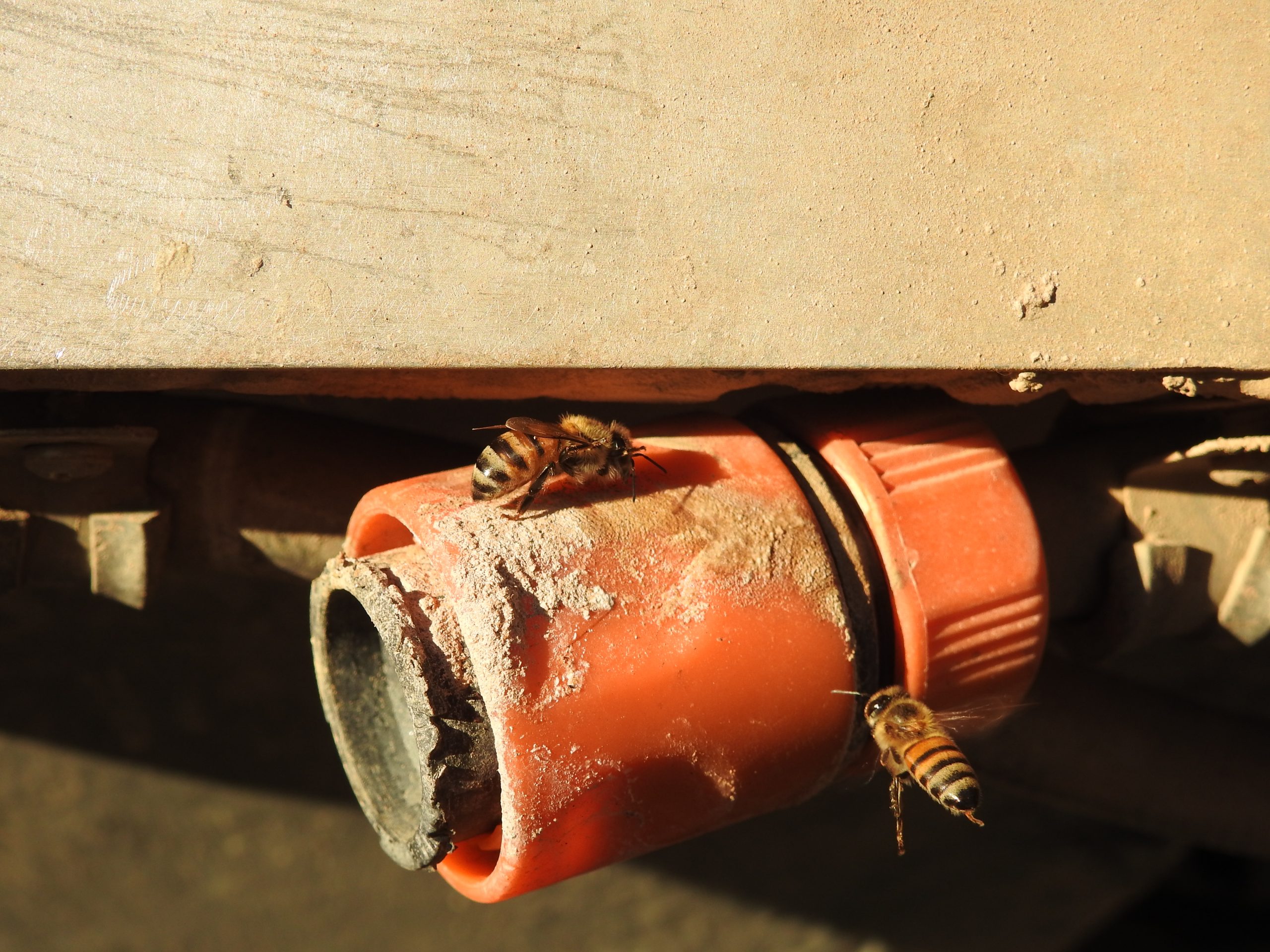
We drove from Khiding Pan not having seen much in the way of animals via Mpayathutlwa Pan which was the only pan with water in it fed via a bore pump. We drove all the way around the pan and saw a few boks but not much else. We headed north towards Mubua Pan. There were a couple of people camping around the pan, but we didn’t see many animals, then it was off to Lesholago Pan, total distance from Khiding of about 20km. Lesholago Pan had a much better view of the pan, we were in campsite number 2. There were Oryx and springbok on the pan especially in the evening. We stayed two nights. The first morning we heard a lion calling, maybe 1km away. That night it called again, this time closer. The next morning we left we heard it calling in the far distance. It is very dry at Lesholago Pan, we were visited by African Honey Bees again, but we moved a lot of water away so we were not quite as tormented by them. The African Honey Bees seem to be able to smell water even in closed water containers, or objects that have held water.
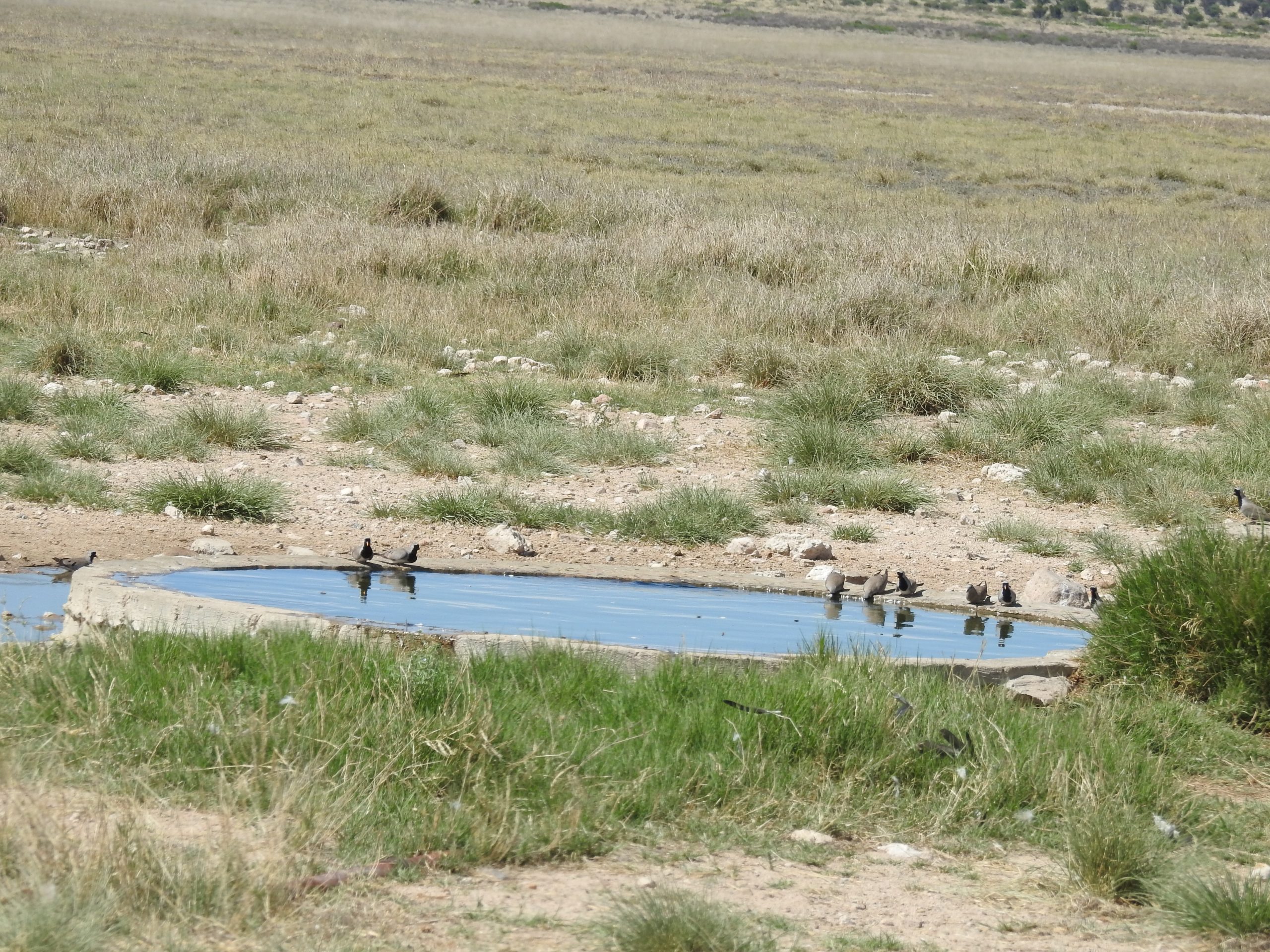
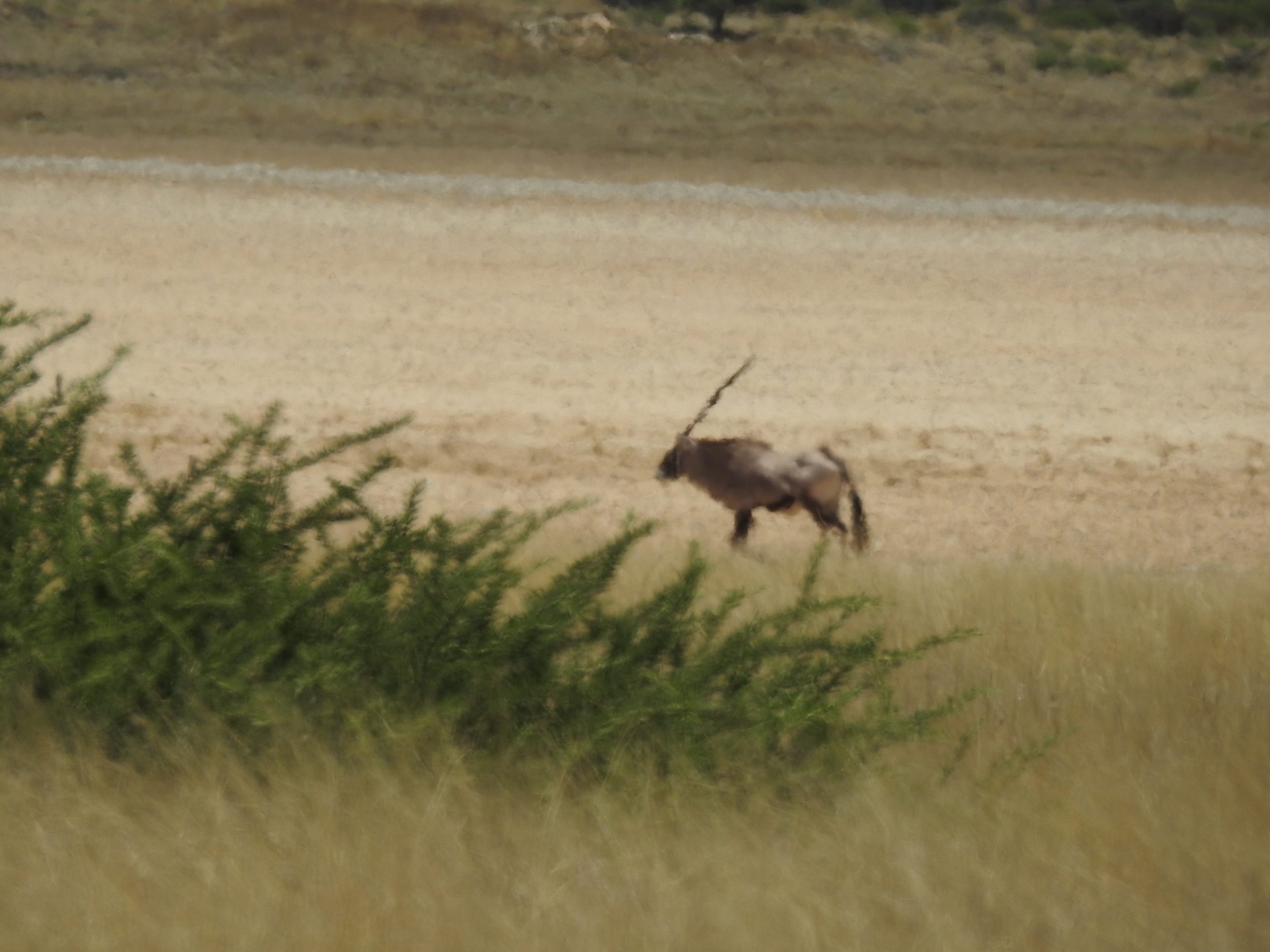
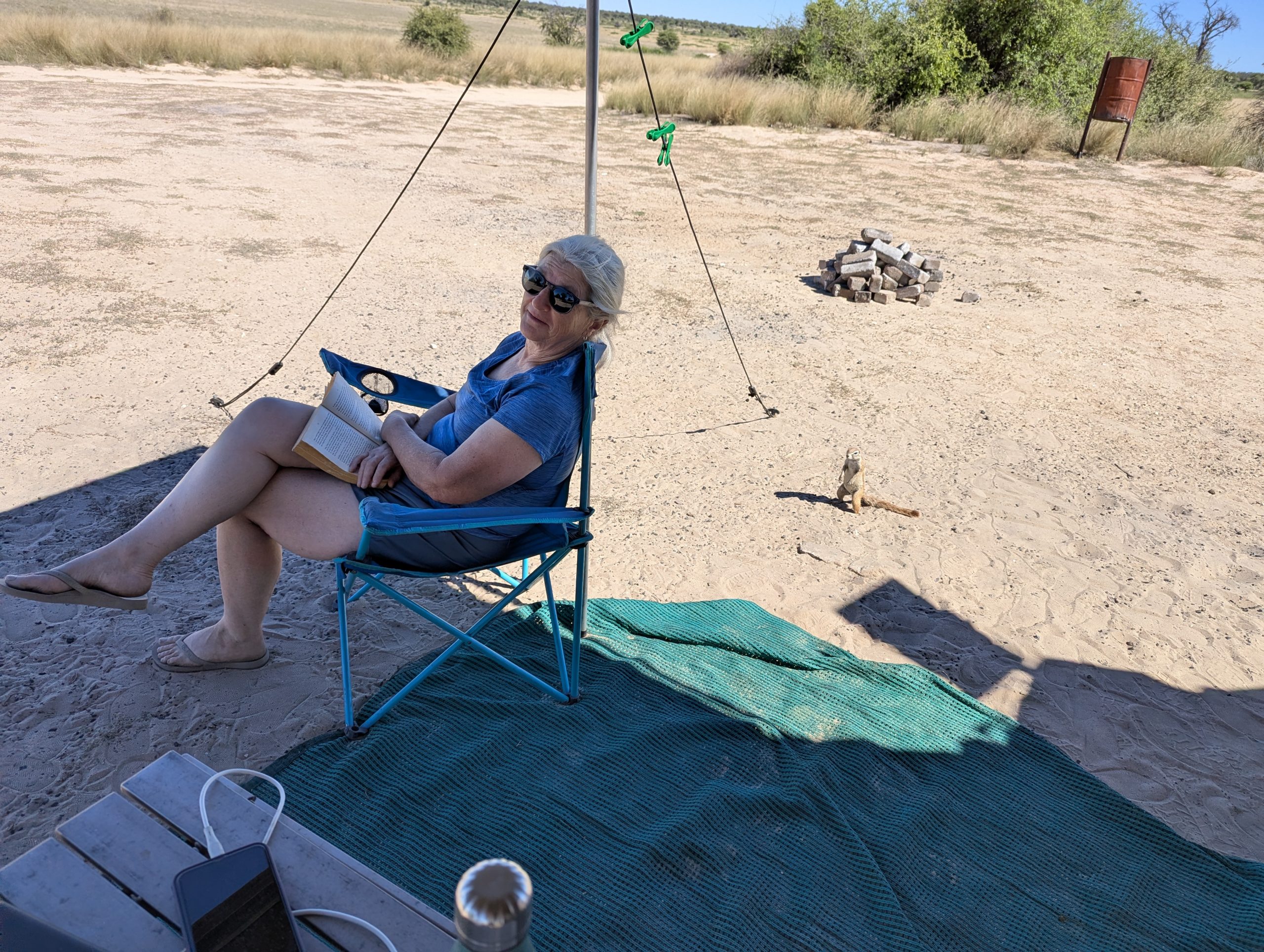
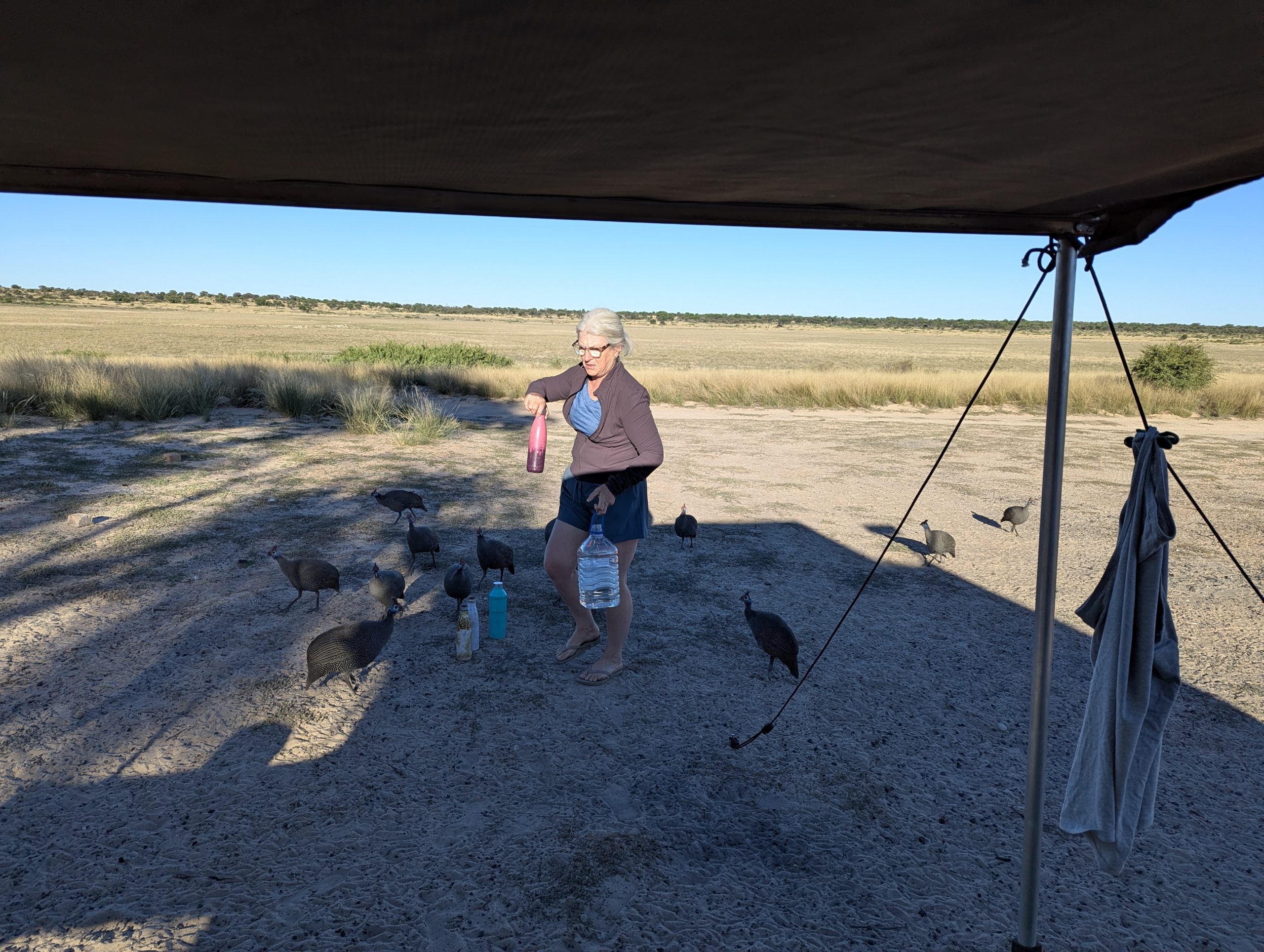
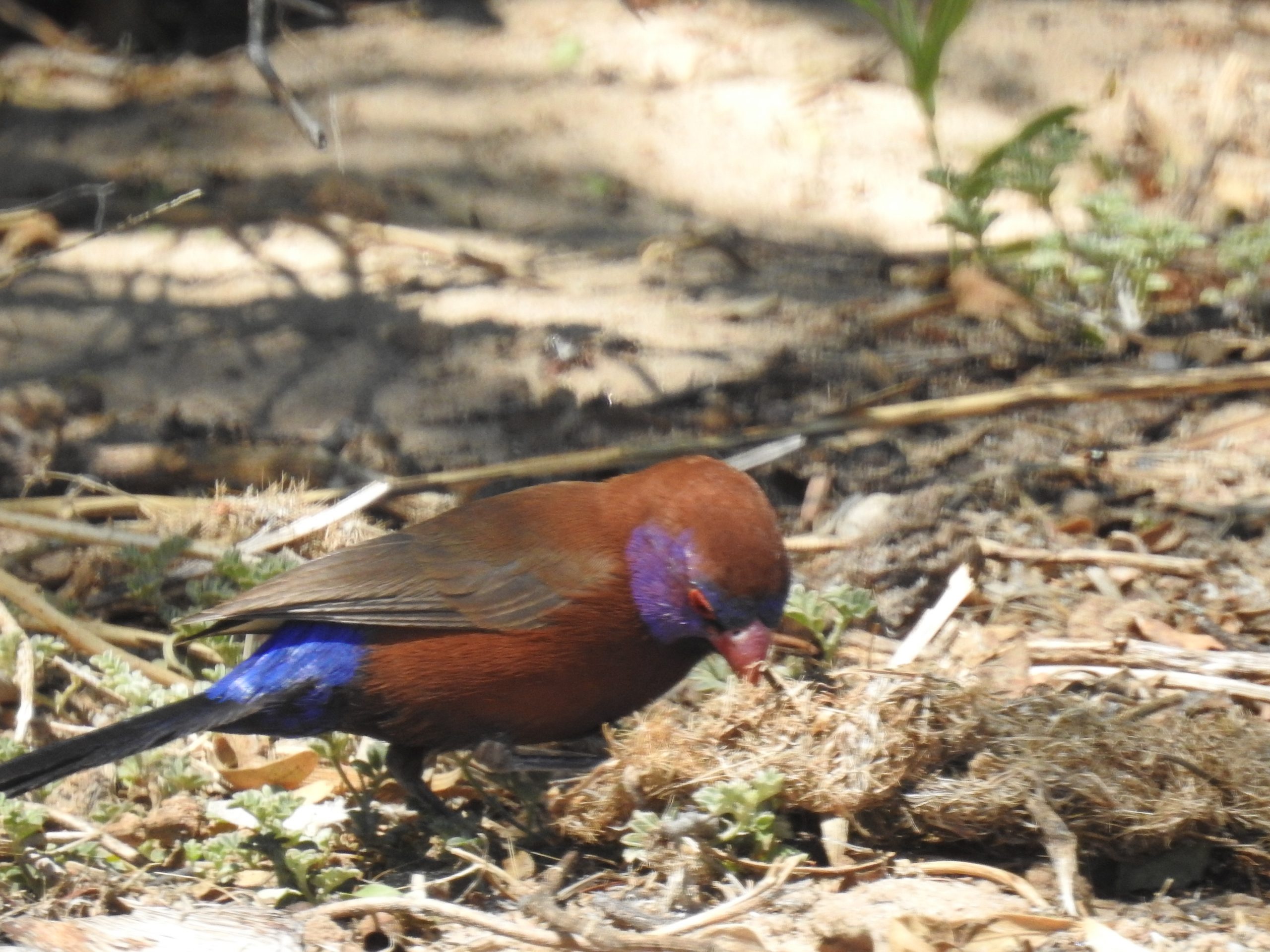
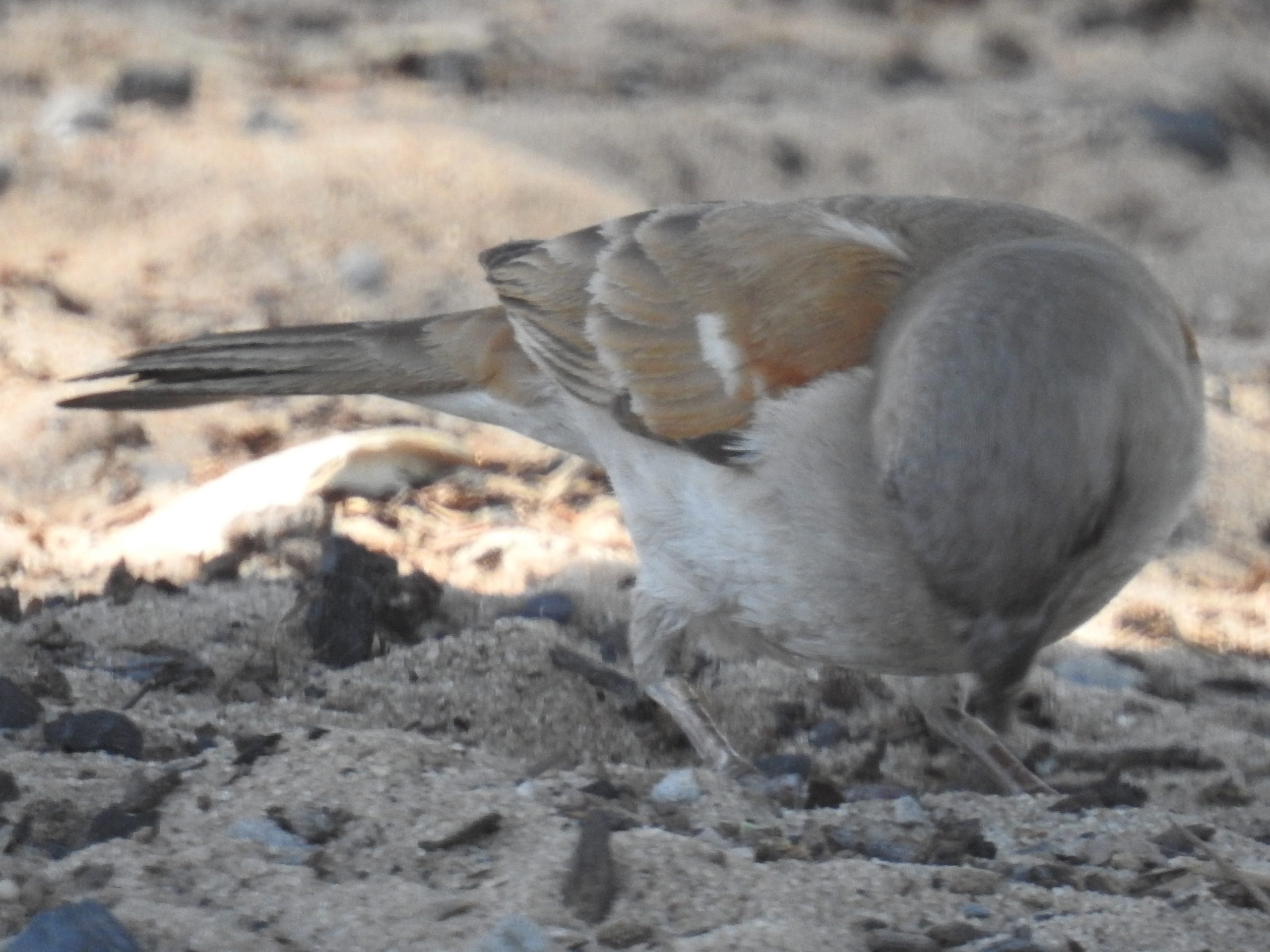
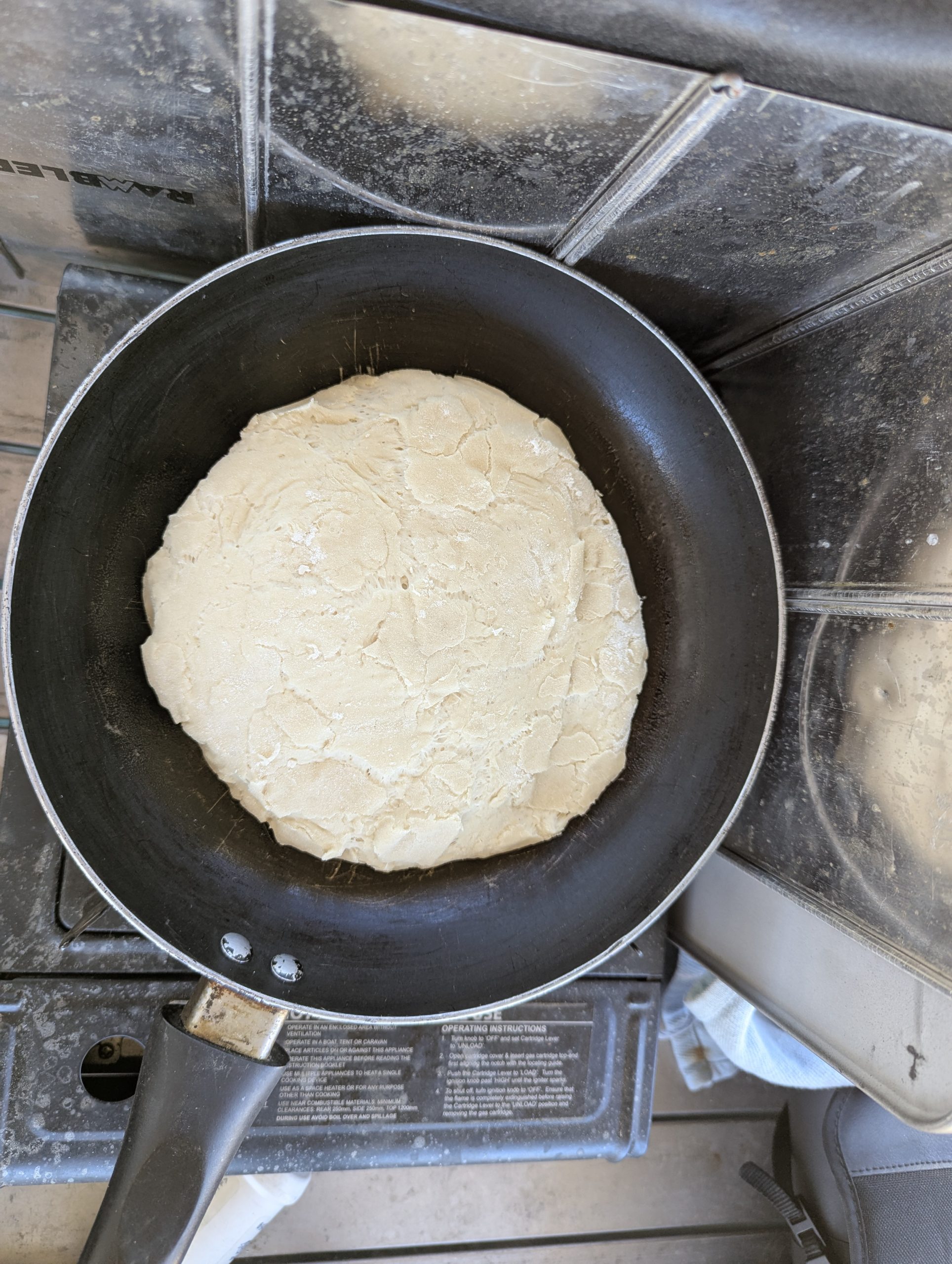
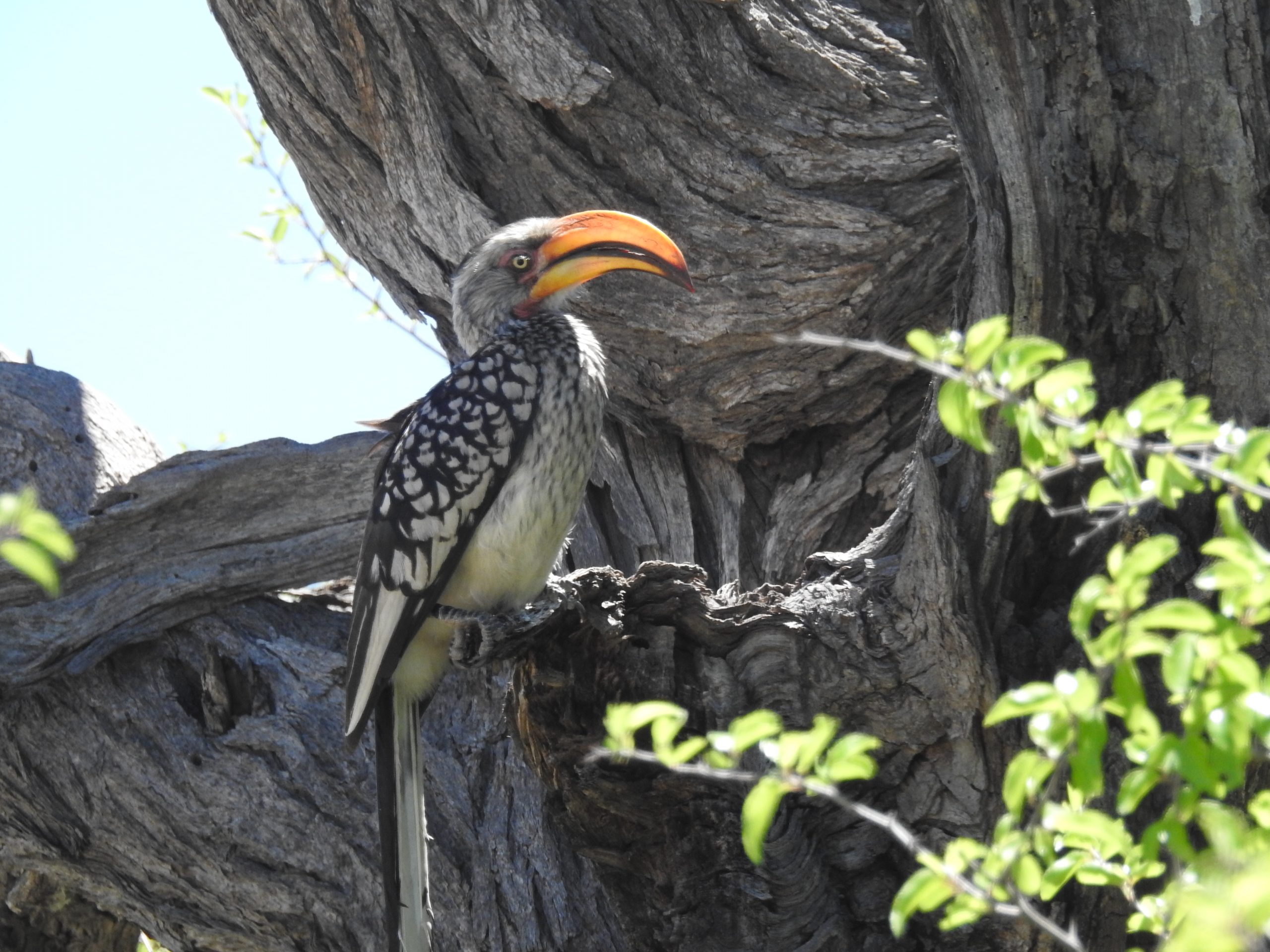
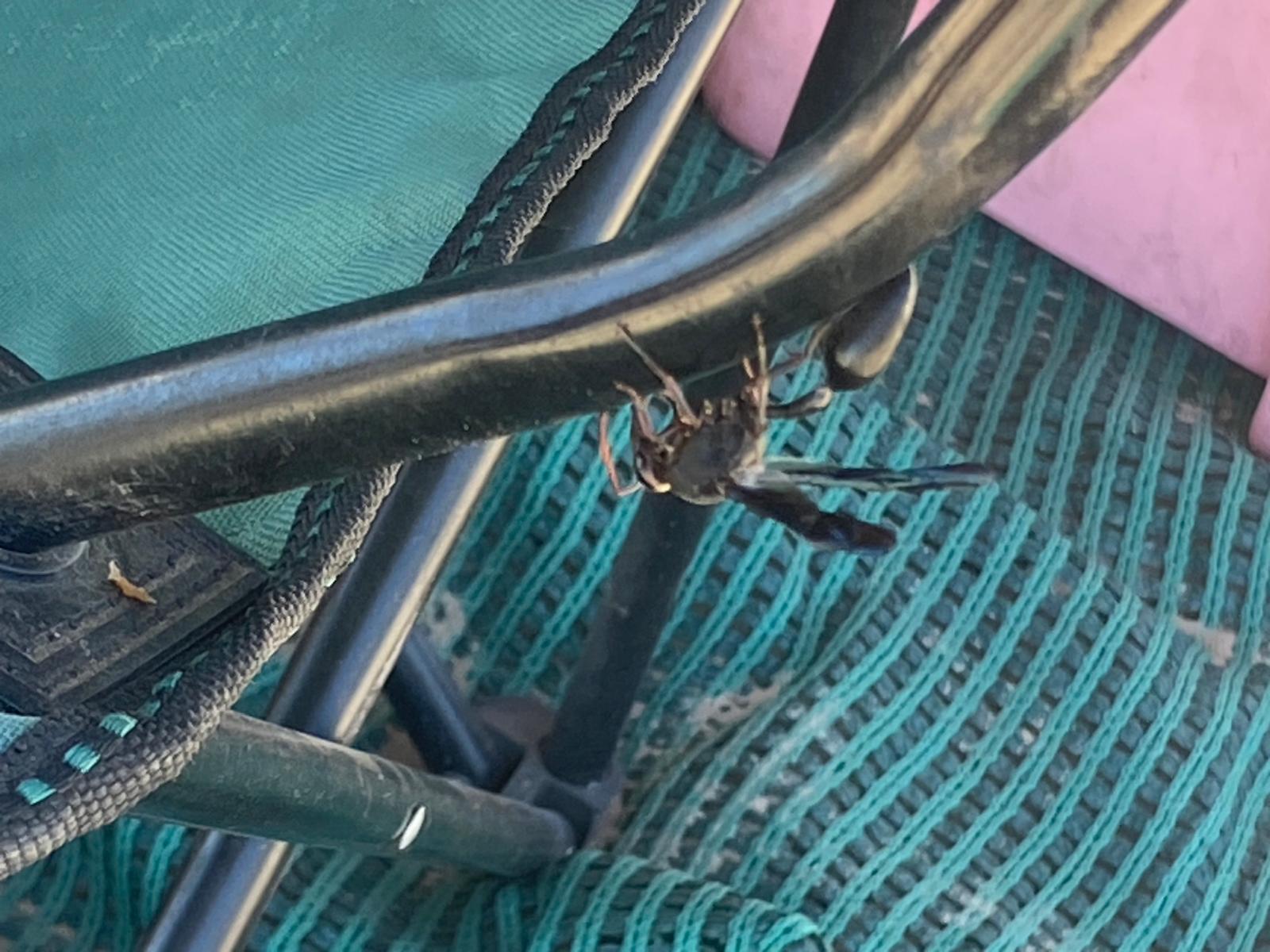
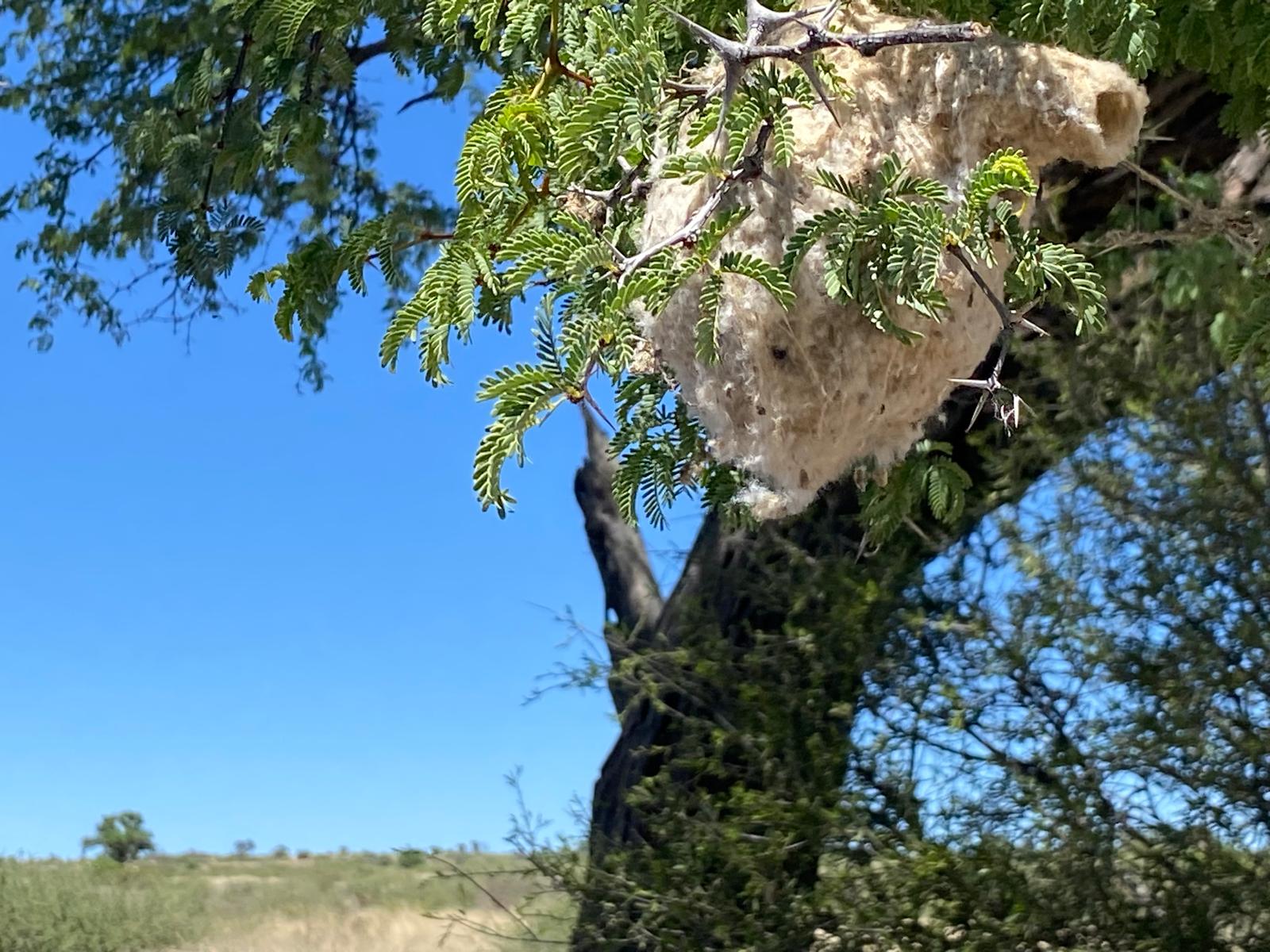
The waterhole at Mpaya panOryx on Mpaya PanThe lookout at Mubua PanOryx at Lesholago PanBlue helmeted Guineafowl at Lesholago PanSunset at Lesholago PanCape squirrel at Lesholago PanLiz’s pet Cape Squirrel at Lesholago PanLiz’s pet Guineafowl at Lesholago Pana male Violet-eared Waxbill at Lesholago PanA Cape Sparrow at Lesholago PanMaking bread at Lesholago PanBaking the bread in a frying panA hornbill at Lesholago PanA narrow waisted wasp. Theses fly into camp, hardly even land and generally don’t biteA Penduline tit nest we saw a few days ago. It took us a while to identify it. A very small bird less than 8cm long. The entrance is only 2cm across
We got to the National Parks office in the morning and map in hand we talked to a helpful man who eventually got us four nights camping in Mabuasehube part of the Kgalagadi Transfrontier Park. Getting bookings in Botswana is like pulling teeth, you want to give them money but they are so reluctant to book sites. We got more supplies and drove for a couple of hours up a gradually worse road to Mubua gate. There Liz managed to get one of the staff to book three more nights so we had a total of 7 nights. We then drove 25km into Khiding Pan. We were booked in for two nights at Khiding Pan. One the second day we were there the South Africa couple who we met at the border and their parents stopped in at the neighboring camp and invited us over for breakfast. We had a great breakfast and discussion.
Sunset at Khiding PanWe were plagued by African Honey Bees. They swarmed around any water.
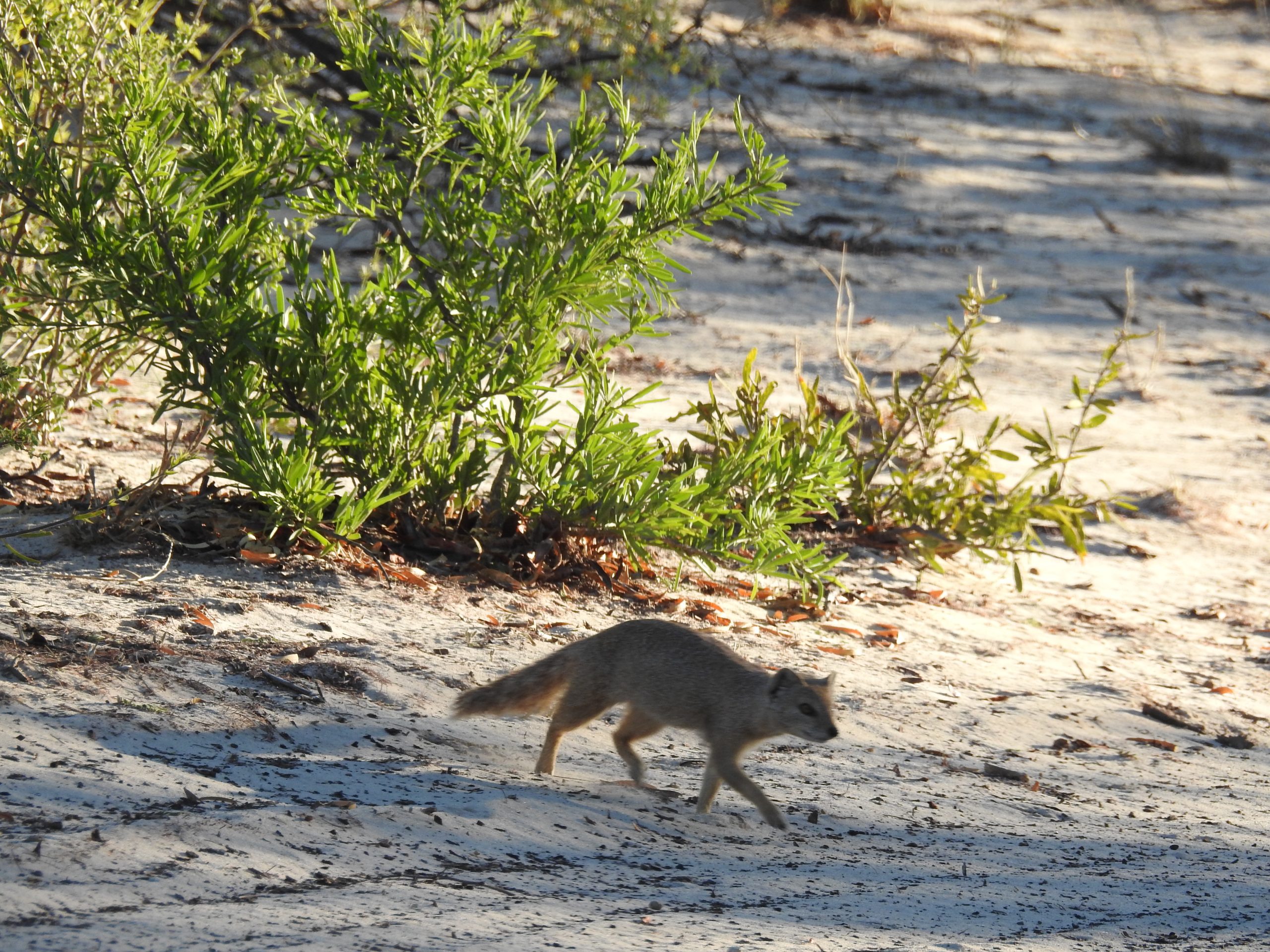
There were Yellow mongoose around camp
A successful wild camp by the side of the road, hardly any cars during the night. We headed off to Tsabong and while sitting in the car park someone nearby we got talking to told us we could book for Mubua at the National Parks office nearby, but it would not be open until Monday. So we headed off to Camel Park outside Tsabong for a afternoon of relaxation, and washing.
It didn’t take long to warm up, we headed north to Askham to top up with more fuel. It then was 58km up to the entrance to Kgalagadi Transfrontier Park . We got to Twee Rivieren the entrance and border crossing to the park. We spoke to the Policeman about crossing and he thought it would be fine. However to cross we needed bookings in the park, and after much back and forth and phone calls to Botswana, we could not get any bookings.
So the alternative was to drive back down to the border crossing at Bokspits. We entered the border apprehensive that we might fail, but met a very friendly policeman (and another not so friendly one). Another South African couple also crossed at the same time, which made it a very friendly atmosphere. So we crossed, and then went through the border crossing into Botswana.
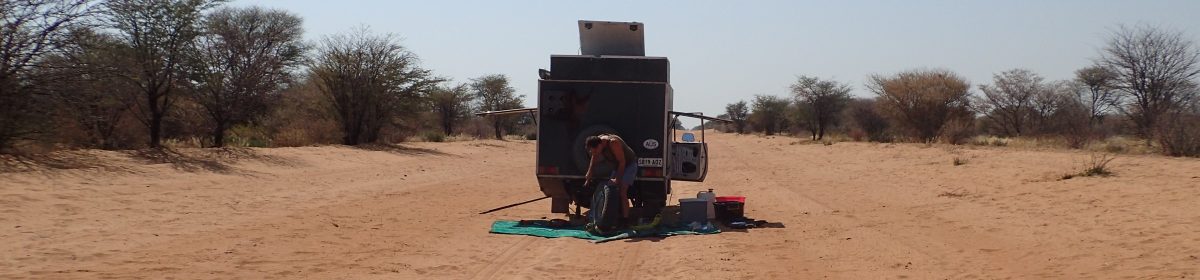
I had not looked at how far it was to Tsabong, and there was no way we would make it before dark, so we started looking for a wild camp. The second one on iOverlander was OK, and we camped behind some trees on a pretty quiet road.
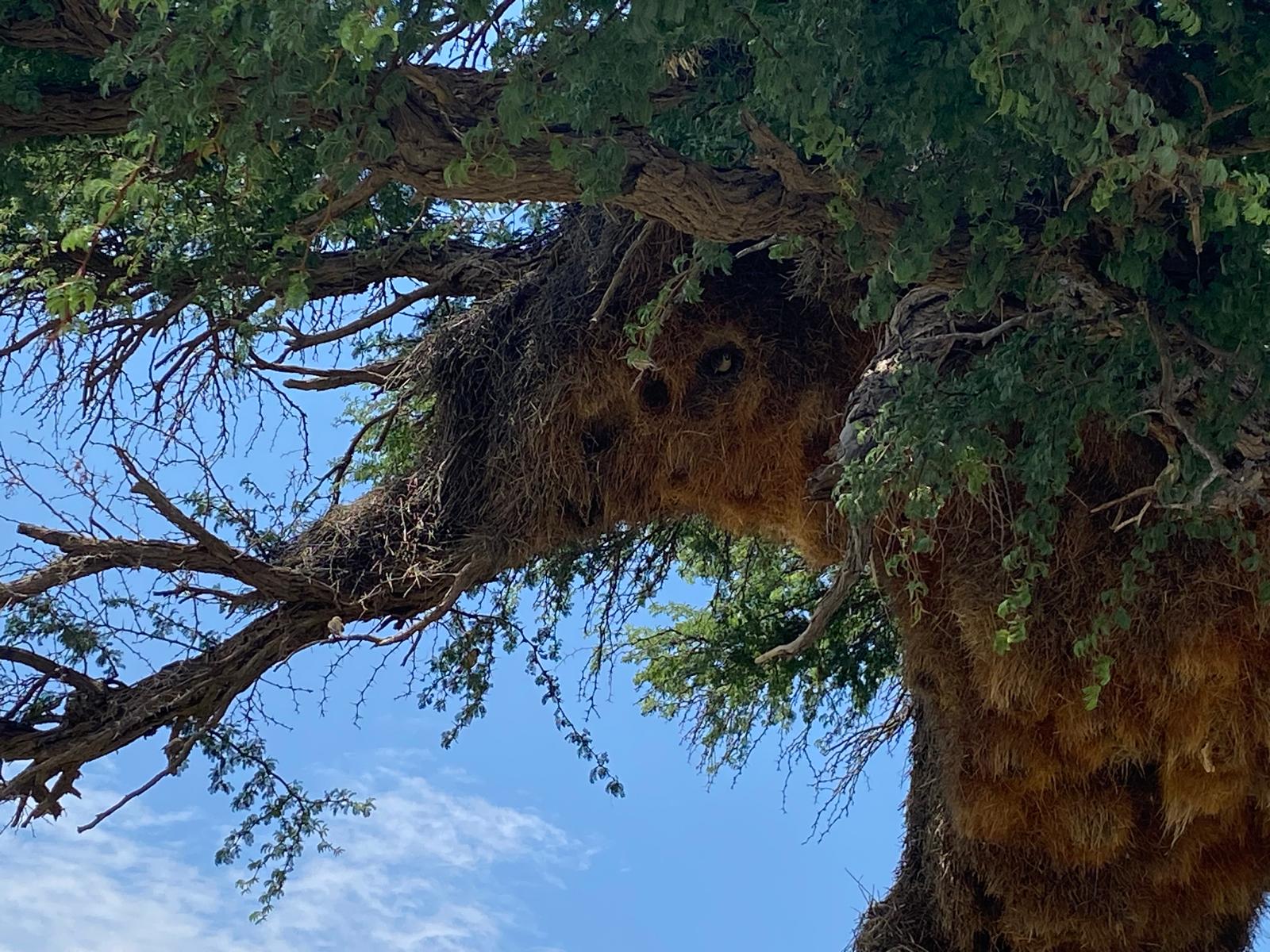
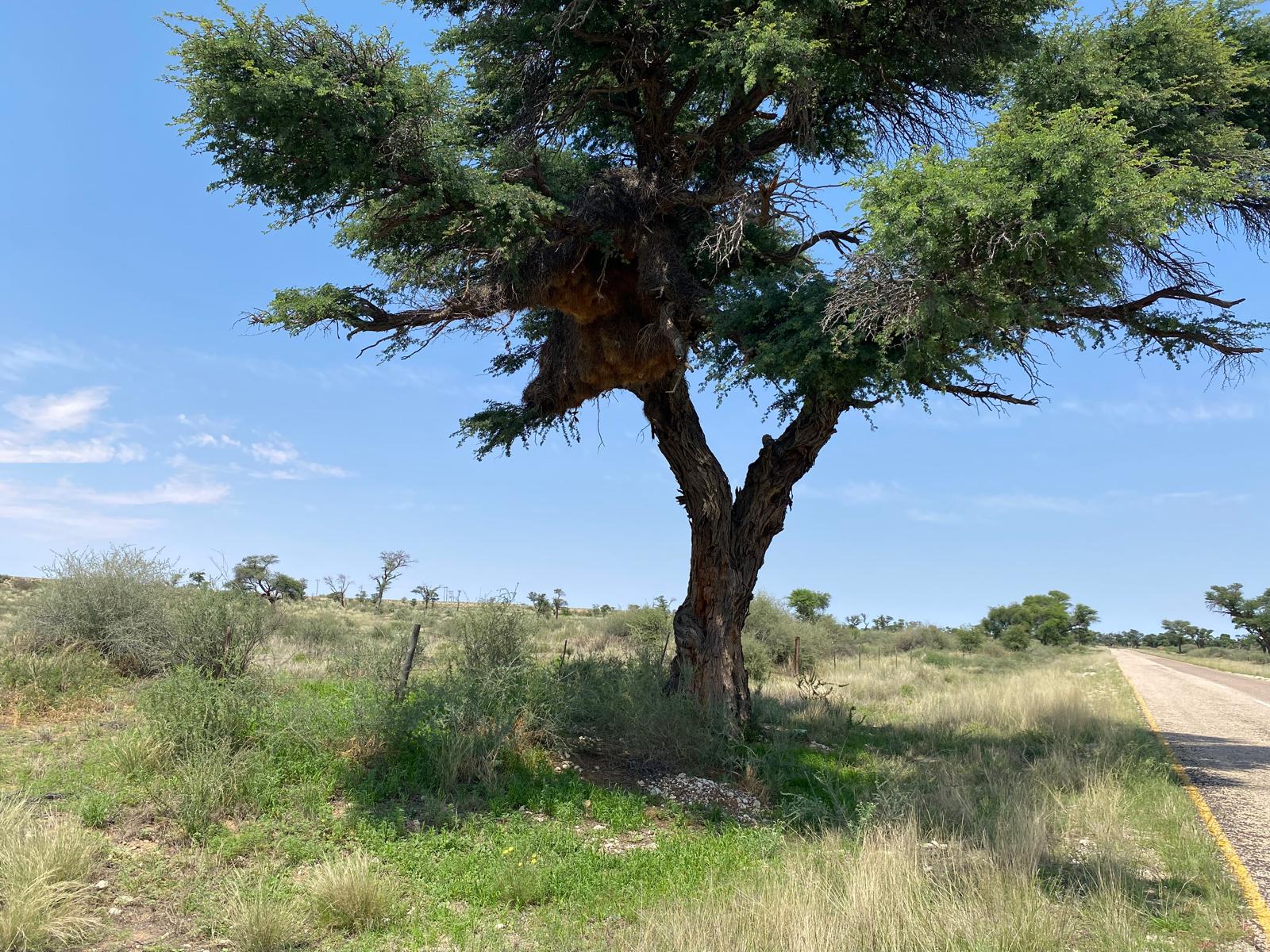
Weaver birds – communal nest
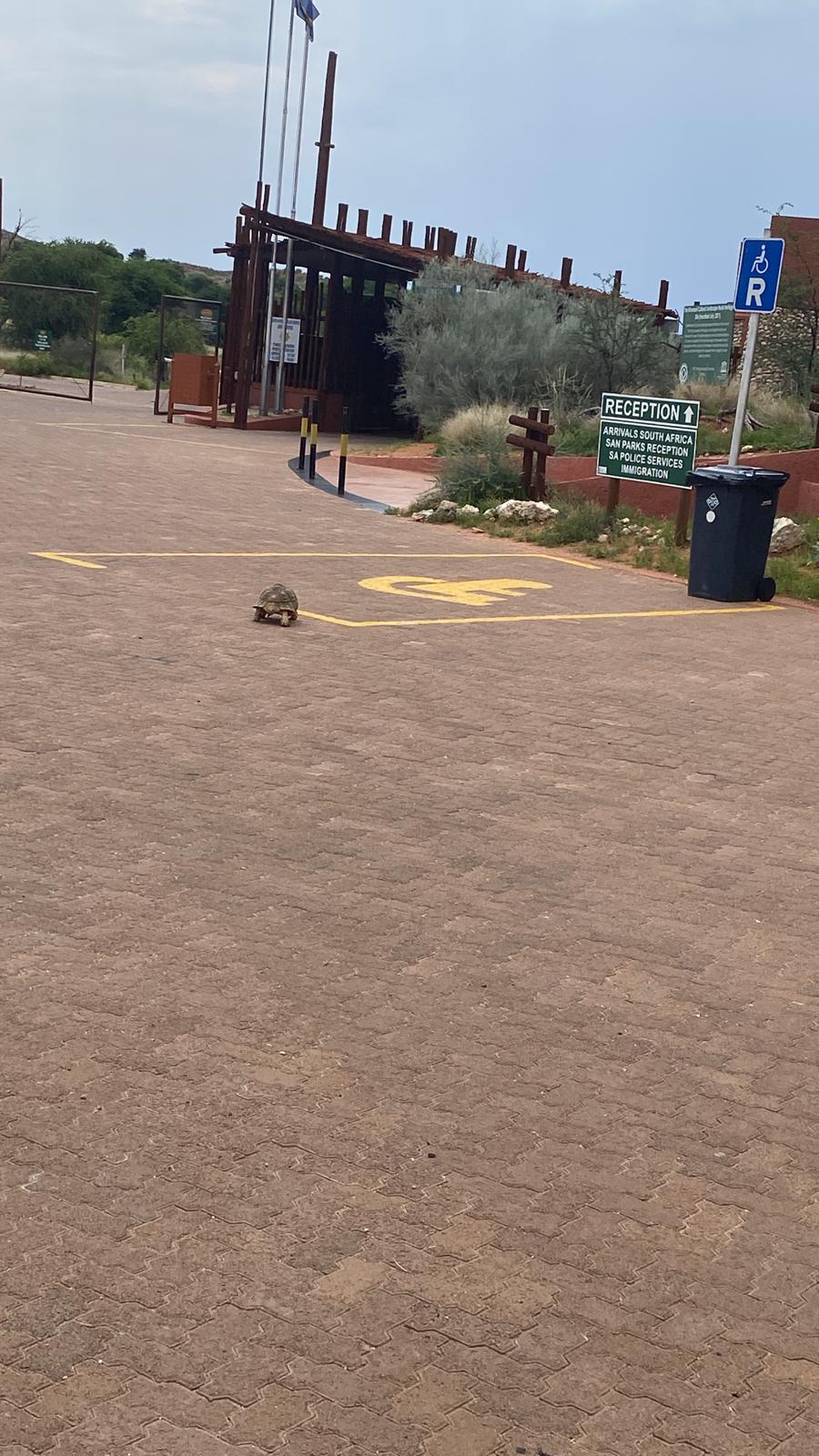
A tortoise wandering across the car park at Kgalagadi Transfrontier Park reception
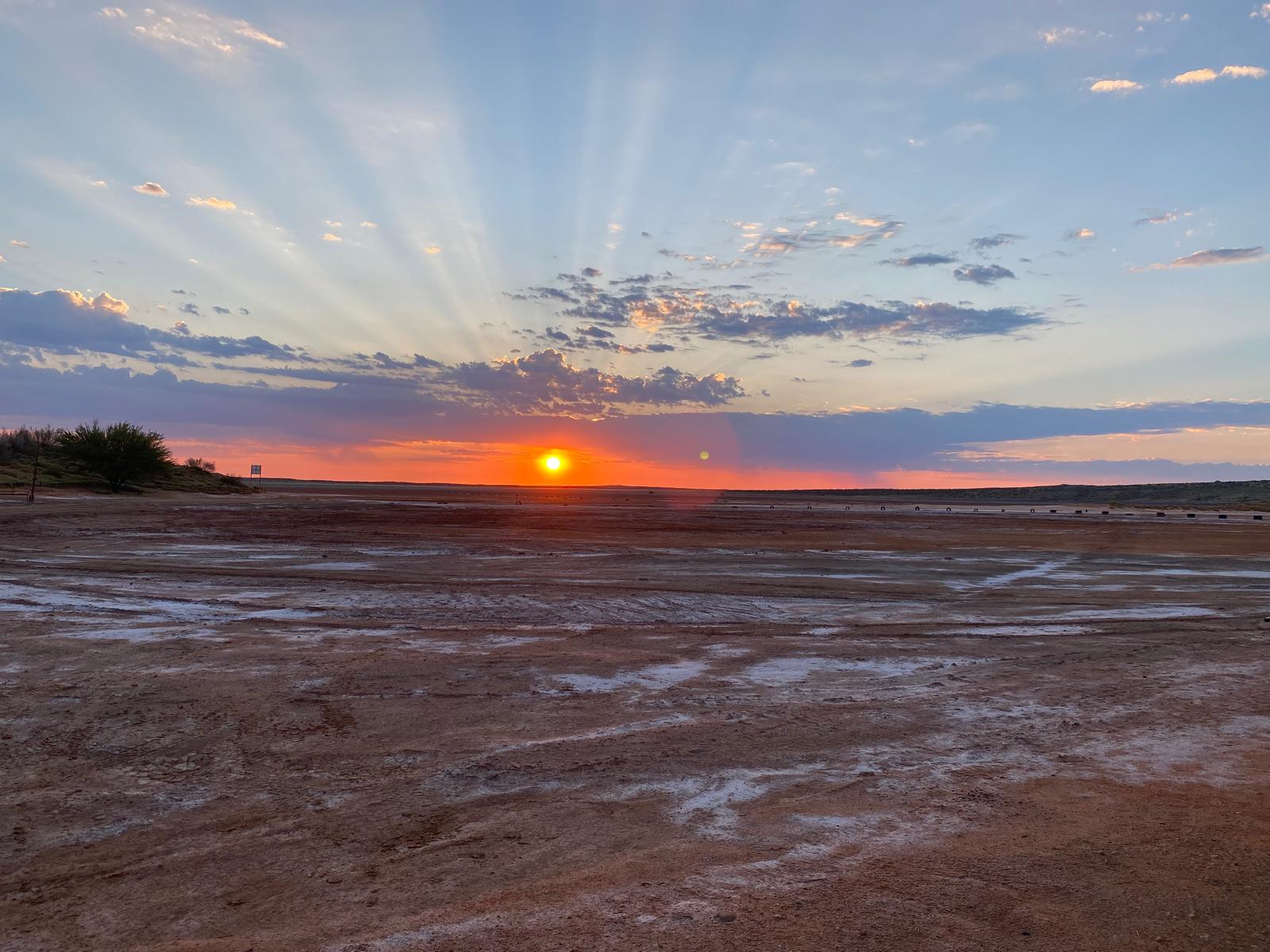
We had a big target today, all the way to Upington 387km away, so we left early before 7am. It was a hot day around 37C. We did well getting to Upington at 1:30pm . We got purified water for our trip to Botswana. Then supplies from PnP, and loads of fuel.
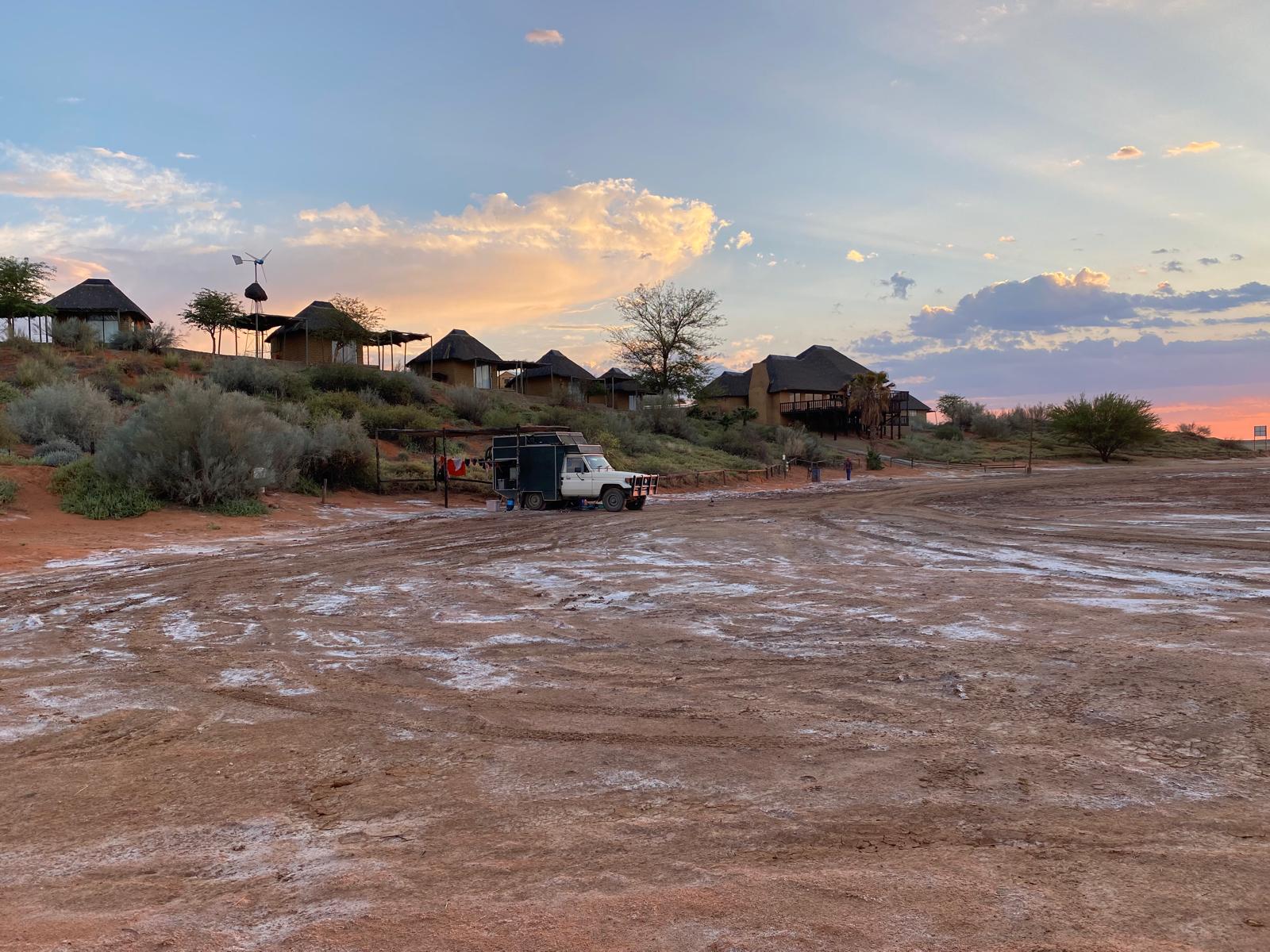
We then headed another 110km north towards Kgalagadi Transfrontier Park and Goerpan Lodge. It was about 4km off the main road. It was a campsite on a slightly muddy pan. It was pretty warm and we had showers that just used the fairly warm cold water in the ablutions.
Sunset at Goerpan LodgeDawn at Goerpan LodgeGoerpan Lodge
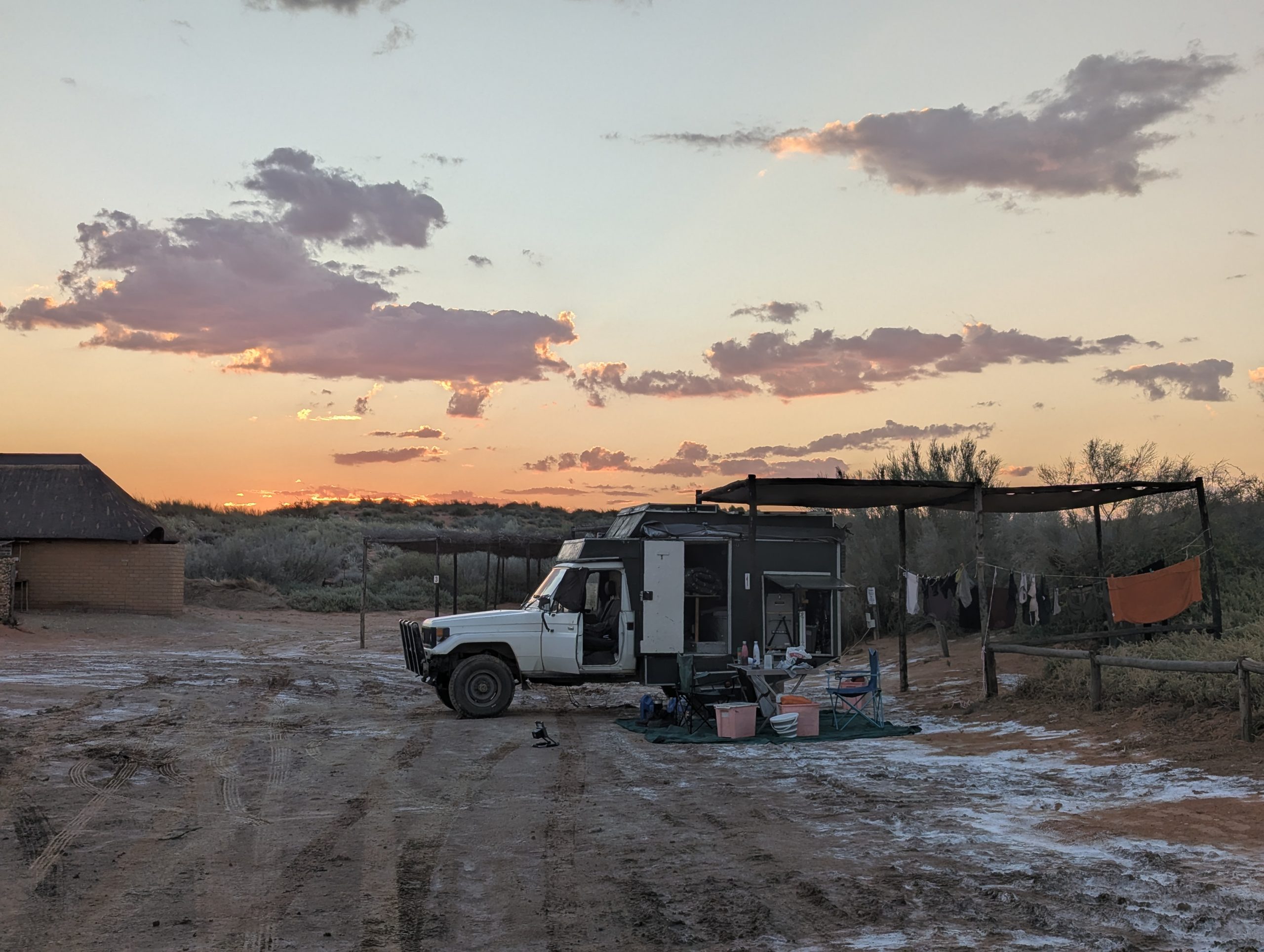
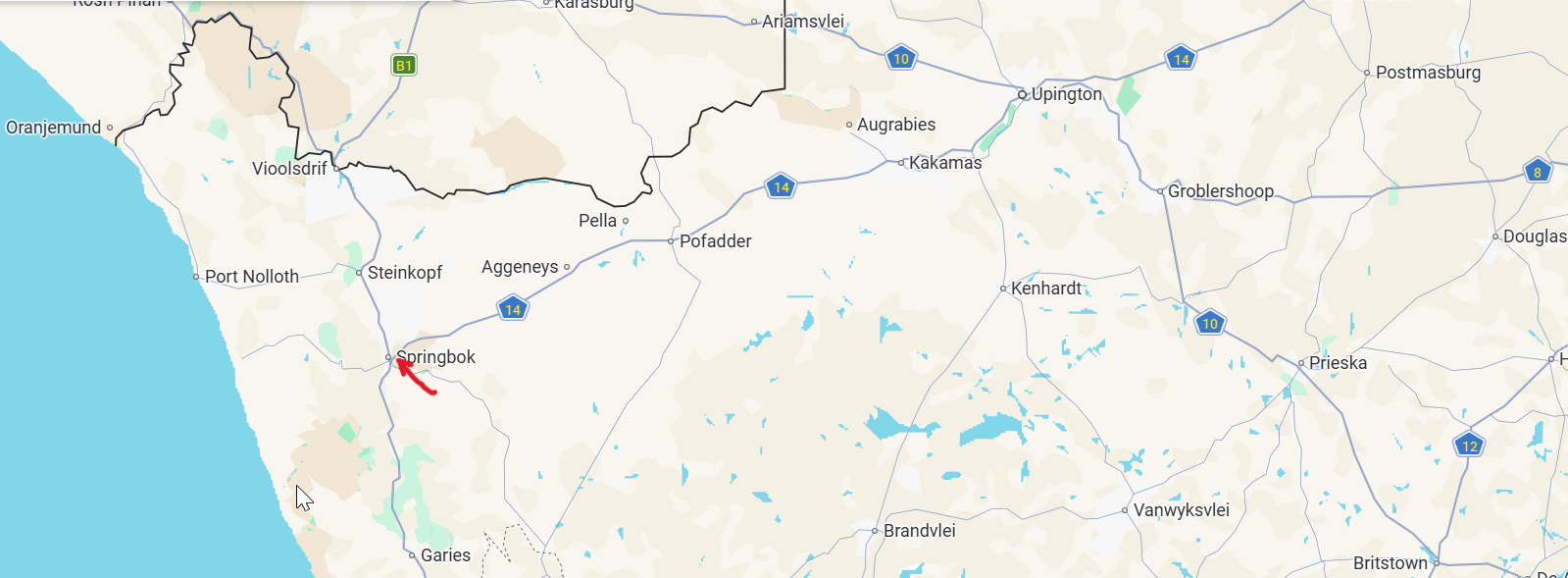
We went for a walk along Hondekip Bay beach and a small drive north. Hondekip Bay is not the fancy beach destination, it feels like a remote town at the end of the earth. More Coober Pedy than Victor Harbor. We headed off along the rough road to the N7 highway. We wanted to get east of Springbok, and Liz tried contacting three different campground but received no replies. So we had to stop at Springbok, and stayed at the Springbok Caravan Park.
We talked to a neighbor in the morning at Strandfontein. We had read on iOverlander that someone had tried to cross the border that we were planning to cross into Botswana, and they had been refused. The refusal was because they were a foreign vehicle, and they were no longer allowed over small border crossings. Our neighbour suggested that we cross into the Kgalagadi Transfrontier Park, where they would be used to foreign vehicles. So we decided that’s what we would try.
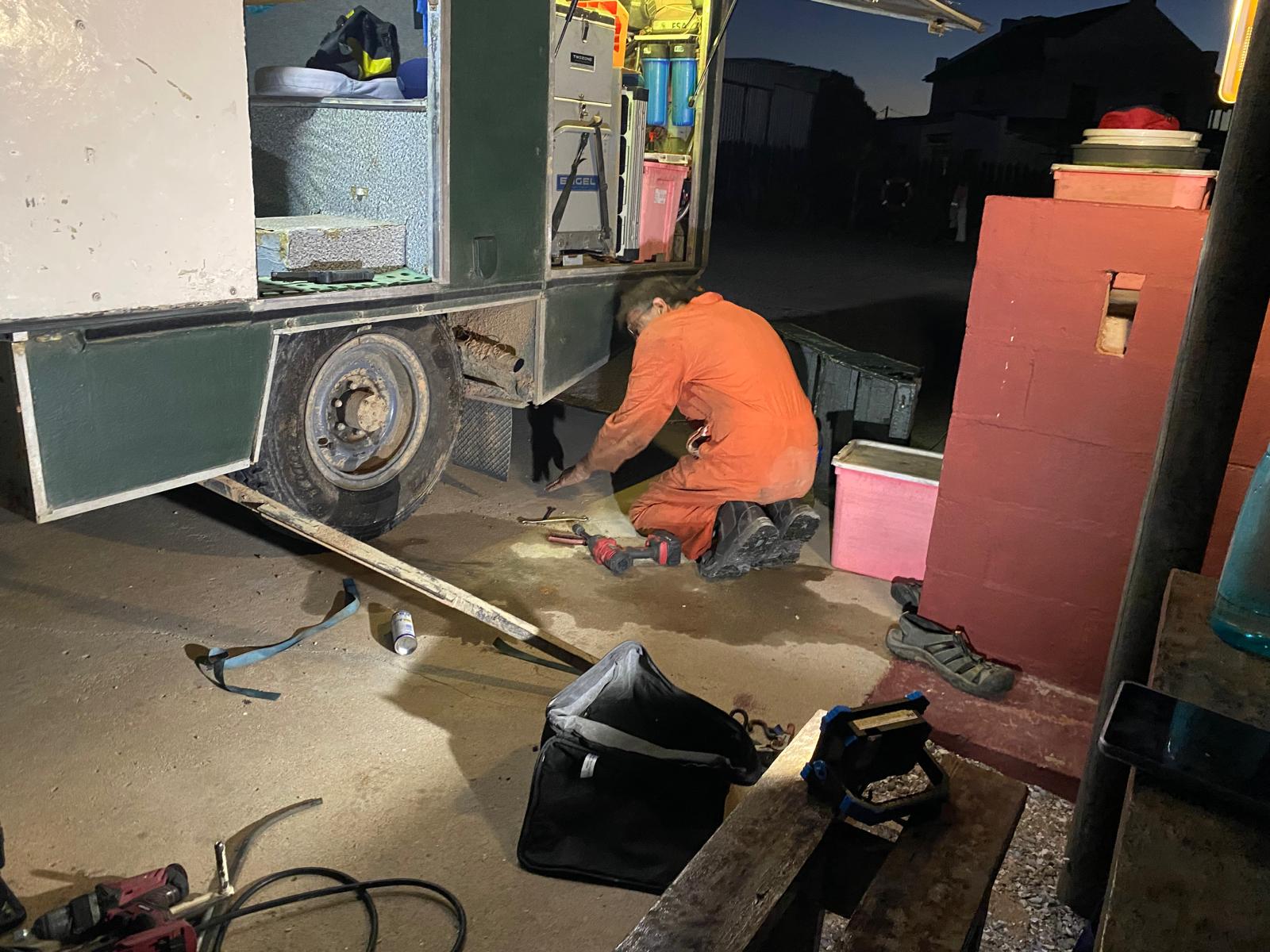
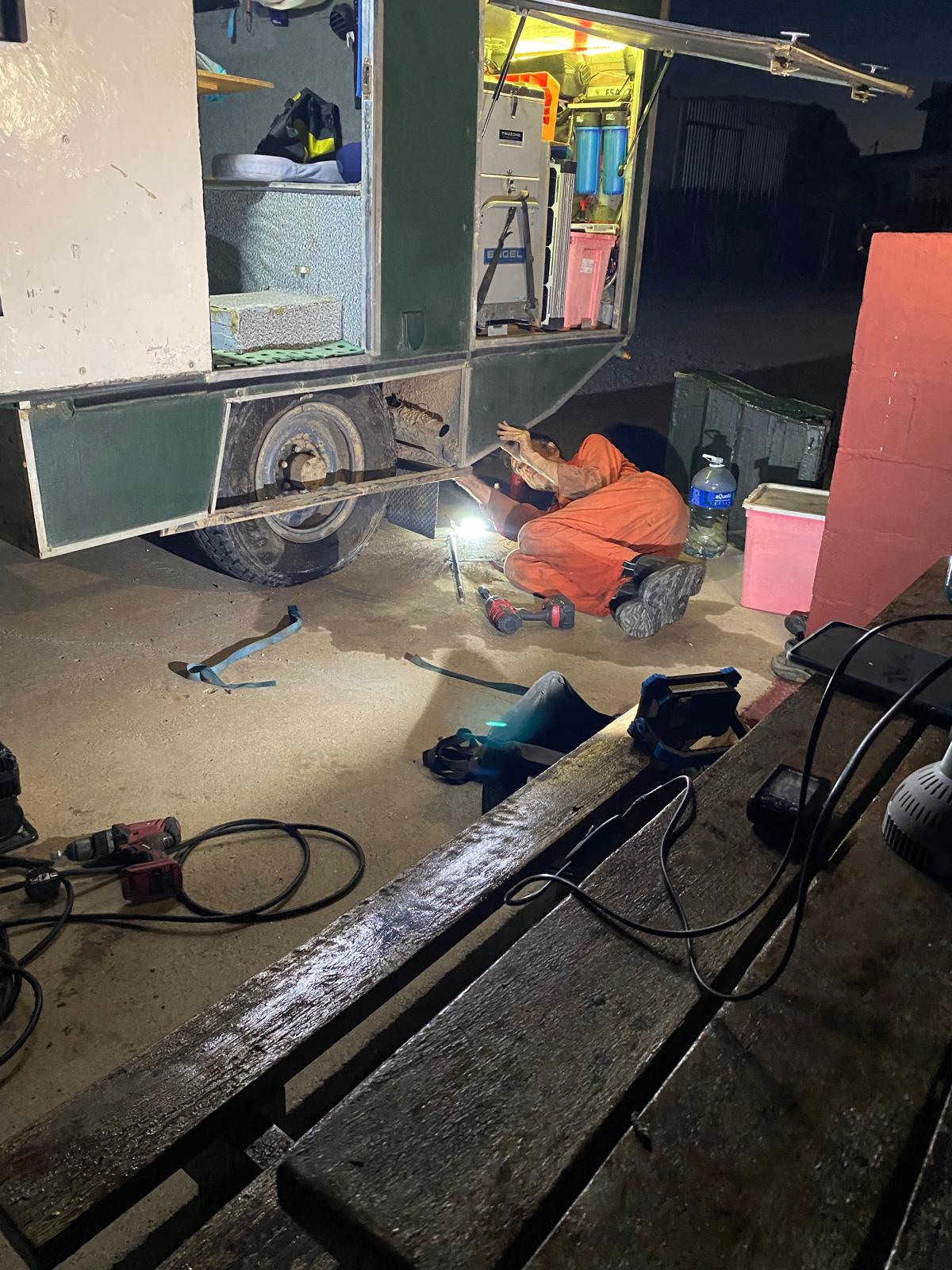
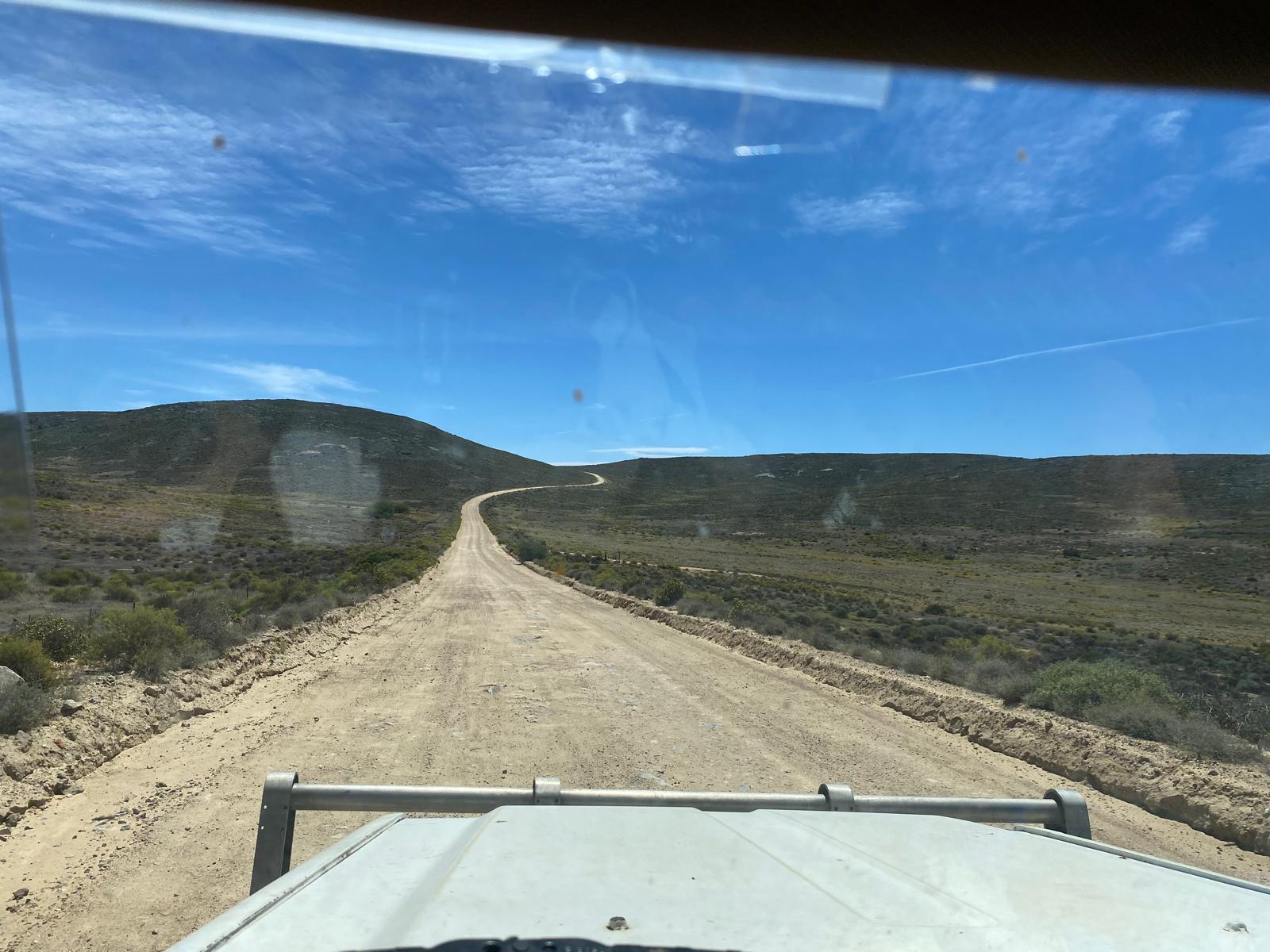
However first up to Hondeklip Bay, our last stop on the Alantic Ocean. It was back to the N7 highway heading north. We stopped for fuel at Garies and then headed off along about 20km of bitumen road, then it was 55km of sometimes rough corrugated dirt to Hondeklip Bay. We arrived at Hondeklip Bay and tried to get into a campsite that we had found on Google. However phone calls went nowhere. Then the tyre alarm went off, and we had a leaking rear tyre. We pumped it up and got to the camping ground listed on iOverlander. It was then a couple of hours removing the tyre dismantling the split rim and fixing the puncture.
Fixing the flat tyreTyre fixThe rough road to Hondeklip Bay
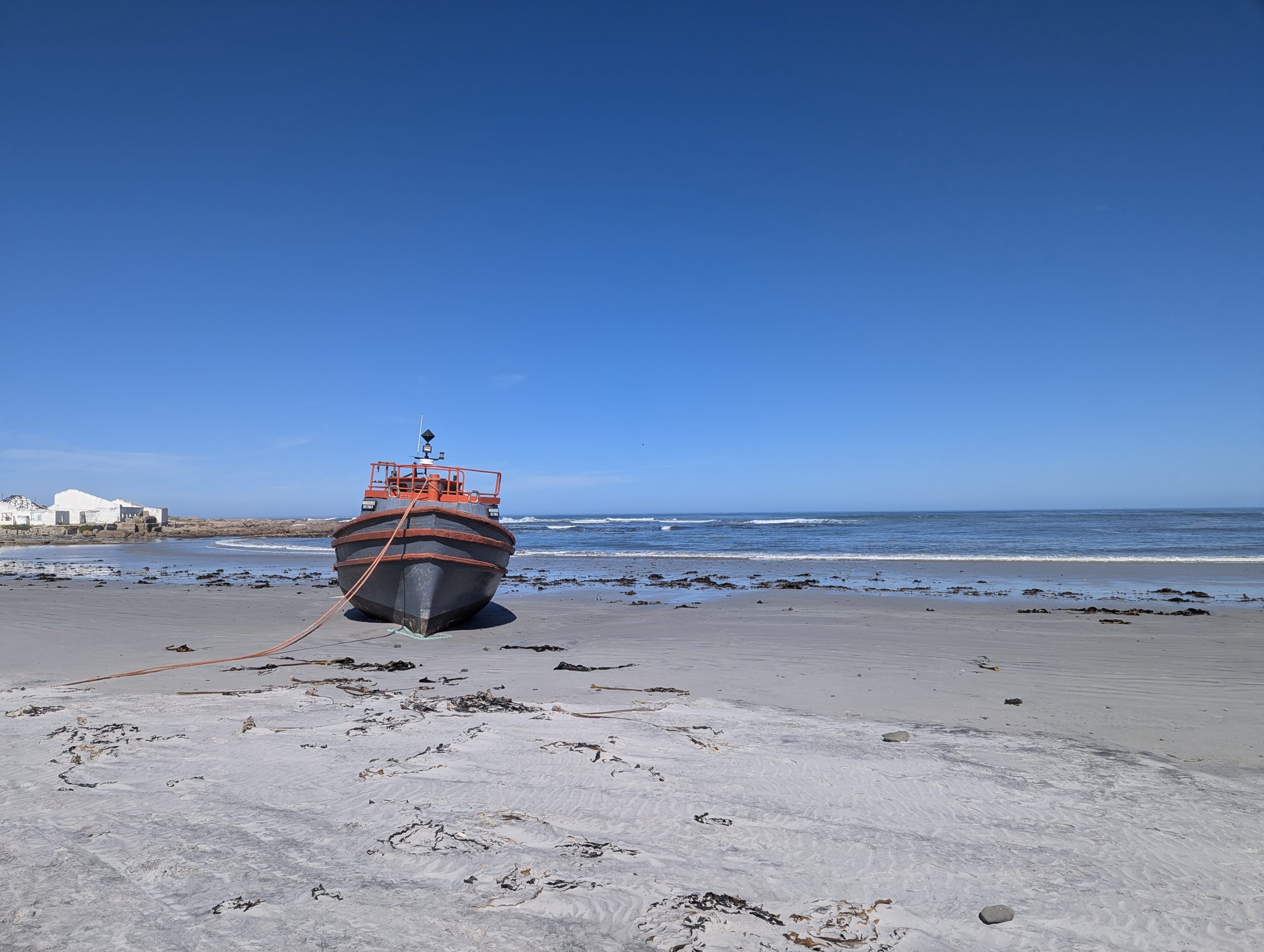
A boat on Hondeklip Bay
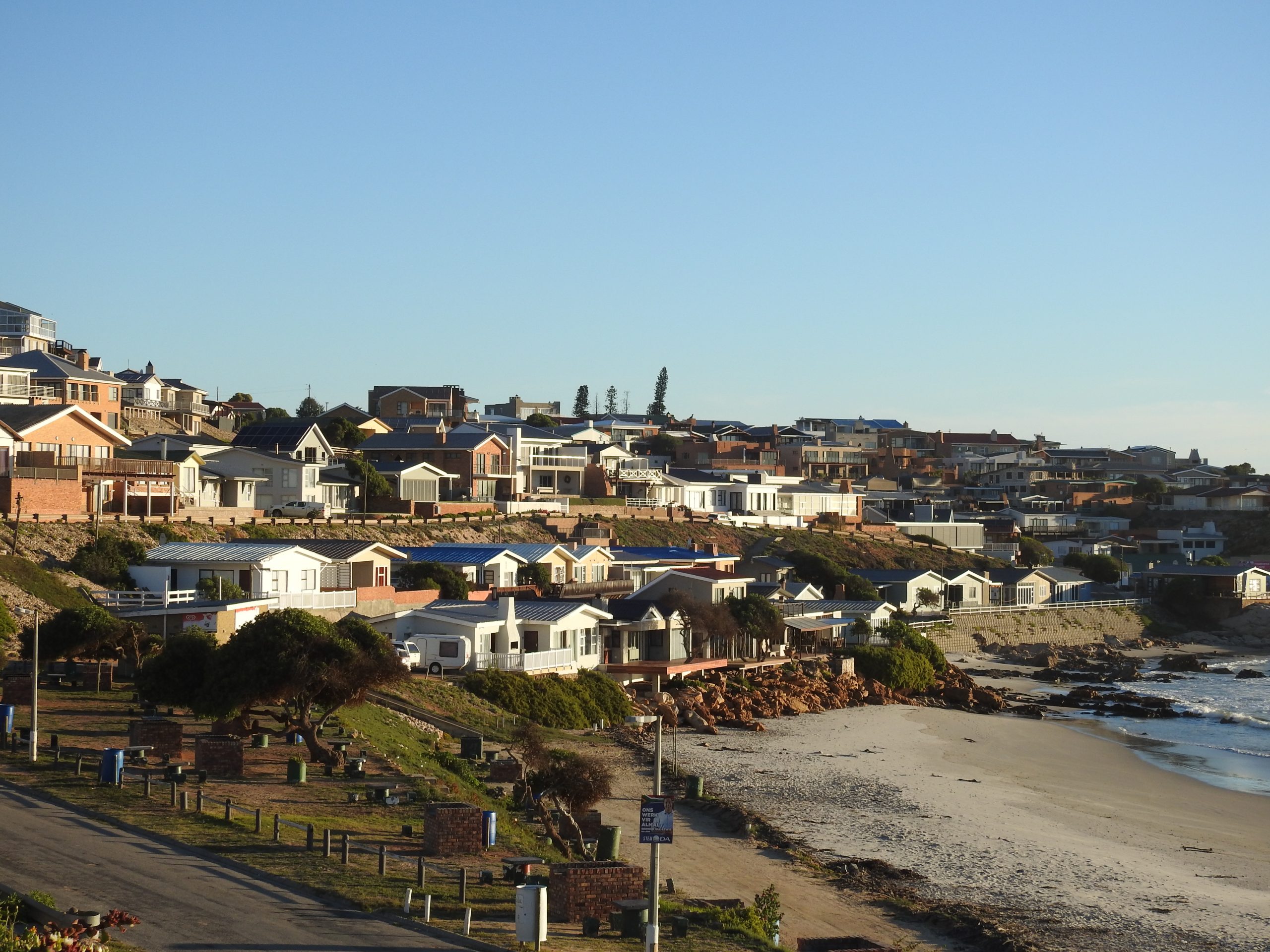
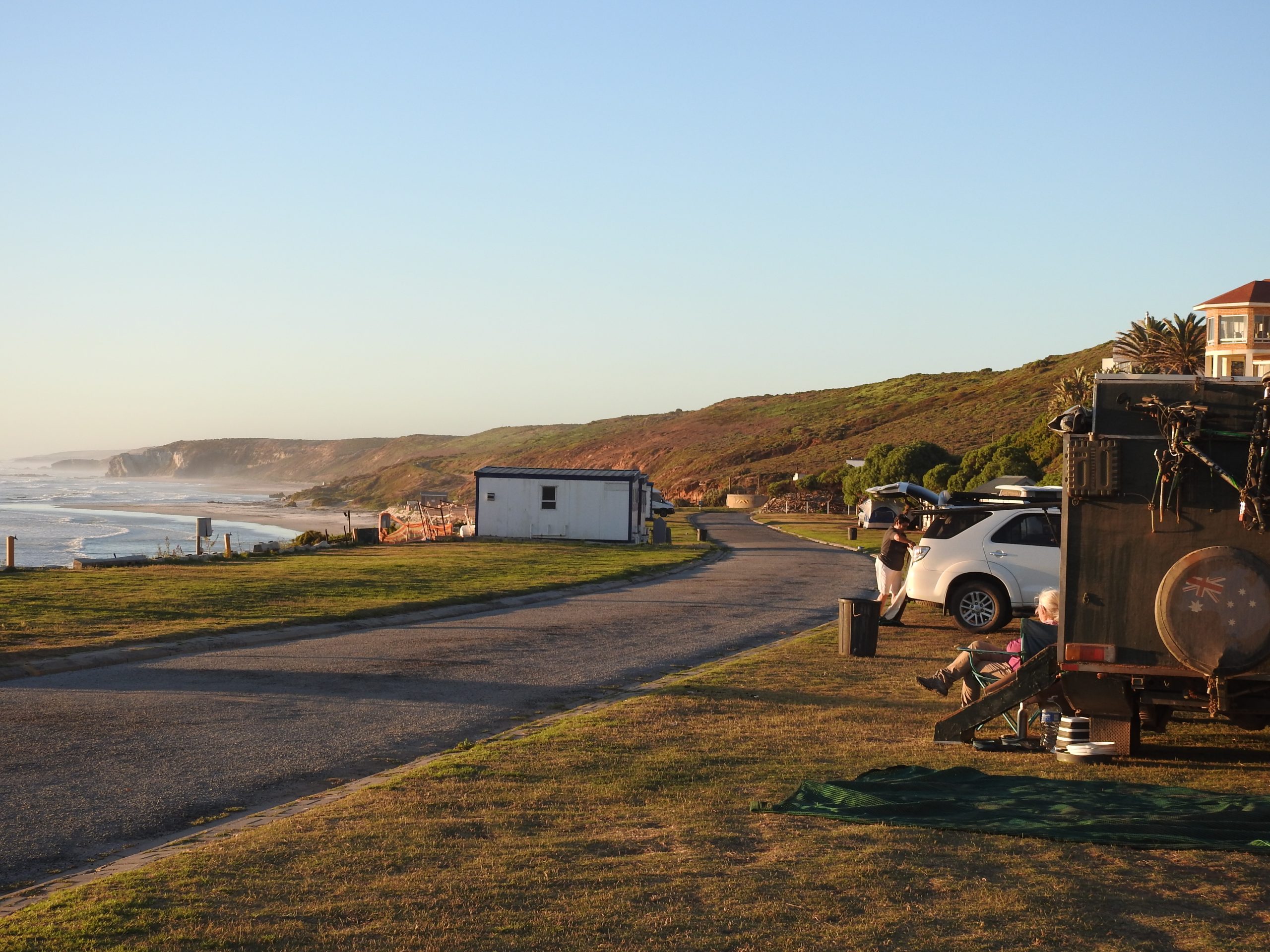
We headed to the local supermarket for supplies then headed north along the coast. We stopped at Langebaan on the way north, and Elands Bay for lunch. Then it was a dirt road with some detours to Strandfontein. We made it to the Municipal office before 5pm to get a key to a private ensuite for our campsite. The campsite had good views over the bay, with some fancy houses on the southern side.
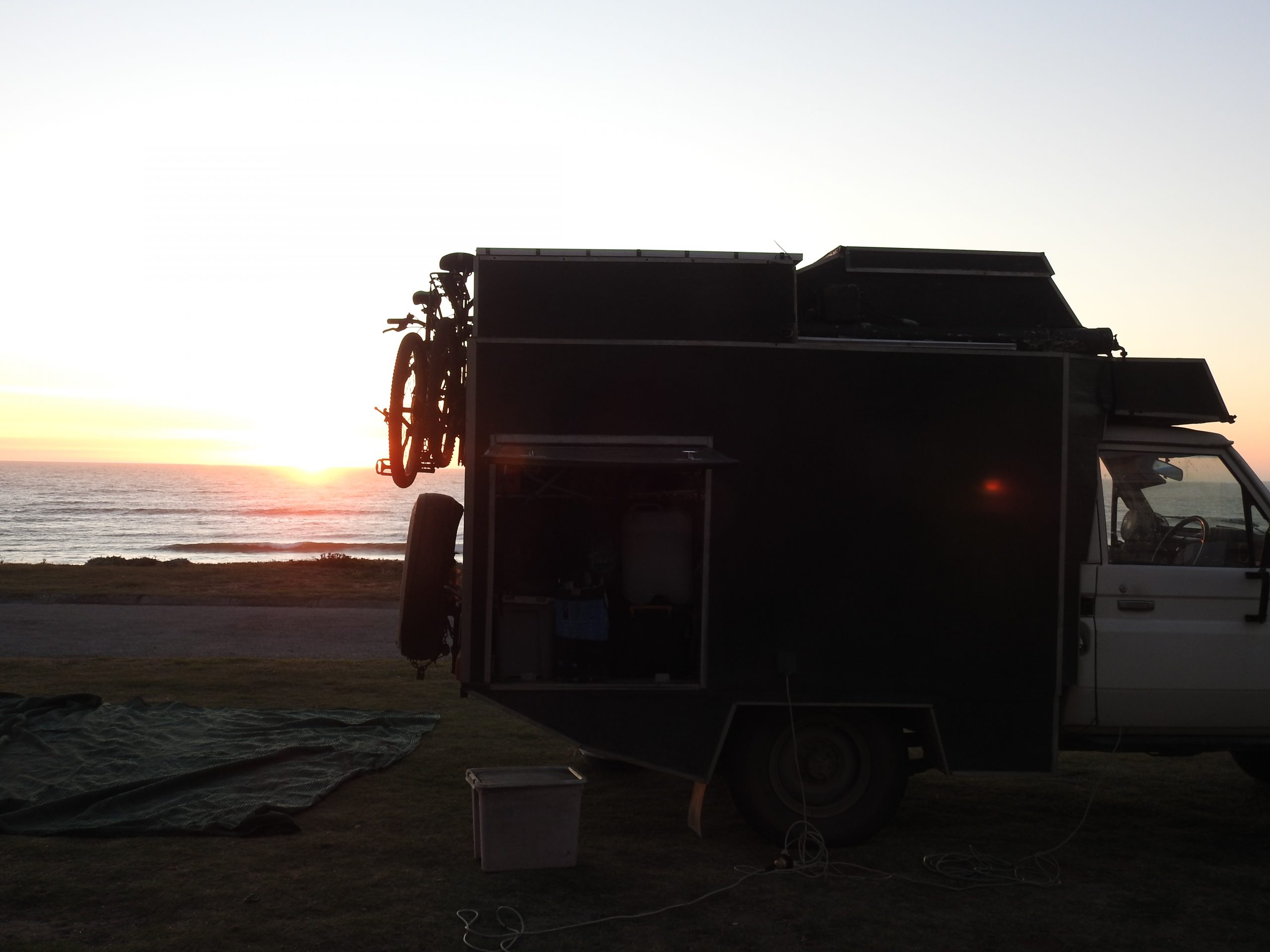
Strandfontein, the expensive housesCampsite at StrandfonteinSunset at Stranfontein