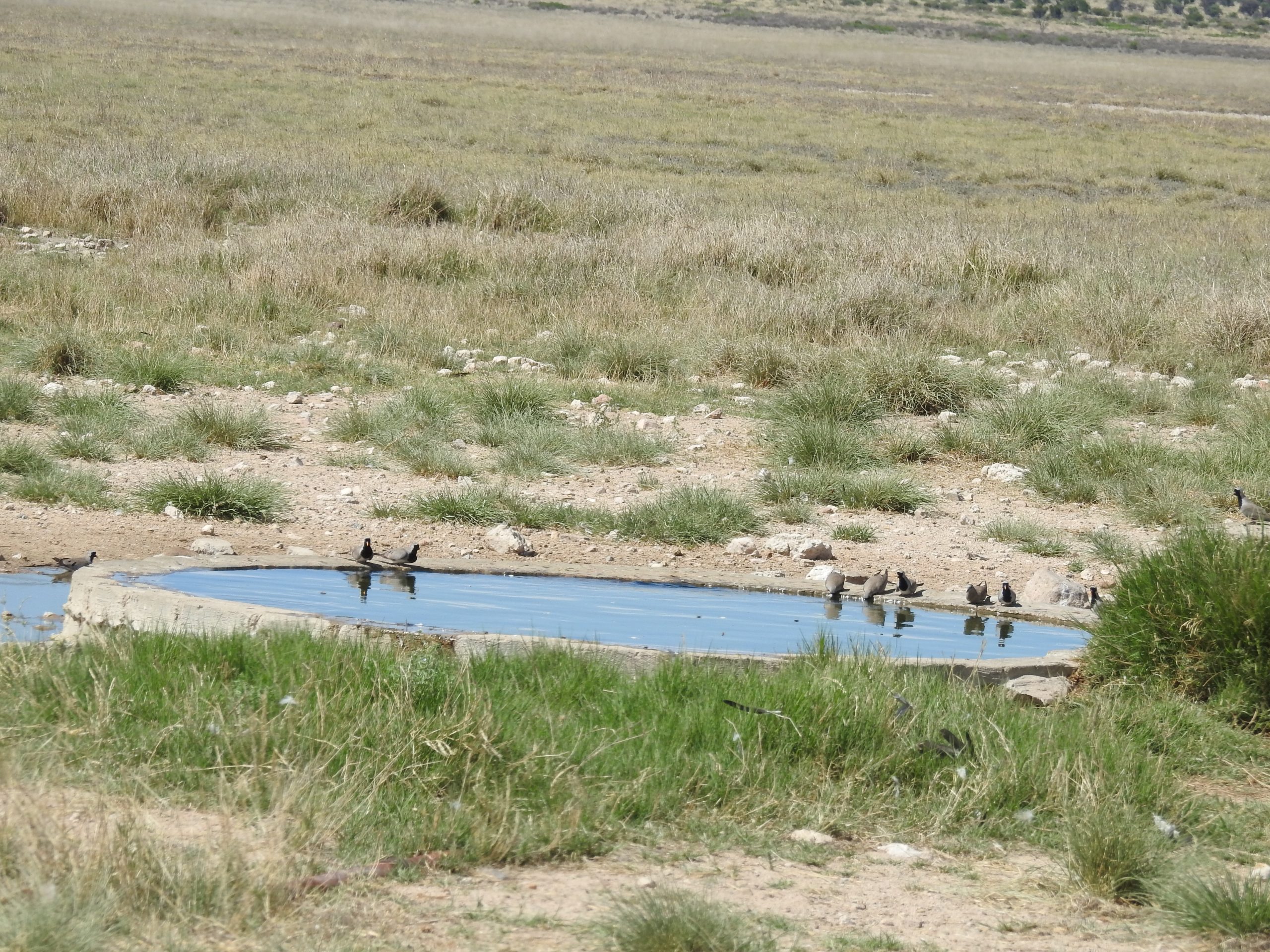
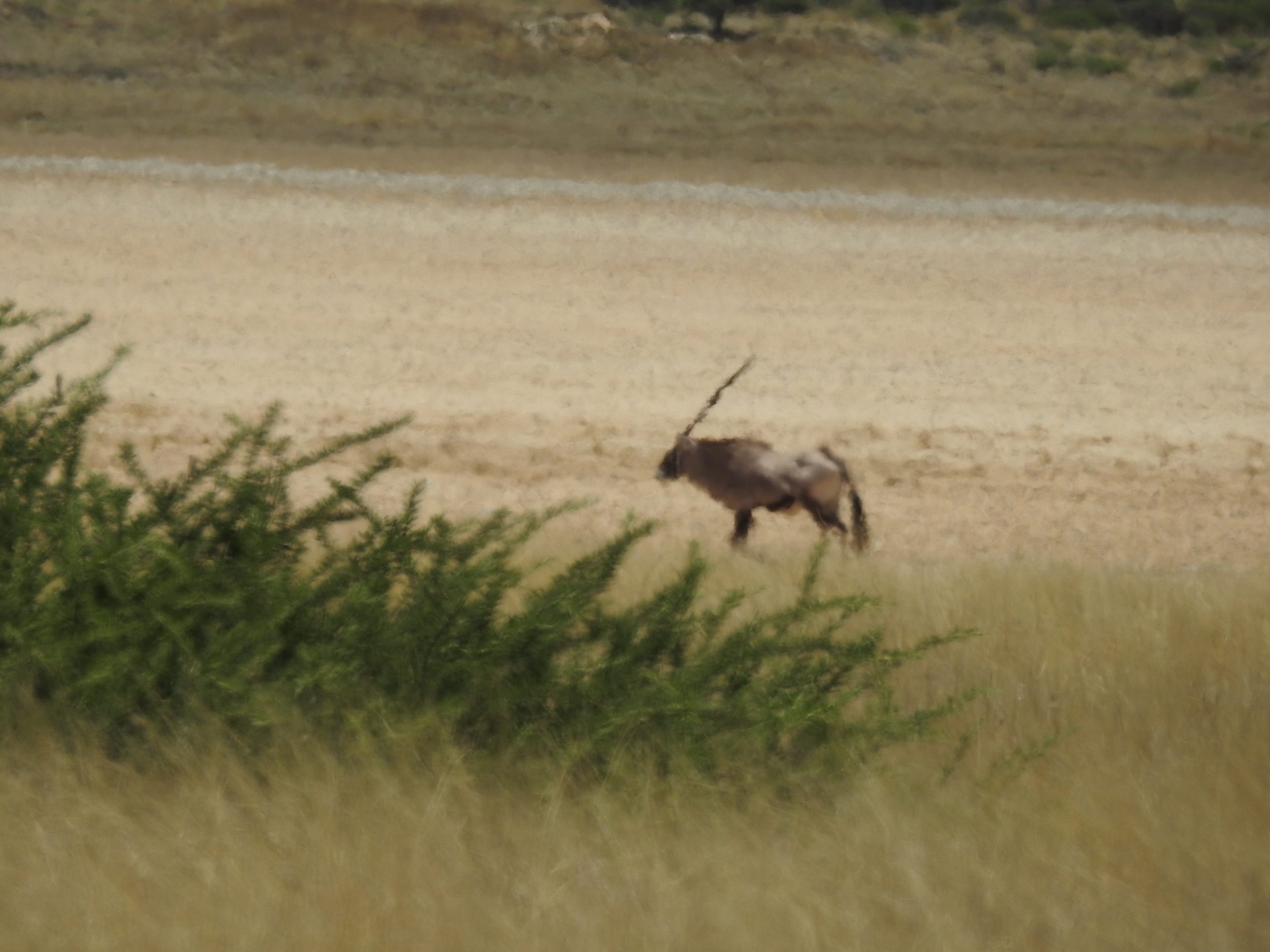
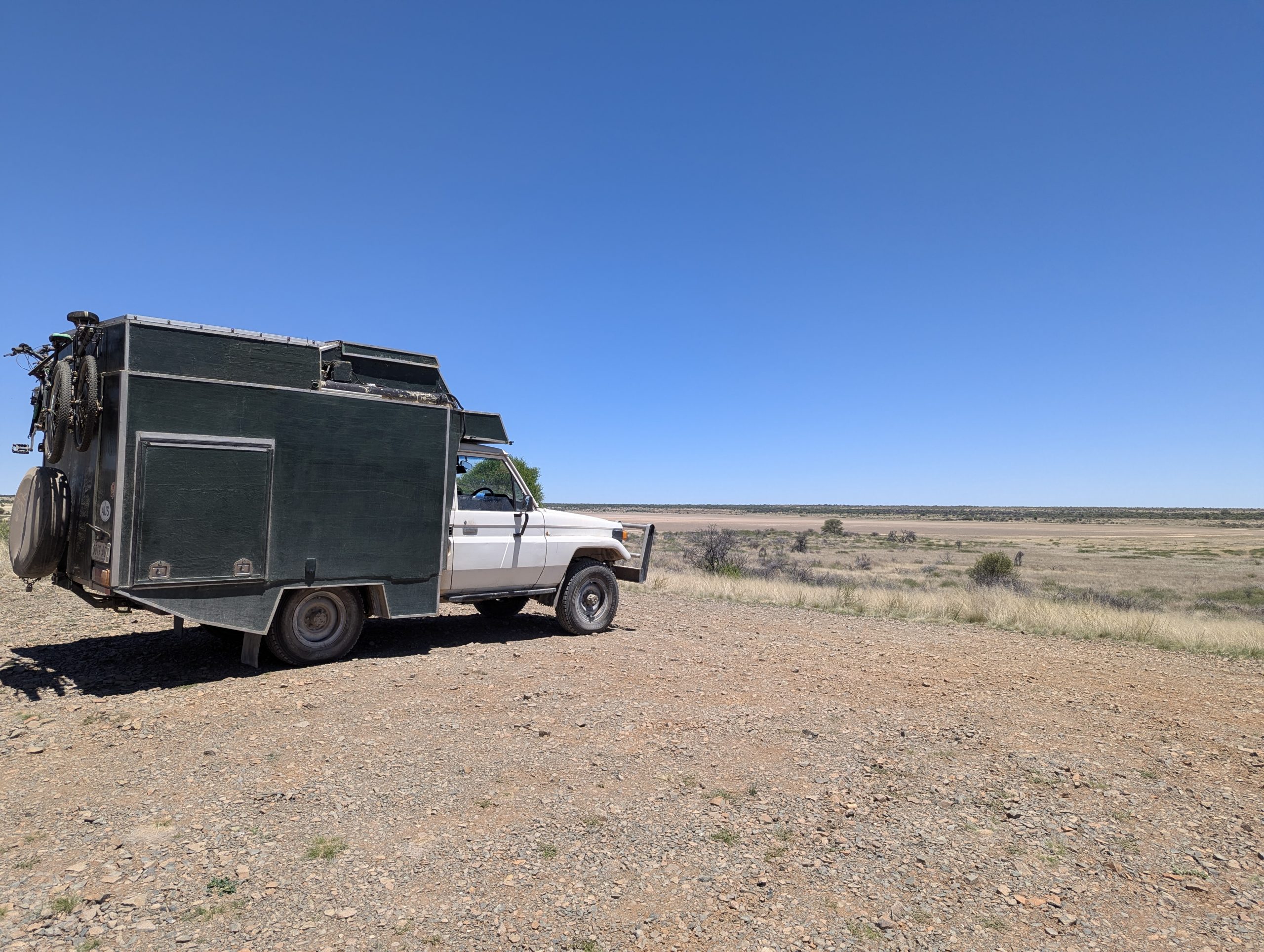
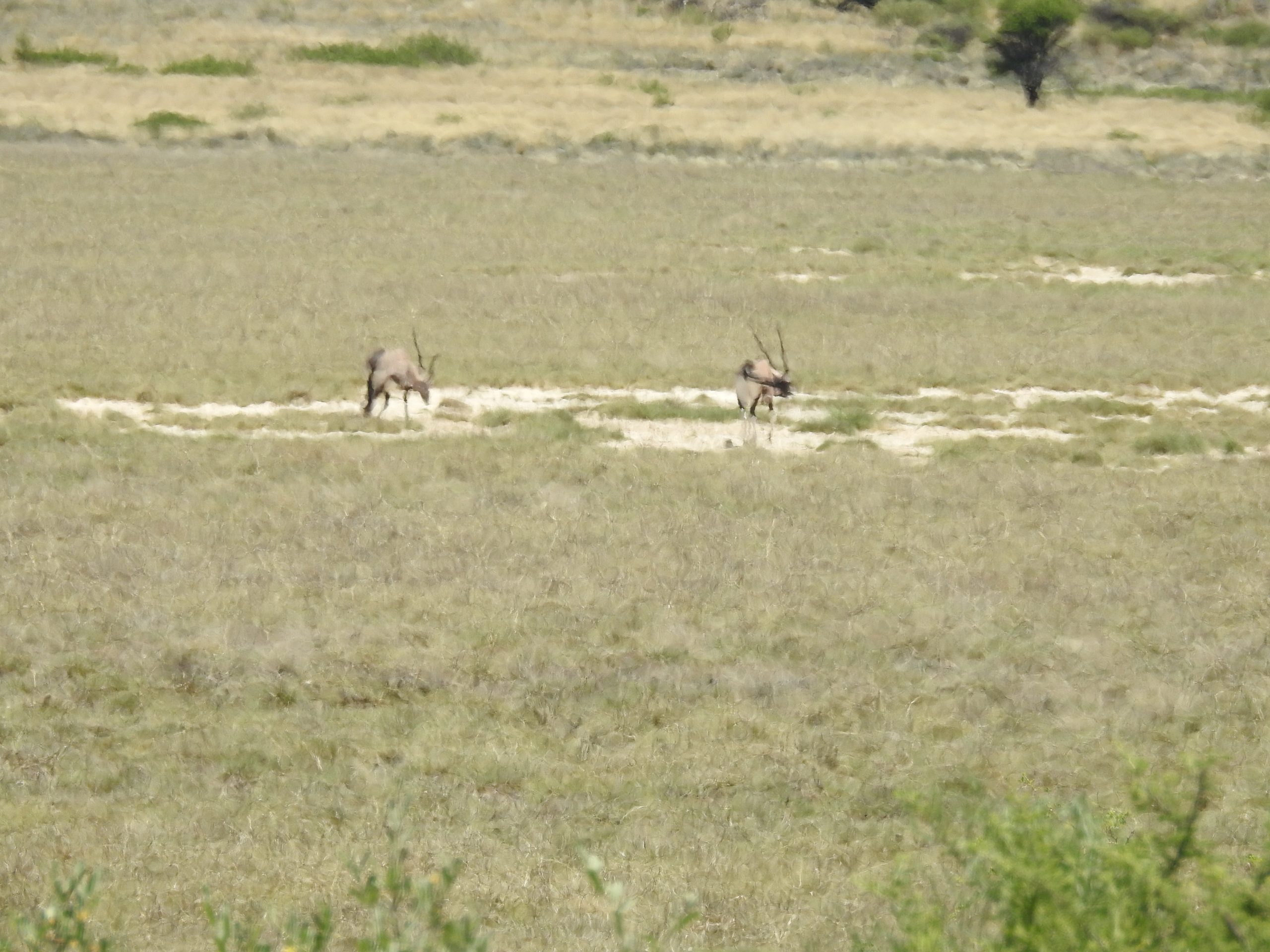
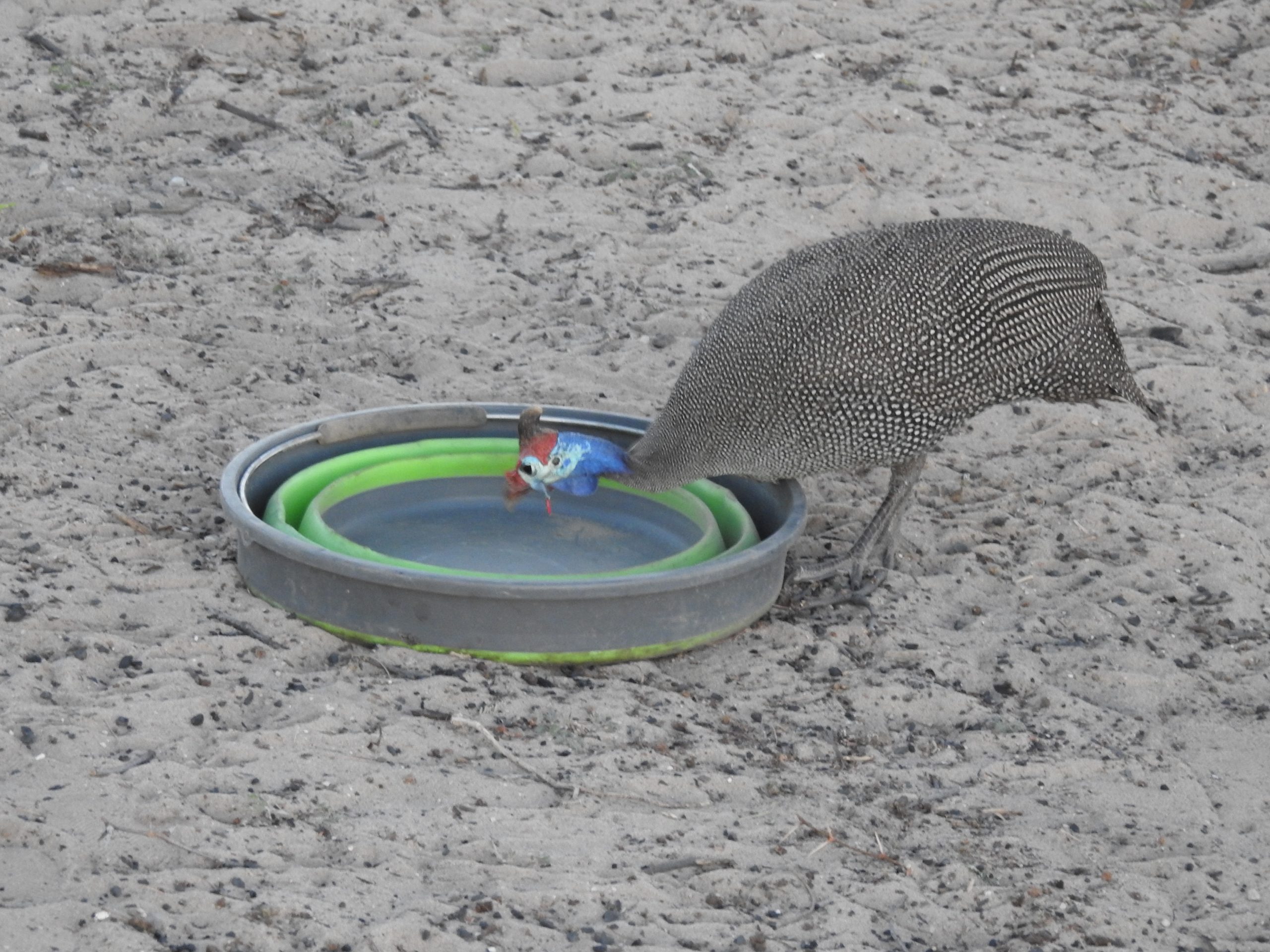
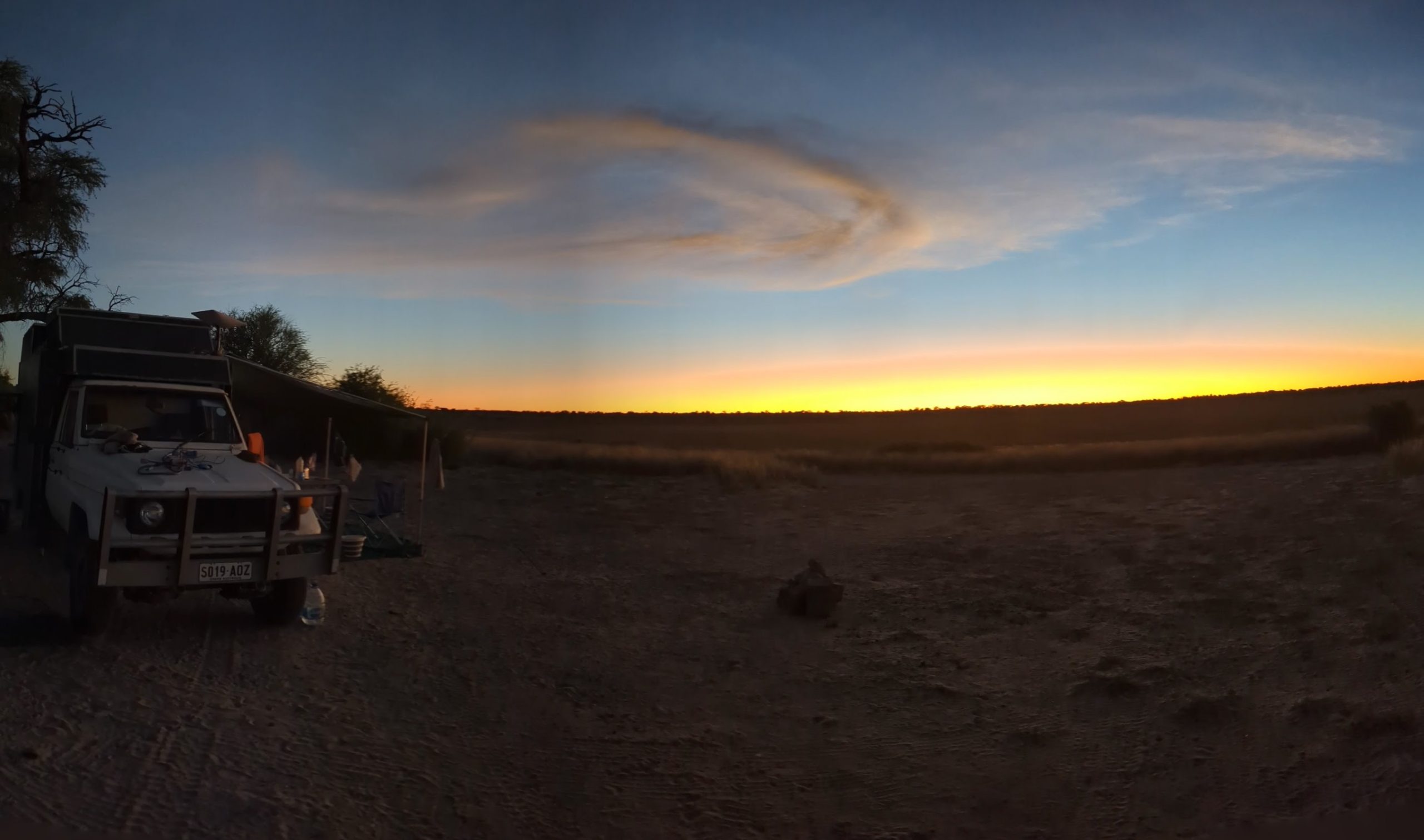
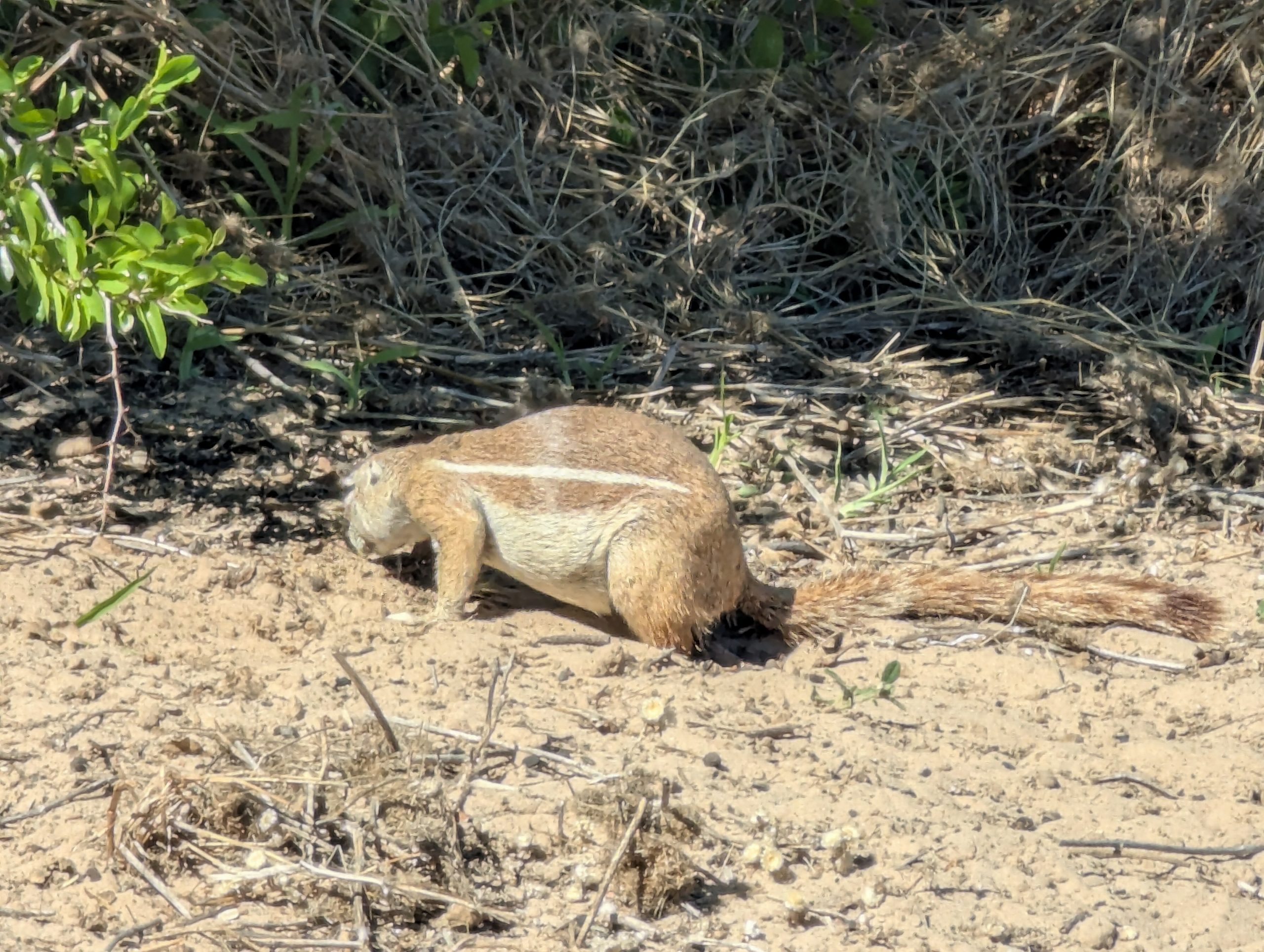
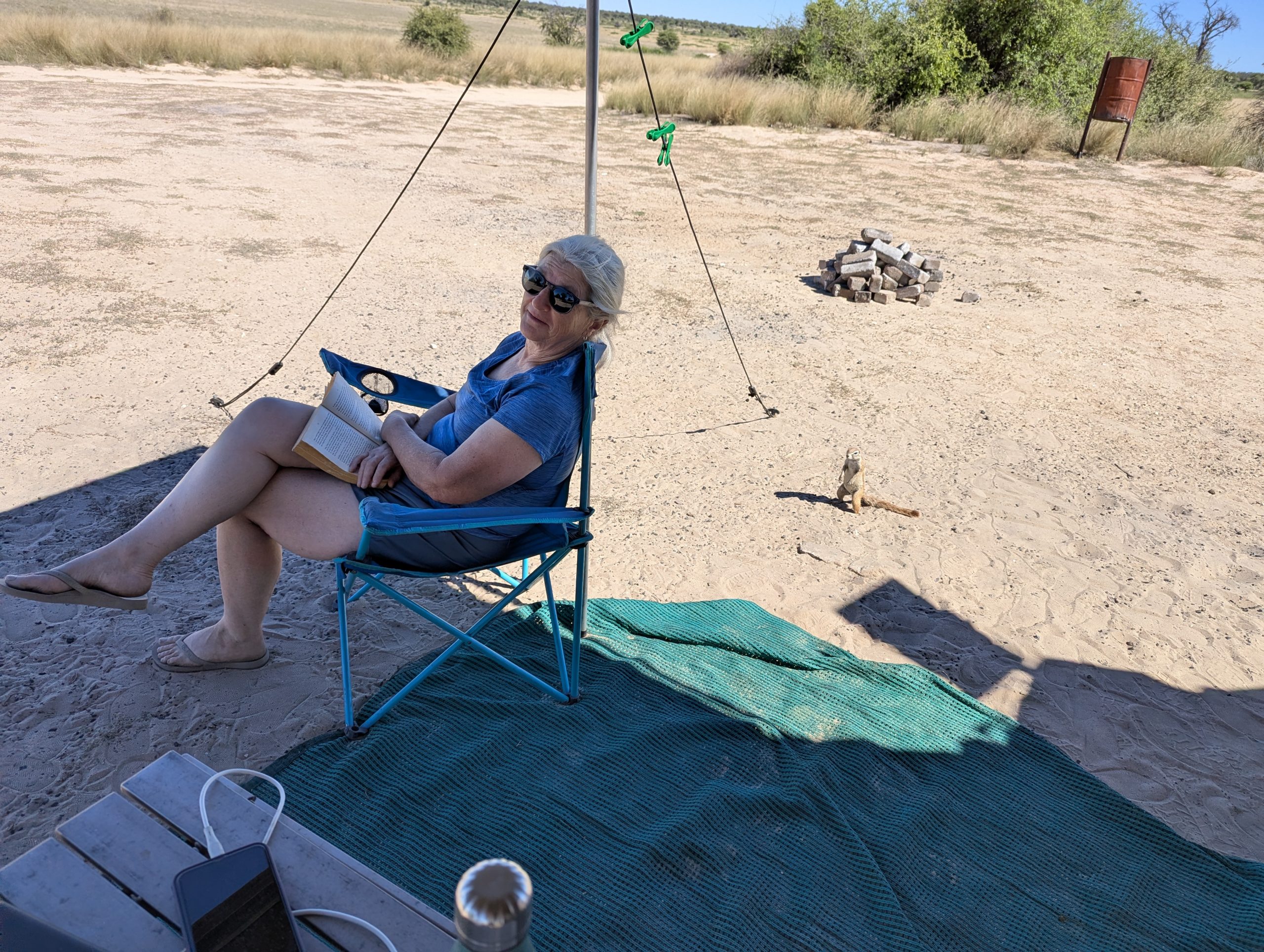
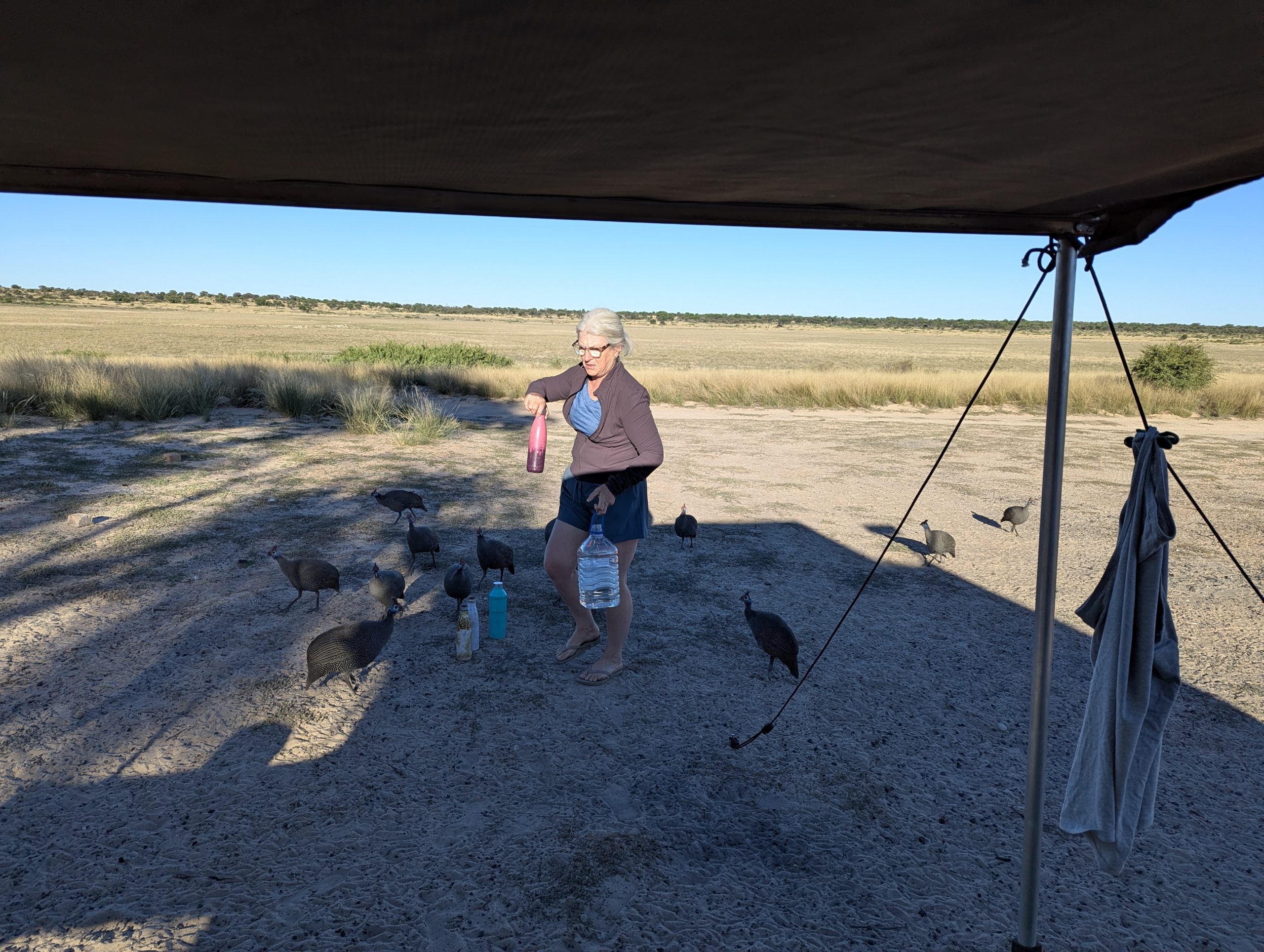
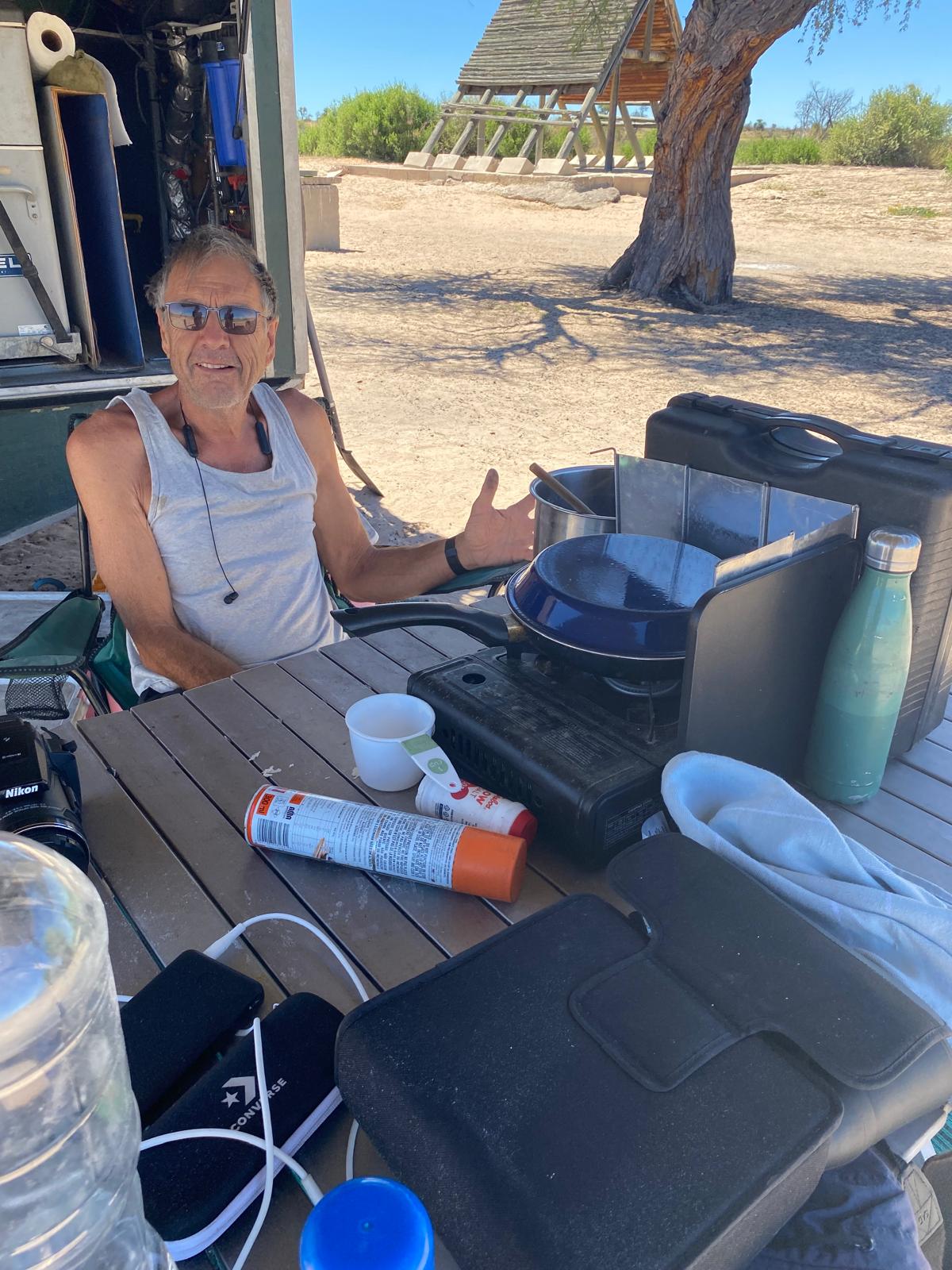
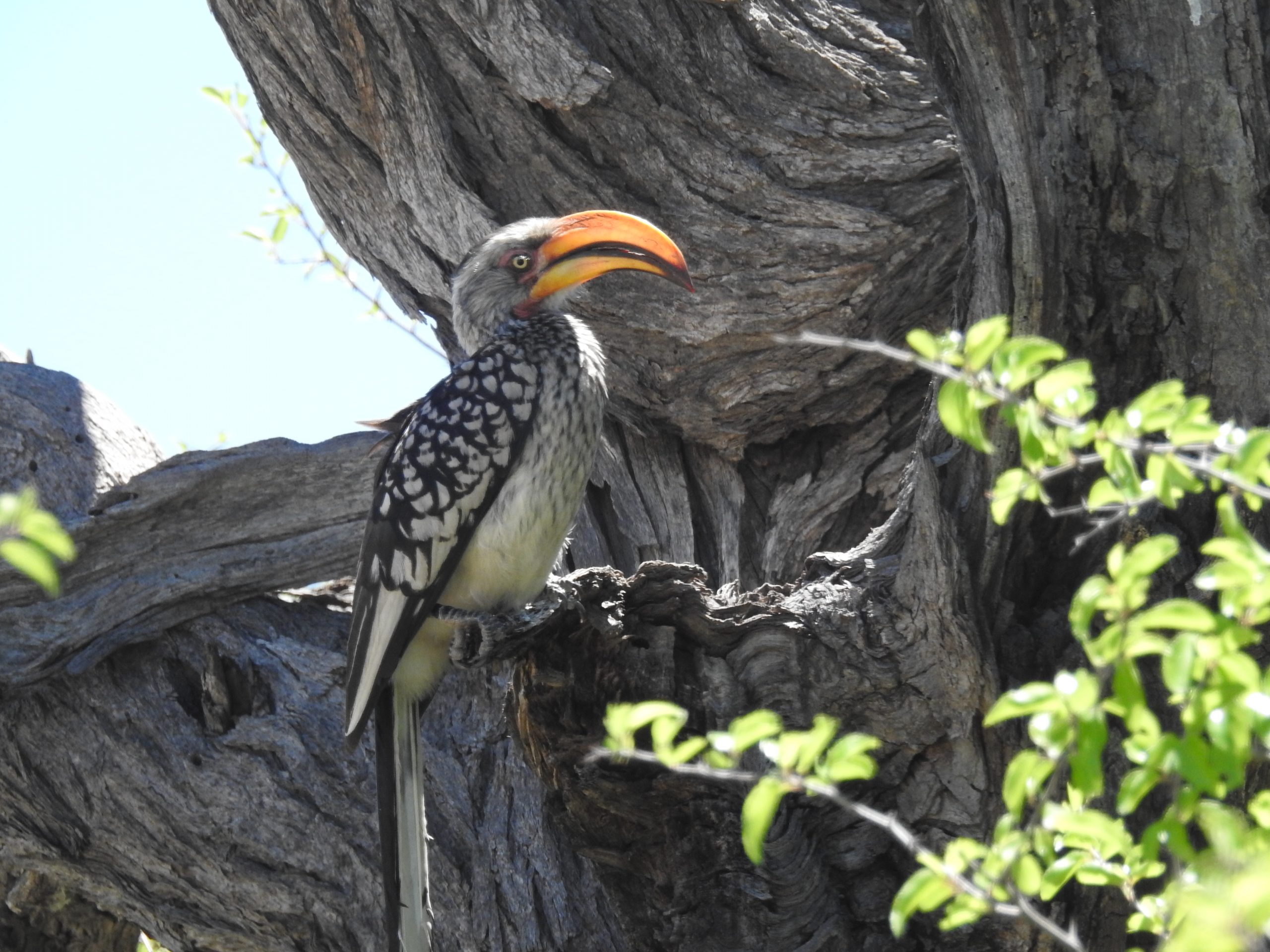
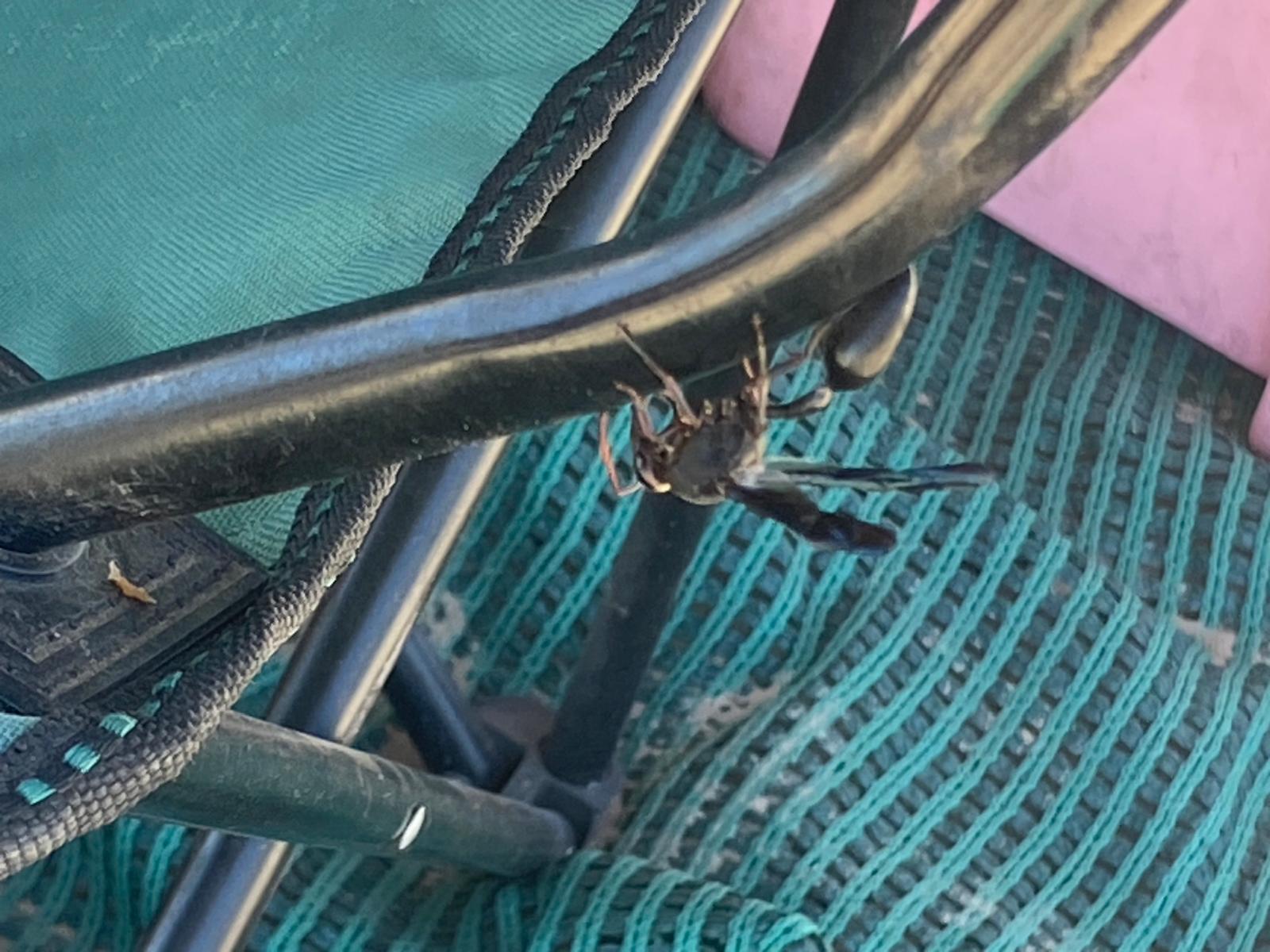
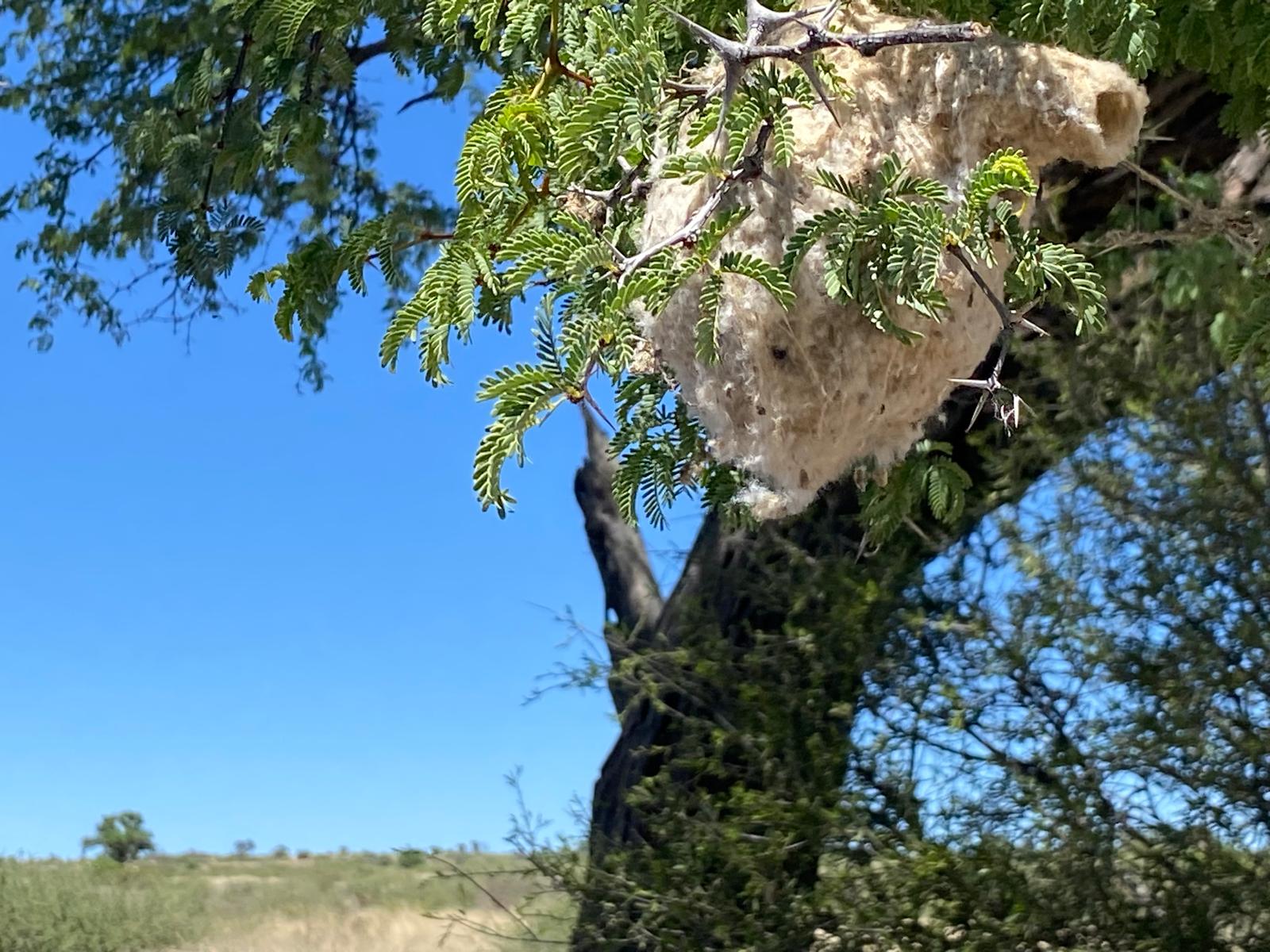
We drove from Khiding Pan not having seen much in the way of animals via Mpayathutlwa Pan which was the only pan with water in it fed via a bore pump. We drove all the way around the pan and saw a few boks but not much else. We headed north towards Mubua Pan. There were a couple of people camping around the pan, but we didn’t see many animals, then it was off to Lesholago Pan, total distance from Khiding of about 20km. Lesholago Pan had a much better view of the pan, we were in campsite number 2. There were Oryx and springbok on the pan especially in the evening. We stayed two nights. The first morning we heard a lion calling, maybe 1km away. That night it called again, this time closer. The next morning we left we heard it calling in the far distance. It is very dry at Lesholago Pan, we were visited by African Honey Bees again, but we moved a lot of water away so we were not quite as tormented by them. The African Honey Bees seem to be able to smell water even in closed water containers, or objects that have held water.